August 10, 2026
LATEST
Five Joint Defence Projects Launch Europe’s Military ShieldElectrification Plan Aims to Make Europe First Electro ContinentHorizon Europe Budget Fight Heats Up as Ministers Push BackGoogle’s DMA Fine Sets Off a Transatlantic Tariff ClashTwenty New University Alliances Join Erasmus for Two YearsForeign Subsidies Case Puts Temu in the EU’s SightsVan Tachographs Now Mandatory for Cross-Border FleetsStress Test Exposes Gaps in Euro Area Bank DefencesEurope Bets on a Gulf Partnership Before the Riyadh SummitWhy the Atlantic Route Now Runs Through MauritaniaKyiv and Chisinau Advance as the EU Accession Talks Gather PaceEurope’s New Digital Border System Beds In After a Rocky RolloutBrussels Mounts Its Largest Wildfire Response as the Fires SpreadRetail Spending Slipped in June, Wrong-Footing EconomistsHeatwave Warning Puts Brussels on Alert for Vulnerable GroupsKANAL’s 230 Million Euro Museum Sets a November Opening DatePension Savings Rules Get a Reset as the EU Scraps the 1% CapMedicine Shortages Move to the Heart of Europe’s Pharma ResetJapan Becomes Europe’s Closest Security Partner in AsiaCan Europe’s New Zealand Deal Anchor It in the Pacific?Five Joint Defence Projects Launch Europe’s Military ShieldElectrification Plan Aims to Make Europe First Electro ContinentHorizon Europe Budget Fight Heats Up as Ministers Push BackGoogle’s DMA Fine Sets Off a Transatlantic Tariff ClashTwenty New University Alliances Join Erasmus for Two YearsForeign Subsidies Case Puts Temu in the EU’s SightsVan Tachographs Now Mandatory for Cross-Border FleetsStress Test Exposes Gaps in Euro Area Bank DefencesEurope Bets on a Gulf Partnership Before the Riyadh SummitWhy the Atlantic Route Now Runs Through MauritaniaKyiv and Chisinau Advance as the EU Accession Talks Gather PaceEurope’s New Digital Border System Beds In After a Rocky RolloutBrussels Mounts Its Largest Wildfire Response as the Fires SpreadRetail Spending Slipped in June, Wrong-Footing EconomistsHeatwave Warning Puts Brussels on Alert for Vulnerable GroupsKANAL’s 230 Million Euro Museum Sets a November Opening DatePension Savings Rules Get a Reset as the EU Scraps the 1% CapMedicine Shortages Move to the Heart of Europe’s Pharma ResetJapan Becomes Europe’s Closest Security Partner in AsiaCan Europe’s New Zealand Deal Anchor It in the Pacific?
August 10, 2026
LATEST
Five Joint Defence Projects Launch Europe’s Military ShieldElectrification Plan Aims to Make Europe First Electro ContinentHorizon Europe Budget Fight Heats Up as Ministers Push BackGoogle’s DMA Fine Sets Off a Transatlantic Tariff ClashTwenty New University Alliances Join Erasmus for Two YearsForeign Subsidies Case Puts Temu in the EU’s SightsVan Tachographs Now Mandatory for Cross-Border FleetsStress Test Exposes Gaps in Euro Area Bank DefencesEurope Bets on a Gulf Partnership Before the Riyadh SummitWhy the Atlantic Route Now Runs Through MauritaniaKyiv and Chisinau Advance as the EU Accession Talks Gather PaceEurope’s New Digital Border System Beds In After a Rocky RolloutBrussels Mounts Its Largest Wildfire Response as the Fires SpreadRetail Spending Slipped in June, Wrong-Footing EconomistsHeatwave Warning Puts Brussels on Alert for Vulnerable GroupsKANAL’s 230 Million Euro Museum Sets a November Opening DatePension Savings Rules Get a Reset as the EU Scraps the 1% CapMedicine Shortages Move to the Heart of Europe’s Pharma ResetJapan Becomes Europe’s Closest Security Partner in AsiaCan Europe’s New Zealand Deal Anchor It in the Pacific?Five Joint Defence Projects Launch Europe’s Military ShieldElectrification Plan Aims to Make Europe First Electro ContinentHorizon Europe Budget Fight Heats Up as Ministers Push BackGoogle’s DMA Fine Sets Off a Transatlantic Tariff ClashTwenty New University Alliances Join Erasmus for Two YearsForeign Subsidies Case Puts Temu in the EU’s SightsVan Tachographs Now Mandatory for Cross-Border FleetsStress Test Exposes Gaps in Euro Area Bank DefencesEurope Bets on a Gulf Partnership Before the Riyadh SummitWhy the Atlantic Route Now Runs Through MauritaniaKyiv and Chisinau Advance as the EU Accession Talks Gather PaceEurope’s New Digital Border System Beds In After a Rocky RolloutBrussels Mounts Its Largest Wildfire Response as the Fires SpreadRetail Spending Slipped in June, Wrong-Footing EconomistsHeatwave Warning Puts Brussels on Alert for Vulnerable GroupsKANAL’s 230 Million Euro Museum Sets a November Opening DatePension Savings Rules Get a Reset as the EU Scraps the 1% CapMedicine Shortages Move to the Heart of Europe’s Pharma ResetJapan Becomes Europe’s Closest Security Partner in AsiaCan Europe’s New Zealand Deal Anchor It in the Pacific?

Europe’s Savings Union Tries to Unlock Idle Capital

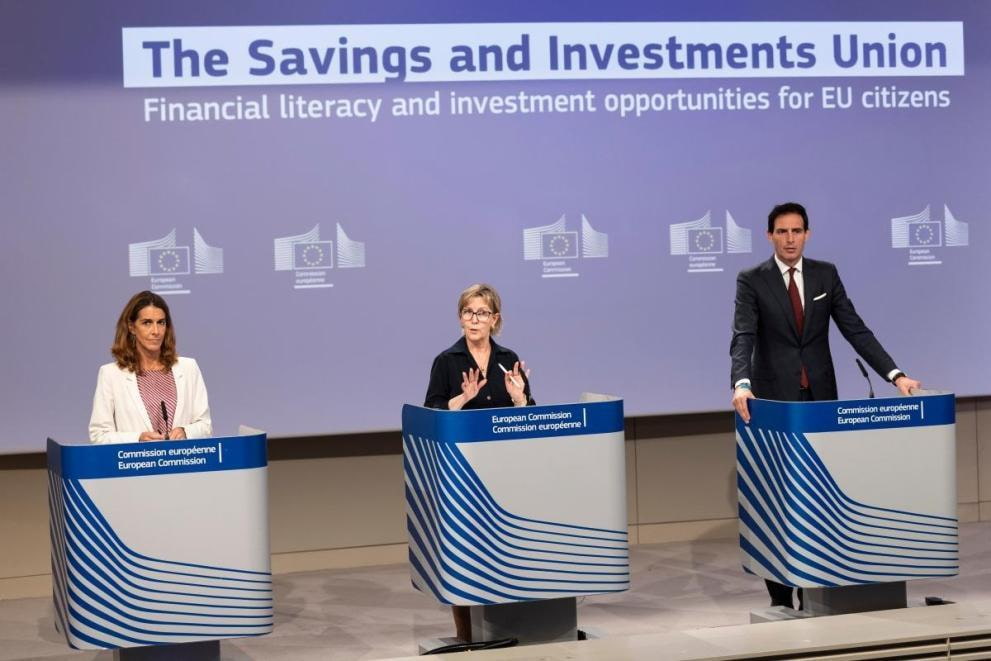
Brussels: Europe holds a strange kind of wealth. Households across the Union sit on trillions of euros in bank deposits, yet much of that money earns little and finances even less, and the Savings Union is the Commission’s attempt to change that. The plan, formally the Savings and Investments Union, wants to steer private savings into productive investment without forcing anyone to take risks they do not understand.

The diagnosis is not new. European capital markets remain fragmented along national lines, so a saver in one country rarely funds a company in another. That fragmentation raises the cost of capital for firms and denies households the higher long-run returns that deeper markets tend to deliver.

From deposits to investment

The Commission built the strategy around a few practical levers. It wants to revive securitisation, the packaging of loans into tradable assets, so banks can free up balance-sheet room and lend more. It wants more citizens to hold shares and funds rather than cash. And it wants supplementary pension schemes to grow, because long-horizon money is exactly what young companies need.

Those priorities showed up in hard recommendations. On 3 June 2026, as part of the European Semester spring package, the Commission issued country-specific advice urging member states to widen retail and institutional participation in capital markets and to strengthen private pensions. The message was blunt: national action, not just Brussels rule-making, will decide whether the project works.

Why progress stays slow

Enthusiasm among policymakers has not yet translated into movement among investors. Executives and fund managers describe a wait-and-see mood, reluctant to commit until they see whether the securitisation reforms and market-integration measures survive contact with the Council and the Parliament. Credible pathways exist, industry bodies say, but credibility is not the same as delivery.

Three obstacles stand out. First, tax and insolvency rules still differ sharply between member states, and those differences quietly fragment markets even when the headline regulation is harmonised. Second, national supervisors guard their turf, which complicates any push toward more centralised oversight. Third, culture matters, because savers raised to prize the safety of a bank deposit do not shift to equities on a policymaker’s say-so.

There is also a fairness question that Brussels cannot ignore. Encouraging households into markets promises higher returns, but it also transfers risk from banks and states onto individuals. Without strong consumer protection and plain-spoken advice, a savings union could hand losses to the very people it claims to enrich.

Even so, the logic behind the effort is hard to dismiss. Europe needs vast sums for defence, clean energy, and digital infrastructure, and public budgets alone cannot cover the bill. Mobilising domestic savings offers a way to fund those ambitions without leaning further on either taxpayers or foreign investors whose priorities may not align with the Union’s.

The Savings Union will not be finished in a single year, and its supporters know it. The test is whether member states treat the June recommendations as a genuine to-do list or as advice to be politely filed away. Deep, integrated markets take years to build, but they start with the unglamorous work of aligning rules that governments have spent decades keeping apart.