August 22, 2026
LATEST
What the EU Taiwan Framework Would Actually Have to DoKorea Signed a Digital Trade Deal That Nobody Has RatifiedCritical Minerals in Mongolia Still Have to Cross Two BordersCan an Indonesia Trade Deal Survive Two Years of RatifyingCross-Border Data Orders Went Live Before the Plumbing DidPlatform Work Rules Take Effect in December and Few Are ReadyCan Europe’s Firefighting Fleet Keep Pace With EU WildfiresThe AI Act Deadline Passed on 2 August and Nothing BitWhy Construction Keeps Shrinking While Confidence ImprovesAccession Talks Stall Again and September 1 Is the TestBrussels Applied a Trade Deal It Cannot Yet RatifyAfrica’s Power Market Now Needs Money More Than BlueprintsLong-Term Budget Talks Enter Autumn Without a Council LineForeign Subsidies Enforcement Now Turns on a Dublin RaidWho Writes Europe’s Telecom Rules Once Copper DisappearsDisability Cards Exist on Paper and Nowhere Else Until 2028Losing Visa-Free Travel Now Takes a Thirty Percent SwingTwenty Flagship Actions Will Test Whether the Culture Compass WorksEurope’s Quality Jobs Act Now Rests on What Unions Do by SeptemberDoes a Three Euro Parcel Duty Change Anything About Cheap ImportsWhat the EU Taiwan Framework Would Actually Have to DoKorea Signed a Digital Trade Deal That Nobody Has RatifiedCritical Minerals in Mongolia Still Have to Cross Two BordersCan an Indonesia Trade Deal Survive Two Years of RatifyingCross-Border Data Orders Went Live Before the Plumbing DidPlatform Work Rules Take Effect in December and Few Are ReadyCan Europe’s Firefighting Fleet Keep Pace With EU WildfiresThe AI Act Deadline Passed on 2 August and Nothing BitWhy Construction Keeps Shrinking While Confidence ImprovesAccession Talks Stall Again and September 1 Is the TestBrussels Applied a Trade Deal It Cannot Yet RatifyAfrica’s Power Market Now Needs Money More Than BlueprintsLong-Term Budget Talks Enter Autumn Without a Council LineForeign Subsidies Enforcement Now Turns on a Dublin RaidWho Writes Europe’s Telecom Rules Once Copper DisappearsDisability Cards Exist on Paper and Nowhere Else Until 2028Losing Visa-Free Travel Now Takes a Thirty Percent SwingTwenty Flagship Actions Will Test Whether the Culture Compass WorksEurope’s Quality Jobs Act Now Rests on What Unions Do by SeptemberDoes a Three Euro Parcel Duty Change Anything About Cheap Imports
August 22, 2026
LATEST
What the EU Taiwan Framework Would Actually Have to DoKorea Signed a Digital Trade Deal That Nobody Has RatifiedCritical Minerals in Mongolia Still Have to Cross Two BordersCan an Indonesia Trade Deal Survive Two Years of RatifyingCross-Border Data Orders Went Live Before the Plumbing DidPlatform Work Rules Take Effect in December and Few Are ReadyCan Europe’s Firefighting Fleet Keep Pace With EU WildfiresThe AI Act Deadline Passed on 2 August and Nothing BitWhy Construction Keeps Shrinking While Confidence ImprovesAccession Talks Stall Again and September 1 Is the TestBrussels Applied a Trade Deal It Cannot Yet RatifyAfrica’s Power Market Now Needs Money More Than BlueprintsLong-Term Budget Talks Enter Autumn Without a Council LineForeign Subsidies Enforcement Now Turns on a Dublin RaidWho Writes Europe’s Telecom Rules Once Copper DisappearsDisability Cards Exist on Paper and Nowhere Else Until 2028Losing Visa-Free Travel Now Takes a Thirty Percent SwingTwenty Flagship Actions Will Test Whether the Culture Compass WorksEurope’s Quality Jobs Act Now Rests on What Unions Do by SeptemberDoes a Three Euro Parcel Duty Change Anything About Cheap ImportsWhat the EU Taiwan Framework Would Actually Have to DoKorea Signed a Digital Trade Deal That Nobody Has RatifiedCritical Minerals in Mongolia Still Have to Cross Two BordersCan an Indonesia Trade Deal Survive Two Years of RatifyingCross-Border Data Orders Went Live Before the Plumbing DidPlatform Work Rules Take Effect in December and Few Are ReadyCan Europe’s Firefighting Fleet Keep Pace With EU WildfiresThe AI Act Deadline Passed on 2 August and Nothing BitWhy Construction Keeps Shrinking While Confidence ImprovesAccession Talks Stall Again and September 1 Is the TestBrussels Applied a Trade Deal It Cannot Yet RatifyAfrica’s Power Market Now Needs Money More Than BlueprintsLong-Term Budget Talks Enter Autumn Without a Council LineForeign Subsidies Enforcement Now Turns on a Dublin RaidWho Writes Europe’s Telecom Rules Once Copper DisappearsDisability Cards Exist on Paper and Nowhere Else Until 2028Losing Visa-Free Travel Now Takes a Thirty Percent SwingTwenty Flagship Actions Will Test Whether the Culture Compass WorksEurope’s Quality Jobs Act Now Rests on What Unions Do by SeptemberDoes a Three Euro Parcel Duty Change Anything About Cheap Imports

Taiwan Waits While Europe Misses Its Own Chips Deadline

Hsinchu: The engineers who run the world’s most advanced fabrication lines watch European deadlines the way farmers watch weather forecasts, with interest and without dependence. Taiwan’s chipmakers have heard Brussels promise a second Chips Act for more than a year. They are still waiting, and the waiting is starting to cost Europe something.

The European Commission put a Chips Act II proposal in its 2026 Work Programme with a target of March. That date passed. Officials offer the usual explanations, and most of them are true, because designing a subsidy regime that survives state aid law and twenty-seven industrial ministries is genuinely hard. The problem is that semiconductor investment cycles do not pause for institutional throat-clearing. A fab decided in 2026 opens around 2030.

The first Chips Act set Europe a target of twenty per cent of global production by 2030. Auditors and analysts have since concluded, with varying degrees of politeness, that the figure will not be met. Europe’s share is drifting closer to half that. The gap is not a scandal. It is arithmetic. Global capacity grew faster than European capacity, so a fixed percentage target became a moving one.

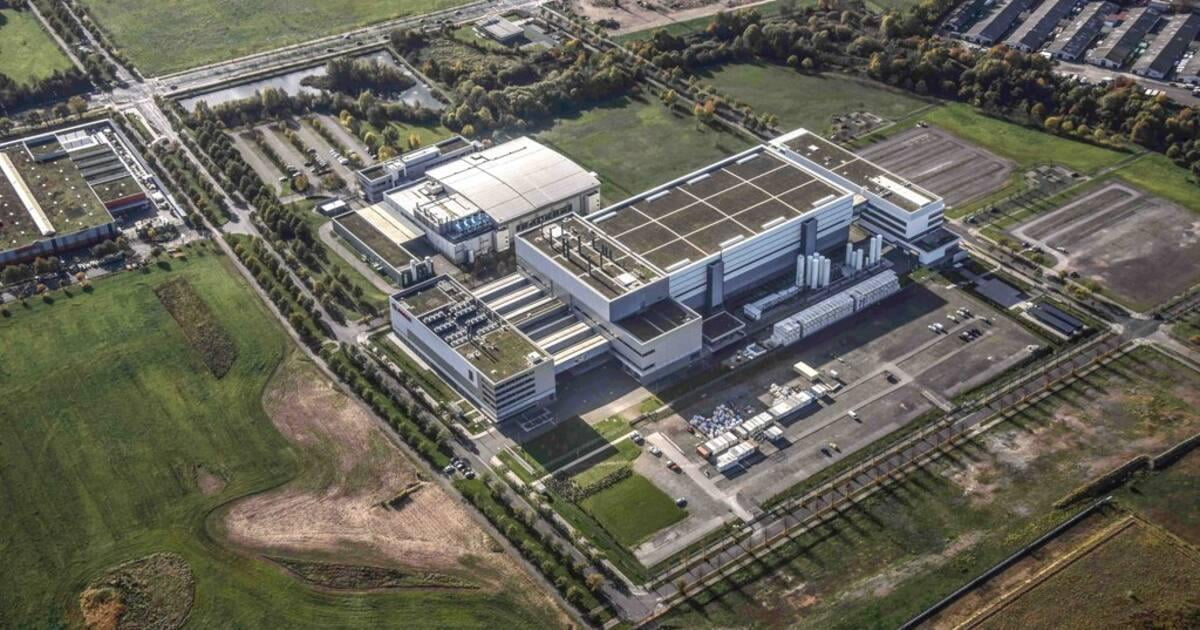
Taiwan is where the shortfall becomes a diplomatic question rather than an accounting one. TSMC’s Dresden plant, built with European public money and Taiwanese process knowledge, remains the largest single proof that the partnership can produce physical objects. Foxconn and GlobalWafers have expanded across the continent. Brussels and Taipei have institutionalised the conversation through an EU–Taiwan Semiconductor Industry Dialogue that gathered more than forty senior industry and research figures alongside SEMICON Europa in Munich.

What that dialogue cannot fix is the asymmetry underneath it. Europe wants Taiwanese leading-edge capability planted on European soil. Taiwan wants market access, talent mobility, research depth and a political relationship that does not evaporate the moment Beijing objects. A recent Institut Montaigne policy paper sets out a roadmap to 2035 and a list of recommendations that mostly amount to one instruction, which is that Europe should decide what it is offering before it decides what it is asking for.

Europe’s genuine strengths sit upstream, not downstream. ASML supplies the lithography tools without which no advanced fab functions anywhere. IMEC in Leuven runs research programmes that every major manufacturer uses. Zeiss makes optics nobody else can. That upstream position gives Brussels far more leverage than its modest share of wafer output suggests, and it is leverage the Union rarely deploys with any coherence.

Research and innovation policy is where the second act could still matter. Rather than chasing volume manufacturing that Asian producers will always finance faster, Europe could fund what it already does well, which means pilot lines, packaging, chip design capacity for smaller firms and the doctoral pipeline that keeps ASML and IMEC staffed. Taiwanese partners have shown consistent interest in that agenda because it complements their own rather than duplicating it.

None of this requires Europe to resolve its political position on Taiwan, which it will not do. It requires Brussels to publish a proposal, name a budget and stop treating a missed deadline as a scheduling detail. Companies allocate capital against certainty. Right now Europe is offering intentions, and Hsinchu has plenty of those already.