Yerevan: Armenian exports have pointed north for three decades, and Brussels now proposes to swing them west with a tariff schedule. The autonomous trade measures the European Commission put forward in July would liberalise roughly 80 percent of what Armenia sells into the European Union. They cover almost 99 percent of the fresh fruit, vegetables and plants Armenia currently ships to Russia, and more than 91 percent of its beverages and spirits. The figures describe an ambition. They do not yet describe a trade flow.
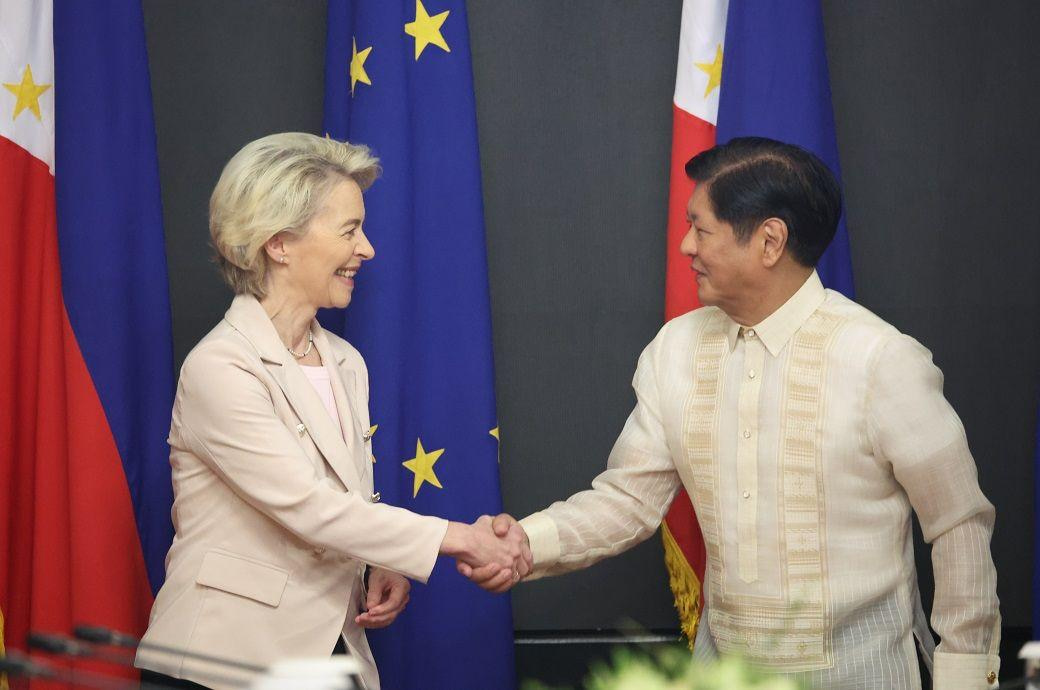
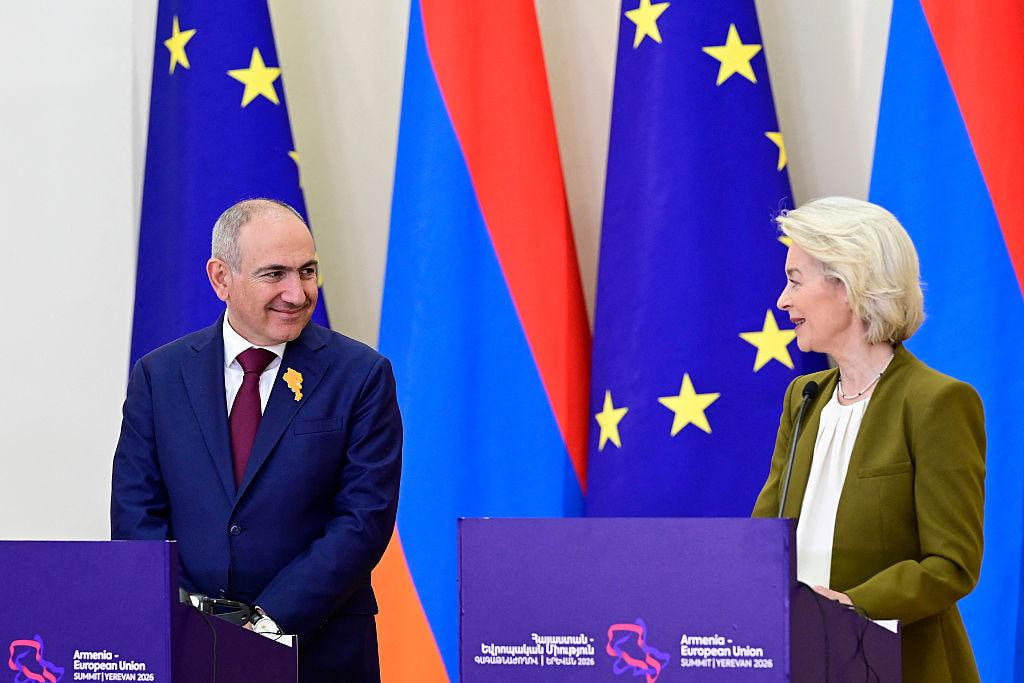
The offer answers a squeeze. Russian restrictions have hit Armenian produce at precisely the moment Yerevan has drawn closer to the Union, and the Commission framed its response as a defence of sovereign choice rather than a commercial favour. President Ursula von der Leyen paired the tariff proposal with a EUR 52 million package during her visit to the Armenian capital, of which EUR 34 million moved within a fortnight. That brings total EU financial support to EUR 288 million, according to the Commission’s own account of the visit.
Two obstacles stand between the announcement and the invoice. The first is procedural. Autonomous trade measures require the European Parliament and the Council to adopt them, and they expire on a fixed horizon. An exporter deciding whether to replant an orchard or finance a bottling line weighs a temporary preference differently from a permanent one. The Commission has tried to close that gap by sending experts to work directly with Armenian producers on standards, export capacity and geographical indications, which is the practical work that actually converts a tariff line into a shipment.
The second obstacle is structural, and nobody in Yerevan pretends otherwise. Armenia sits inside the Eurasian Economic Union, whose external tariff and regulatory perimeter it does not set. A country can diversify its customers within that arrangement. It cannot simply relocate its trade regime. Armenian brandy producers, to take the clearest case, built their volumes on a Russian market that recognises their product and a distribution chain that reaches it. European supermarkets ask different questions about residue limits, cold chain documentation and traceability, and the answers take seasons to produce rather than quarters.
Mobility runs on a parallel track and a slower clock. The visa liberalisation dialogue opened in September 2024, the Commission handed over an action plan covering document security, border management, public order and fundamental rights, and an Armenian task force met again in mid-August to review implementation. Benchmark-based visa processes reward administrative persistence rather than political enthusiasm, as the Council’s own record on Armenia makes plain. Georgia and Moldova each took years.
What has genuinely changed is the regional setting. The initialling of the Armenia-Azerbaijan peace agreement and continued normalisation with Turkiye alter the arithmetic of every route map drawn in the South Caucasus. The Union has attached money to that logic through a connectivity package worth up to EUR 200 million and an additional EUR 20 million in peace dividends aimed at healthcare, demining and local business. Roads and rail that open eastward are worth more to Armenian exporters than any tariff concession, because a landlocked producer sells geography before it sells fruit.
The honest reading is that Europe has bought time rather than a realignment. Tariff-free access lowers a barrier that was never the binding constraint. Logistics, certification, financing and the durability of the offer are. If the Parliament and Council adopt the measures quickly and the Commission keeps its technical missions in place beyond the news cycle, Armenian exporters gain a second buyer of record. If the preferences lapse before the orchards adjust, Yerevan will have learned that a strategic agenda signed in December and celebrated at a summit in May can still leave a grower in Ararat province facing the same two options he had before.