August 23, 2026
LATEST
Europe Now Runs Trade Defence Against China One Product at a TimeWhat Seoul Must Sign Before Korean Firms Can Touch SAFE MoneyNorth Korea’s Money Moves Faster Than Europe Can List Its OwnersNew Zealand Is Still Waiting for the Pact Japan and Korea SignedFarmers Won a CAP Budget Floor and Lost the Second PillarAustralia Wants Into Horizon Europe Before the Money DoublesOcean Act Drafters Face a Deadline and Two Rival DirectivesFive Joint Defence Projects Start With 325 Million in Seed MoneyVehicle Circularity Rules Now Land on Suppliers, Not Just CarmakersArmenia Is Halfway Through a Visa Roadmap of 74 BenchmarksSyria Regained a Trade Agreement While Sanctions Remain in PlaceHeatwave Preparedness Now Needs a Law, Not Another PlanEurope’s Tobacco Tax Overhaul Now Doubles as an EU Budget FixCrypto Rules Reopened Two Years After They Took EffectETIAS Has Quietly Lost the Only Launch Date It Ever Committed ToSteel Quotas Fell 47 Percent and Buyers Are Still AdjustingWill the Space Act Survive Its Second Half of Negotiations in CouncilFishermen Want More Herring While Scientists Advise Zero CodDestroying Unsold Clothes Became Illegal and Little Has ChangedCivil Society Gets Double the Money and Loses Its ProgrammeEurope Now Runs Trade Defence Against China One Product at a TimeWhat Seoul Must Sign Before Korean Firms Can Touch SAFE MoneyNorth Korea’s Money Moves Faster Than Europe Can List Its OwnersNew Zealand Is Still Waiting for the Pact Japan and Korea SignedFarmers Won a CAP Budget Floor and Lost the Second PillarAustralia Wants Into Horizon Europe Before the Money DoublesOcean Act Drafters Face a Deadline and Two Rival DirectivesFive Joint Defence Projects Start With 325 Million in Seed MoneyVehicle Circularity Rules Now Land on Suppliers, Not Just CarmakersArmenia Is Halfway Through a Visa Roadmap of 74 BenchmarksSyria Regained a Trade Agreement While Sanctions Remain in PlaceHeatwave Preparedness Now Needs a Law, Not Another PlanEurope’s Tobacco Tax Overhaul Now Doubles as an EU Budget FixCrypto Rules Reopened Two Years After They Took EffectETIAS Has Quietly Lost the Only Launch Date It Ever Committed ToSteel Quotas Fell 47 Percent and Buyers Are Still AdjustingWill the Space Act Survive Its Second Half of Negotiations in CouncilFishermen Want More Herring While Scientists Advise Zero CodDestroying Unsold Clothes Became Illegal and Little Has ChangedCivil Society Gets Double the Money and Loses Its Programme
August 23, 2026
LATEST
Europe Now Runs Trade Defence Against China One Product at a TimeWhat Seoul Must Sign Before Korean Firms Can Touch SAFE MoneyNorth Korea’s Money Moves Faster Than Europe Can List Its OwnersNew Zealand Is Still Waiting for the Pact Japan and Korea SignedFarmers Won a CAP Budget Floor and Lost the Second PillarAustralia Wants Into Horizon Europe Before the Money DoublesOcean Act Drafters Face a Deadline and Two Rival DirectivesFive Joint Defence Projects Start With 325 Million in Seed MoneyVehicle Circularity Rules Now Land on Suppliers, Not Just CarmakersArmenia Is Halfway Through a Visa Roadmap of 74 BenchmarksSyria Regained a Trade Agreement While Sanctions Remain in PlaceHeatwave Preparedness Now Needs a Law, Not Another PlanEurope’s Tobacco Tax Overhaul Now Doubles as an EU Budget FixCrypto Rules Reopened Two Years After They Took EffectETIAS Has Quietly Lost the Only Launch Date It Ever Committed ToSteel Quotas Fell 47 Percent and Buyers Are Still AdjustingWill the Space Act Survive Its Second Half of Negotiations in CouncilFishermen Want More Herring While Scientists Advise Zero CodDestroying Unsold Clothes Became Illegal and Little Has ChangedCivil Society Gets Double the Money and Loses Its ProgrammeEurope Now Runs Trade Defence Against China One Product at a TimeWhat Seoul Must Sign Before Korean Firms Can Touch SAFE MoneyNorth Korea’s Money Moves Faster Than Europe Can List Its OwnersNew Zealand Is Still Waiting for the Pact Japan and Korea SignedFarmers Won a CAP Budget Floor and Lost the Second PillarAustralia Wants Into Horizon Europe Before the Money DoublesOcean Act Drafters Face a Deadline and Two Rival DirectivesFive Joint Defence Projects Start With 325 Million in Seed MoneyVehicle Circularity Rules Now Land on Suppliers, Not Just CarmakersArmenia Is Halfway Through a Visa Roadmap of 74 BenchmarksSyria Regained a Trade Agreement While Sanctions Remain in PlaceHeatwave Preparedness Now Needs a Law, Not Another PlanEurope’s Tobacco Tax Overhaul Now Doubles as an EU Budget FixCrypto Rules Reopened Two Years After They Took EffectETIAS Has Quietly Lost the Only Launch Date It Ever Committed ToSteel Quotas Fell 47 Percent and Buyers Are Still AdjustingWill the Space Act Survive Its Second Half of Negotiations in CouncilFishermen Want More Herring While Scientists Advise Zero CodDestroying Unsold Clothes Became Illegal and Little Has ChangedCivil Society Gets Double the Money and Loses Its Programme

Eighty New Research Networks Open With a Youth Quota Attached

Eighty new research networks start work across Europe this autumn, and the rules governing who proposes them changed in a way that will reshape the applicant pool for years.

COST, the intergovernmental scheme that funds research networking rather than research itself, confirmed the eighty selections on 19 May. The figure marks a jump from seventy the previous year. Each network, known as a COST Action, runs for four years and receives roughly 150,000 euros in its opening year and 180,000 euros annually thereafter. Researchers can now apply to join the approved Actions ahead of their September and October launches.

Those sums look modest beside Horizon Europe’s ninety-five billion euro envelope, and they should. COST pays for meetings, short scientific missions, training schools and coordination. It does not pay for laboratories, salaries or equipment. The model assumes that European research suffers less from a shortage of ideas than from a shortage of connections between the people holding them.

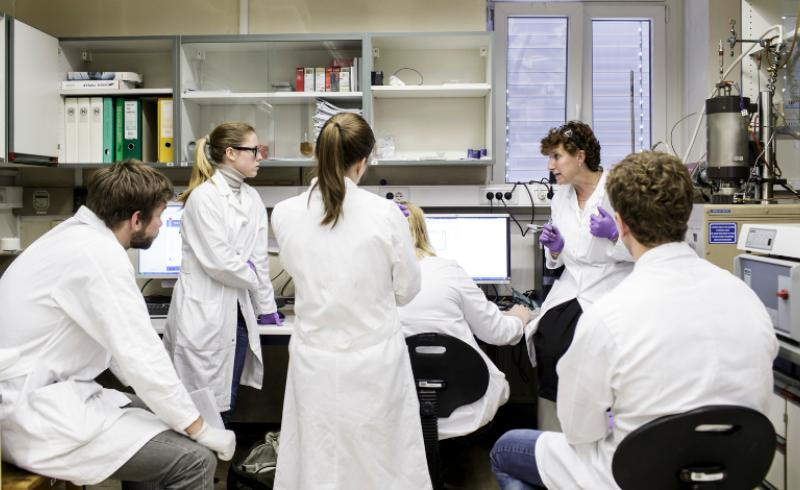
The 2026 open call attached a condition that changes the mechanics of proposal writing. At least forty percent of proposers must now qualify as young researchers and innovators. Consortium leaders can no longer assemble a familiar circle of senior collaborators and add an early-career name at the end. They have to build teams where junior participants shape the science from the first draft.

The approved topics show how far the scheme ranges. This year’s cohort covers psychosis prevention, neuromorphic computing, quieter fan technology, vaccines aimed at broader health benefits, artificial intelligence and the conservation of modern art. One Action examines parental and children’s wellbeing. Sixty-one percent of the eighty span at least two OECD fields of science, which reflects a selection process that rewards work sitting between disciplines rather than inside one.

Natural sciences account for half the portfolio. Social sciences follow at forty percent, engineering and technology at thirty-three, medical and health sciences at thirty-one. Agricultural science reaches sixteen percent and humanities fifteen. Those figures overlap because most Actions claim more than one field, and the pattern tells you something about where interdisciplinary momentum currently sits in European research.

The youth requirement carries a policy argument behind it. European research policy has worried for a decade about early-career precarity, about postdoctoral researchers who cycle through short contracts without building the international networks that senior colleagues accumulated over careers. Money alone does not fix that. Access does. A forty percent floor forces open a door that informal networks tend to keep closed.

Sceptics will note the obvious risk. Quotas can produce nominal participation, where junior names appear on paper while decisions happen elsewhere. COST cannot easily audit that dynamic across eighty networks in thirty-eight participating countries. Whether the rule delivers genuine influence or polite tokenism will only become visible in the mission reports and leadership rosters three years from now.

The scheme still occupies a useful niche in the funding landscape. Horizon Europe consortia demand months of preparation and reward institutions with dedicated grant offices. COST proposals stay lighter, which lets smaller universities and researchers in widening countries compete on the strength of an idea. Anyone considering the current open call should read the youth threshold as the central design change, not a footnote.