August 23, 2026
LATEST
North Korea’s Money Moves Faster Than Europe Can List Its OwnersNew Zealand Is Still Waiting for the Pact Japan and Korea SignedFarmers Won a CAP Budget Floor and Lost the Second PillarAustralia Wants Into Horizon Europe Before the Money DoublesOcean Act Drafters Face a Deadline and Two Rival DirectivesFive Joint Defence Projects Start With 325 Million in Seed MoneyVehicle Circularity Rules Now Land on Suppliers, Not Just CarmakersArmenia Is Halfway Through a Visa Roadmap of 74 BenchmarksSyria Regained a Trade Agreement While Sanctions Remain in PlaceHeatwave Preparedness Now Needs a Law, Not Another PlanEurope’s Tobacco Tax Overhaul Now Doubles as an EU Budget FixCrypto Rules Reopened Two Years After They Took EffectETIAS Has Quietly Lost the Only Launch Date It Ever Committed ToSteel Quotas Fell 47 Percent and Buyers Are Still AdjustingWill the Space Act Survive Its Second Half of Negotiations in CouncilFishermen Want More Herring While Scientists Advise Zero CodDestroying Unsold Clothes Became Illegal and Little Has ChangedCivil Society Gets Double the Money and Loses Its ProgrammeNine Days Remain Before Restoration Plans Fall Due in BrusselsAutumn Vote Decides When the Pharma Package Starts Its ClockNorth Korea’s Money Moves Faster Than Europe Can List Its OwnersNew Zealand Is Still Waiting for the Pact Japan and Korea SignedFarmers Won a CAP Budget Floor and Lost the Second PillarAustralia Wants Into Horizon Europe Before the Money DoublesOcean Act Drafters Face a Deadline and Two Rival DirectivesFive Joint Defence Projects Start With 325 Million in Seed MoneyVehicle Circularity Rules Now Land on Suppliers, Not Just CarmakersArmenia Is Halfway Through a Visa Roadmap of 74 BenchmarksSyria Regained a Trade Agreement While Sanctions Remain in PlaceHeatwave Preparedness Now Needs a Law, Not Another PlanEurope’s Tobacco Tax Overhaul Now Doubles as an EU Budget FixCrypto Rules Reopened Two Years After They Took EffectETIAS Has Quietly Lost the Only Launch Date It Ever Committed ToSteel Quotas Fell 47 Percent and Buyers Are Still AdjustingWill the Space Act Survive Its Second Half of Negotiations in CouncilFishermen Want More Herring While Scientists Advise Zero CodDestroying Unsold Clothes Became Illegal and Little Has ChangedCivil Society Gets Double the Money and Loses Its ProgrammeNine Days Remain Before Restoration Plans Fall Due in BrusselsAutumn Vote Decides When the Pharma Package Starts Its Clock
August 23, 2026
LATEST
North Korea’s Money Moves Faster Than Europe Can List Its OwnersNew Zealand Is Still Waiting for the Pact Japan and Korea SignedFarmers Won a CAP Budget Floor and Lost the Second PillarAustralia Wants Into Horizon Europe Before the Money DoublesOcean Act Drafters Face a Deadline and Two Rival DirectivesFive Joint Defence Projects Start With 325 Million in Seed MoneyVehicle Circularity Rules Now Land on Suppliers, Not Just CarmakersArmenia Is Halfway Through a Visa Roadmap of 74 BenchmarksSyria Regained a Trade Agreement While Sanctions Remain in PlaceHeatwave Preparedness Now Needs a Law, Not Another PlanEurope’s Tobacco Tax Overhaul Now Doubles as an EU Budget FixCrypto Rules Reopened Two Years After They Took EffectETIAS Has Quietly Lost the Only Launch Date It Ever Committed ToSteel Quotas Fell 47 Percent and Buyers Are Still AdjustingWill the Space Act Survive Its Second Half of Negotiations in CouncilFishermen Want More Herring While Scientists Advise Zero CodDestroying Unsold Clothes Became Illegal and Little Has ChangedCivil Society Gets Double the Money and Loses Its ProgrammeNine Days Remain Before Restoration Plans Fall Due in BrusselsAutumn Vote Decides When the Pharma Package Starts Its ClockNorth Korea’s Money Moves Faster Than Europe Can List Its OwnersNew Zealand Is Still Waiting for the Pact Japan and Korea SignedFarmers Won a CAP Budget Floor and Lost the Second PillarAustralia Wants Into Horizon Europe Before the Money DoublesOcean Act Drafters Face a Deadline and Two Rival DirectivesFive Joint Defence Projects Start With 325 Million in Seed MoneyVehicle Circularity Rules Now Land on Suppliers, Not Just CarmakersArmenia Is Halfway Through a Visa Roadmap of 74 BenchmarksSyria Regained a Trade Agreement While Sanctions Remain in PlaceHeatwave Preparedness Now Needs a Law, Not Another PlanEurope’s Tobacco Tax Overhaul Now Doubles as an EU Budget FixCrypto Rules Reopened Two Years After They Took EffectETIAS Has Quietly Lost the Only Launch Date It Ever Committed ToSteel Quotas Fell 47 Percent and Buyers Are Still AdjustingWill the Space Act Survive Its Second Half of Negotiations in CouncilFishermen Want More Herring While Scientists Advise Zero CodDestroying Unsold Clothes Became Illegal and Little Has ChangedCivil Society Gets Double the Money and Loses Its ProgrammeNine Days Remain Before Restoration Plans Fall Due in BrusselsAutumn Vote Decides When the Pharma Package Starts Its Clock

New Zealand Is Still Waiting for the Pact Japan and Korea Signed

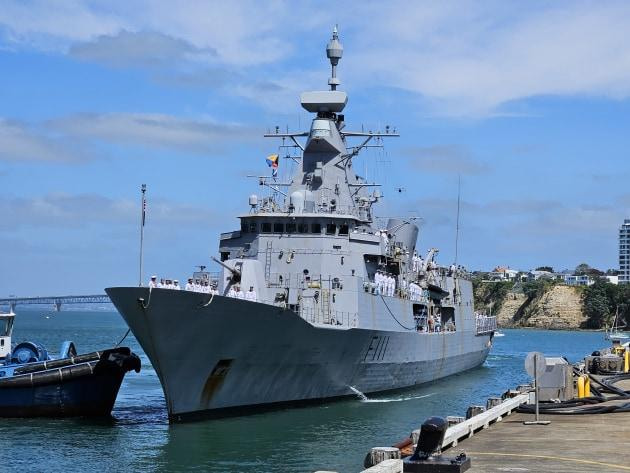
Devonport: The naval base on Auckland’s northern harbour hosts a fleet of nine ships, and New Zealand’s defence planners are candid that the country cannot secure its maritime approaches alone. That candour has not yet produced the one document Wellington’s closest European partners already hold.

Japan and Korea signed Security and Defence Partnerships with the European Union in November 2024. Australia signed one in March 2026, covering cyber, emerging technology, economic security, hybrid threats, maritime security, space and defence industry cooperation. New Zealand has none. The Commission President has proposed a closer security dialogue as a first step toward one, which is diplomatic language for the beginning of a process rather than its conclusion.

The absence is odd on the merits. New Zealand and the EU concluded a free trade agreement that entered into force in May 2024 and share every stated value the partnership framework invokes. Wellington contributes to European-led maritime operations, aligns closely on Russia sanctions, and has signed the Union’s framework agreement on crisis management participation. On paper the relationship is more advanced than several that have already been formalised.

Three explanations circulate, and all of them carry some weight. The first is capacity. The EU’s partnership programme has expanded quickly across the Indo-Pacific, the Western Balkans and the eastern neighbourhood, and the External Action Service negotiates these texts with a small team. Queueing is real.

The second is scale. A partnership with Australia gives Europe access to a defence industrial base, a critical minerals portfolio and a submarine programme. New Zealand offers a defence budget under two percent of GDP and a force structure built around patrol and transport. The strategic return is smaller, and institutions allocate scarce negotiating capacity accordingly.

The third is Wellington’s own ambivalence. New Zealand has spent decades cultivating an independent foreign policy, maintains a substantial trade relationship with China, and has been more cautious than Canberra about formal alignment. Successive governments have preferred issue-by-issue cooperation to framework agreements that invite questions at home about what has been signed away.

Yet the direction of travel is unmistakable. New Zealand signed a three-year defence cooperation agreement with Papua New Guinea in July 2026, deepening training, maritime surveillance and technology ties across the Pacific. That fits a wider regional pattern in which Australia, New Zealand and the United States are locking in security arrangements as China expands its diplomatic and policing footprint among the island states.

Here Europe’s interest is clearer than its posture suggests. The EU has spent considerable effort building Pacific credibility through development finance and its Global Gateway offer, and it lacks a security counterpart to that presence. New Zealand knows the region’s institutions, languages and sensitivities in a way no European capital does. A partnership would give Brussels a route into Pacific security conversations it currently watches from outside.

The signature will probably come. What the delay reveals is that the partnership framework, presented as a values-based network, is being sequenced by industrial weight. New Zealand is discovering that shared values move you into the queue, and something else entirely moves you to the front of it.