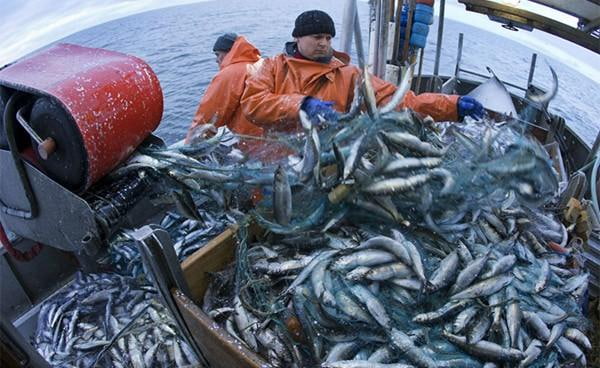
Fishermen around the Baltic have spent the summer arguing with a number that has not moved in years. Scientists at the International Council for the Exploration of the Sea again advise zero catches for both eastern and western Baltic cod in 2027. Producer organisations again say a literal zero would strand fleets that catch cod only by accident while chasing flatfish and herring.
The European Association of Fish Producers Organisations set out that position in its latest paper on Baltic quotas for 2027. It asks the Commission to roll over the existing by-catch allowances rather than cut them: 266 tonnes for western Baltic cod and 430 tonnes for eastern Baltic cod. Both figures repeat what ministers agreed for the current year. Neither figure represents a targeted fishery. They exist so that a trawler pulling up an unintended cod does not commit an offence.
On herring and sprat the association wants the opposite direction. It argues that stock assessments justify higher pelagic quotas next year, and that the Commission has been slow to translate improving indicators into catch limits. That claim will be tested within days. The Commission usually adopts its Baltic proposal in the last week of August, and last year it landed on 26 August.
What arrived then set the tone for everything since. The Commission proposed cutting overall Baltic fishing opportunities by 14.3 per cent, to roughly 295,000 tonnes. Bothnian herring lost 62 per cent. Western Baltic herring lost half. Salmon in the main basin lost 27 per cent. Herring in the Gulf of Riga lost 17 per cent and plaice lost 3 per cent. Only salmon in the Gulf of Finland gained anything, and only by one per cent.
Ministers softened little of it. Meeting in late October, the Council agreed catch limits that kept both cod stocks under by-catch-only regimes, confirming that neither stock supports a directed fishery. The Commission described the outcome as consistent with the Baltic multiannual plan.
That plan is where the real disagreement sits. It obliges the Council to follow maximum sustainable yield where the science supports it and to apply precaution where it does not. For cod, the science has not supported anything for close to a decade. Eastern Baltic cod collapsed in the 2010s and has not recovered despite a targeted-fishing ban since 2019. Warming water, low oxygen in deep basins and seal predation all feature in the explanations, and none of them respond to quota policy.
Which leaves the by-catch allowance doing unusual work. It is not a fishing opportunity in any meaningful sense. It is a legal tolerance that keeps other Baltic fisheries operating, and industry treats it as infrastructure rather than as a catch. Environmental groups read the same number differently, arguing that any positive figure signals that cod remains commercially available and delays the harder conversation about capacity.
Coastal states will split along familiar lines. Poland, Denmark and Sweden carry the largest pelagic interests. Finland and Estonia will fight over Bothnian and Gulf of Riga herring, where last year’s cuts hit processors hardest. Germany’s small western Baltic fleet has already shrunk to the point where quota debates matter less than fuel costs.
The Commission’s own account of last year’s deal emphasised stock recovery over fleet economics. Whether the 2027 proposal keeps that balance will become clear before the month ends, and the October Council will decide how much of it survives.