August 23, 2026
LATEST
What Seoul Must Sign Before Korean Firms Can Touch SAFE MoneyNorth Korea’s Money Moves Faster Than Europe Can List Its OwnersNew Zealand Is Still Waiting for the Pact Japan and Korea SignedFarmers Won a CAP Budget Floor and Lost the Second PillarAustralia Wants Into Horizon Europe Before the Money DoublesOcean Act Drafters Face a Deadline and Two Rival DirectivesFive Joint Defence Projects Start With 325 Million in Seed MoneyVehicle Circularity Rules Now Land on Suppliers, Not Just CarmakersArmenia Is Halfway Through a Visa Roadmap of 74 BenchmarksSyria Regained a Trade Agreement While Sanctions Remain in PlaceHeatwave Preparedness Now Needs a Law, Not Another PlanEurope’s Tobacco Tax Overhaul Now Doubles as an EU Budget FixCrypto Rules Reopened Two Years After They Took EffectETIAS Has Quietly Lost the Only Launch Date It Ever Committed ToSteel Quotas Fell 47 Percent and Buyers Are Still AdjustingWill the Space Act Survive Its Second Half of Negotiations in CouncilFishermen Want More Herring While Scientists Advise Zero CodDestroying Unsold Clothes Became Illegal and Little Has ChangedCivil Society Gets Double the Money and Loses Its ProgrammeNine Days Remain Before Restoration Plans Fall Due in BrusselsWhat Seoul Must Sign Before Korean Firms Can Touch SAFE MoneyNorth Korea’s Money Moves Faster Than Europe Can List Its OwnersNew Zealand Is Still Waiting for the Pact Japan and Korea SignedFarmers Won a CAP Budget Floor and Lost the Second PillarAustralia Wants Into Horizon Europe Before the Money DoublesOcean Act Drafters Face a Deadline and Two Rival DirectivesFive Joint Defence Projects Start With 325 Million in Seed MoneyVehicle Circularity Rules Now Land on Suppliers, Not Just CarmakersArmenia Is Halfway Through a Visa Roadmap of 74 BenchmarksSyria Regained a Trade Agreement While Sanctions Remain in PlaceHeatwave Preparedness Now Needs a Law, Not Another PlanEurope’s Tobacco Tax Overhaul Now Doubles as an EU Budget FixCrypto Rules Reopened Two Years After They Took EffectETIAS Has Quietly Lost the Only Launch Date It Ever Committed ToSteel Quotas Fell 47 Percent and Buyers Are Still AdjustingWill the Space Act Survive Its Second Half of Negotiations in CouncilFishermen Want More Herring While Scientists Advise Zero CodDestroying Unsold Clothes Became Illegal and Little Has ChangedCivil Society Gets Double the Money and Loses Its ProgrammeNine Days Remain Before Restoration Plans Fall Due in Brussels
August 23, 2026
LATEST
What Seoul Must Sign Before Korean Firms Can Touch SAFE MoneyNorth Korea’s Money Moves Faster Than Europe Can List Its OwnersNew Zealand Is Still Waiting for the Pact Japan and Korea SignedFarmers Won a CAP Budget Floor and Lost the Second PillarAustralia Wants Into Horizon Europe Before the Money DoublesOcean Act Drafters Face a Deadline and Two Rival DirectivesFive Joint Defence Projects Start With 325 Million in Seed MoneyVehicle Circularity Rules Now Land on Suppliers, Not Just CarmakersArmenia Is Halfway Through a Visa Roadmap of 74 BenchmarksSyria Regained a Trade Agreement While Sanctions Remain in PlaceHeatwave Preparedness Now Needs a Law, Not Another PlanEurope’s Tobacco Tax Overhaul Now Doubles as an EU Budget FixCrypto Rules Reopened Two Years After They Took EffectETIAS Has Quietly Lost the Only Launch Date It Ever Committed ToSteel Quotas Fell 47 Percent and Buyers Are Still AdjustingWill the Space Act Survive Its Second Half of Negotiations in CouncilFishermen Want More Herring While Scientists Advise Zero CodDestroying Unsold Clothes Became Illegal and Little Has ChangedCivil Society Gets Double the Money and Loses Its ProgrammeNine Days Remain Before Restoration Plans Fall Due in BrusselsWhat Seoul Must Sign Before Korean Firms Can Touch SAFE MoneyNorth Korea’s Money Moves Faster Than Europe Can List Its OwnersNew Zealand Is Still Waiting for the Pact Japan and Korea SignedFarmers Won a CAP Budget Floor and Lost the Second PillarAustralia Wants Into Horizon Europe Before the Money DoublesOcean Act Drafters Face a Deadline and Two Rival DirectivesFive Joint Defence Projects Start With 325 Million in Seed MoneyVehicle Circularity Rules Now Land on Suppliers, Not Just CarmakersArmenia Is Halfway Through a Visa Roadmap of 74 BenchmarksSyria Regained a Trade Agreement While Sanctions Remain in PlaceHeatwave Preparedness Now Needs a Law, Not Another PlanEurope’s Tobacco Tax Overhaul Now Doubles as an EU Budget FixCrypto Rules Reopened Two Years After They Took EffectETIAS Has Quietly Lost the Only Launch Date It Ever Committed ToSteel Quotas Fell 47 Percent and Buyers Are Still AdjustingWill the Space Act Survive Its Second Half of Negotiations in CouncilFishermen Want More Herring While Scientists Advise Zero CodDestroying Unsold Clothes Became Illegal and Little Has ChangedCivil Society Gets Double the Money and Loses Its ProgrammeNine Days Remain Before Restoration Plans Fall Due in Brussels

What Seoul Must Sign Before Korean Firms Can Touch SAFE Money

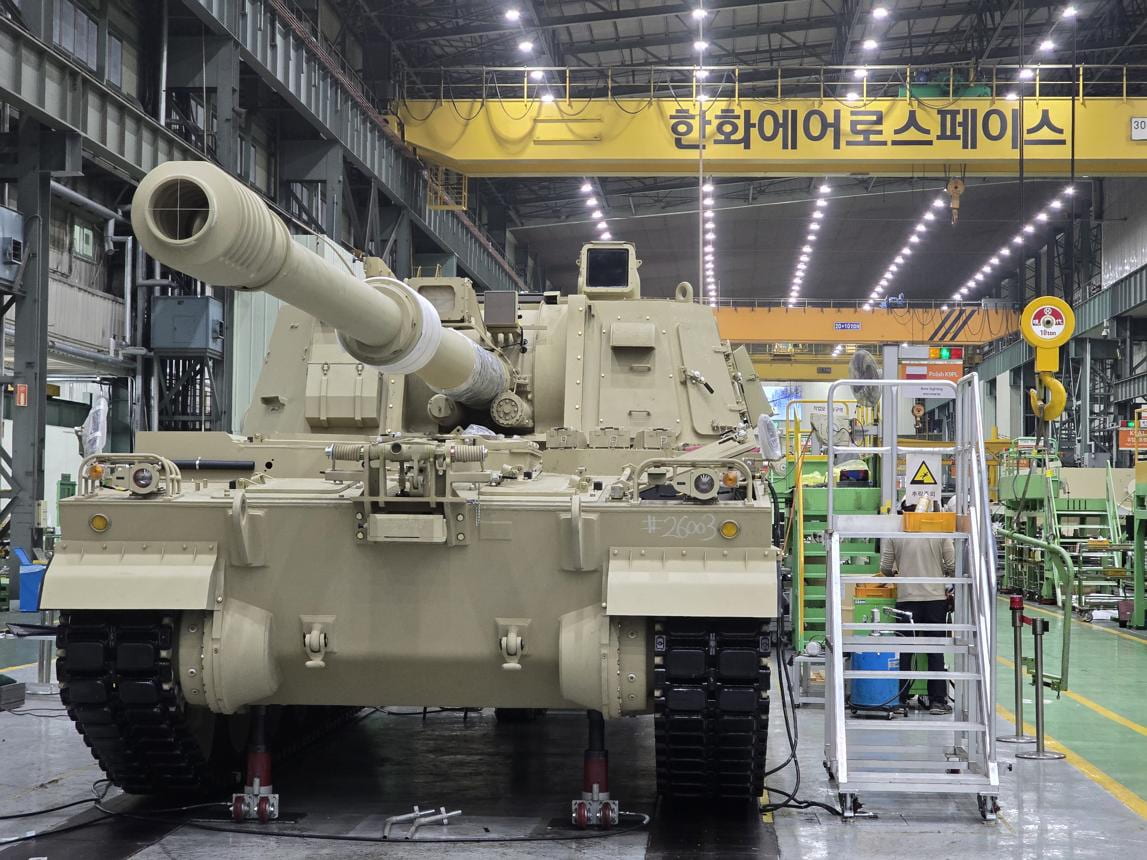
Changwon: The armoured vehicle and artillery lines clustered in this South Gyeongsang industrial city have supplied Poland, Romania and Norway over the past three years, and their executives now watch a European lending instrument they cannot yet borrow against. Security Action for Europe, the 150 billion euro loan facility the Council adopted in May 2025, funds joint procurement among member states. Korean firms sit outside it by default.

The rule that decides this is arithmetic. SAFE requires that at least 65 percent of a weapon system’s component cost originate in the European Union, the European Economic Area, EFTA states or Ukraine. The remaining 35 percent can come from elsewhere, which is why Korean subsystems already travel into European programmes as inputs rather than as headline contracts. What Korean primes want is different. They want their own platforms eligible.

The legal path exists. Countries holding a Security and Defence Partnership with the EU may gain access to common procurement, and Korea signed one in November 2024. But the partnership does not itself unlock the money. An additional agreement has to follow, negotiated separately, and neither side has published a text.

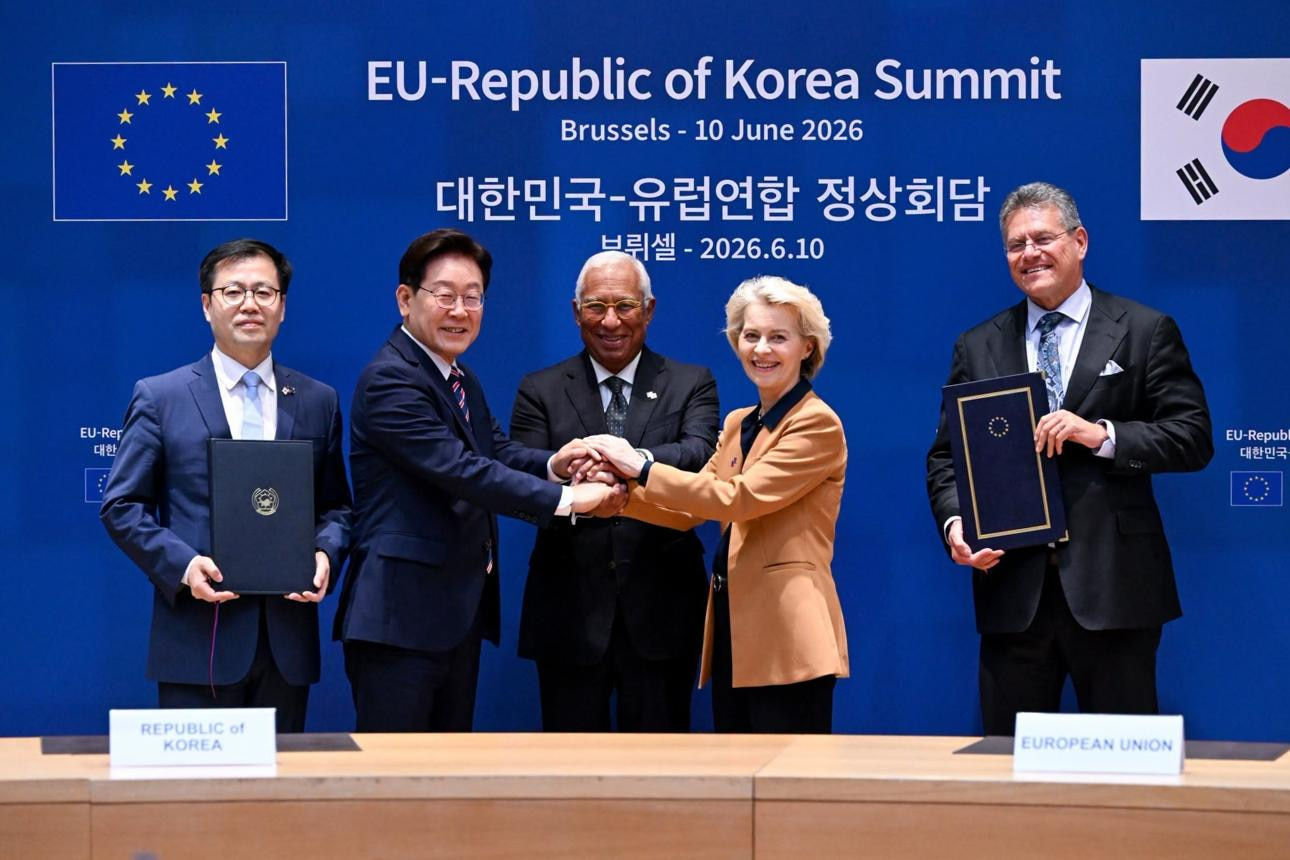
Diplomatic activity around the file has been steady rather than fast. The EU and Korea upgraded their Security and Defence Dialogue to Managing Director level, held sessions in Brussels in November 2025 and Seoul in May 2026, and covered maritime security, cyber, space, crisis management and non-proliferation. Leaders met for the eleventh EU-Korea Summit in Brussels on 10 June 2026. The External Action Service readout describes implementation, not conclusion.

Two arguments now compete inside the Union. French officials and much of the European defence industry treat SAFE as an industrial policy instrument whose entire point is to rebuild European production capacity. Letting Korean platforms in, on this reading, subsidises the competitor. Warsaw and several northern capitals answer that they need howitzers and tanks on a timeline European lines cannot meet, that Korean delivery schedules are the reason they signed in the first place, and that a loan they cannot spend on the equipment they actually need is not much of a loan.

Korea’s own position is more layered than the debate assumes. Hanwha and Hyundai Rotem have moved toward local assembly in Poland, which shifts value into the European base and edges systems closer to the content threshold. That commercial choice may resolve more than any negotiation. A platform built substantially in Europe by a Korean parent is a different legal object from an import.

The timing pressure is real. SAFE loan allocations run on defined windows, and member states that hesitate lose their place. Every month Brussels and Seoul spend drafting an access agreement is a month in which national procurement offices commit to whatever is already eligible.

Nobody expects a rupture. Both sides describe the relationship as strategic and mean it. But strategic language has not yet produced the one document that would let a Changwon production line bid directly into a European loan, and until it does, the partnership operates below the level where the money moves.