August 23, 2026
LATEST
Farmers Won a CAP Budget Floor and Lost the Second PillarAustralia Wants Into Horizon Europe Before the Money DoublesOcean Act Drafters Face a Deadline and Two Rival DirectivesFive Joint Defence Projects Start With 325 Million in Seed MoneyVehicle Circularity Rules Now Land on Suppliers, Not Just CarmakersArmenia Is Halfway Through a Visa Roadmap of 74 BenchmarksSyria Regained a Trade Agreement While Sanctions Remain in PlaceHeatwave Preparedness Now Needs a Law, Not Another PlanEurope’s Tobacco Tax Overhaul Now Doubles as an EU Budget FixCrypto Rules Reopened Two Years After They Took EffectETIAS Has Quietly Lost the Only Launch Date It Ever Committed ToSteel Quotas Fell 47 Percent and Buyers Are Still AdjustingWill the Space Act Survive Its Second Half of Negotiations in CouncilFishermen Want More Herring While Scientists Advise Zero CodDestroying Unsold Clothes Became Illegal and Little Has ChangedCivil Society Gets Double the Money and Loses Its ProgrammeNine Days Remain Before Restoration Plans Fall Due in BrusselsAutumn Vote Decides When the Pharma Package Starts Its ClockWhy Two Billion Euros Cannot Fix the Caspian Ferry BottleneckJoint Patrols Will Show Whether the India Defence Pact WorksFarmers Won a CAP Budget Floor and Lost the Second PillarAustralia Wants Into Horizon Europe Before the Money DoublesOcean Act Drafters Face a Deadline and Two Rival DirectivesFive Joint Defence Projects Start With 325 Million in Seed MoneyVehicle Circularity Rules Now Land on Suppliers, Not Just CarmakersArmenia Is Halfway Through a Visa Roadmap of 74 BenchmarksSyria Regained a Trade Agreement While Sanctions Remain in PlaceHeatwave Preparedness Now Needs a Law, Not Another PlanEurope’s Tobacco Tax Overhaul Now Doubles as an EU Budget FixCrypto Rules Reopened Two Years After They Took EffectETIAS Has Quietly Lost the Only Launch Date It Ever Committed ToSteel Quotas Fell 47 Percent and Buyers Are Still AdjustingWill the Space Act Survive Its Second Half of Negotiations in CouncilFishermen Want More Herring While Scientists Advise Zero CodDestroying Unsold Clothes Became Illegal and Little Has ChangedCivil Society Gets Double the Money and Loses Its ProgrammeNine Days Remain Before Restoration Plans Fall Due in BrusselsAutumn Vote Decides When the Pharma Package Starts Its ClockWhy Two Billion Euros Cannot Fix the Caspian Ferry BottleneckJoint Patrols Will Show Whether the India Defence Pact Works
August 23, 2026
LATEST
Farmers Won a CAP Budget Floor and Lost the Second PillarAustralia Wants Into Horizon Europe Before the Money DoublesOcean Act Drafters Face a Deadline and Two Rival DirectivesFive Joint Defence Projects Start With 325 Million in Seed MoneyVehicle Circularity Rules Now Land on Suppliers, Not Just CarmakersArmenia Is Halfway Through a Visa Roadmap of 74 BenchmarksSyria Regained a Trade Agreement While Sanctions Remain in PlaceHeatwave Preparedness Now Needs a Law, Not Another PlanEurope’s Tobacco Tax Overhaul Now Doubles as an EU Budget FixCrypto Rules Reopened Two Years After They Took EffectETIAS Has Quietly Lost the Only Launch Date It Ever Committed ToSteel Quotas Fell 47 Percent and Buyers Are Still AdjustingWill the Space Act Survive Its Second Half of Negotiations in CouncilFishermen Want More Herring While Scientists Advise Zero CodDestroying Unsold Clothes Became Illegal and Little Has ChangedCivil Society Gets Double the Money and Loses Its ProgrammeNine Days Remain Before Restoration Plans Fall Due in BrusselsAutumn Vote Decides When the Pharma Package Starts Its ClockWhy Two Billion Euros Cannot Fix the Caspian Ferry BottleneckJoint Patrols Will Show Whether the India Defence Pact WorksFarmers Won a CAP Budget Floor and Lost the Second PillarAustralia Wants Into Horizon Europe Before the Money DoublesOcean Act Drafters Face a Deadline and Two Rival DirectivesFive Joint Defence Projects Start With 325 Million in Seed MoneyVehicle Circularity Rules Now Land on Suppliers, Not Just CarmakersArmenia Is Halfway Through a Visa Roadmap of 74 BenchmarksSyria Regained a Trade Agreement While Sanctions Remain in PlaceHeatwave Preparedness Now Needs a Law, Not Another PlanEurope’s Tobacco Tax Overhaul Now Doubles as an EU Budget FixCrypto Rules Reopened Two Years After They Took EffectETIAS Has Quietly Lost the Only Launch Date It Ever Committed ToSteel Quotas Fell 47 Percent and Buyers Are Still AdjustingWill the Space Act Survive Its Second Half of Negotiations in CouncilFishermen Want More Herring While Scientists Advise Zero CodDestroying Unsold Clothes Became Illegal and Little Has ChangedCivil Society Gets Double the Money and Loses Its ProgrammeNine Days Remain Before Restoration Plans Fall Due in BrusselsAutumn Vote Decides When the Pharma Package Starts Its ClockWhy Two Billion Euros Cannot Fix the Caspian Ferry BottleneckJoint Patrols Will Show Whether the India Defence Pact Works

Will the Space Act Survive Its Second Half of Negotiations in Council

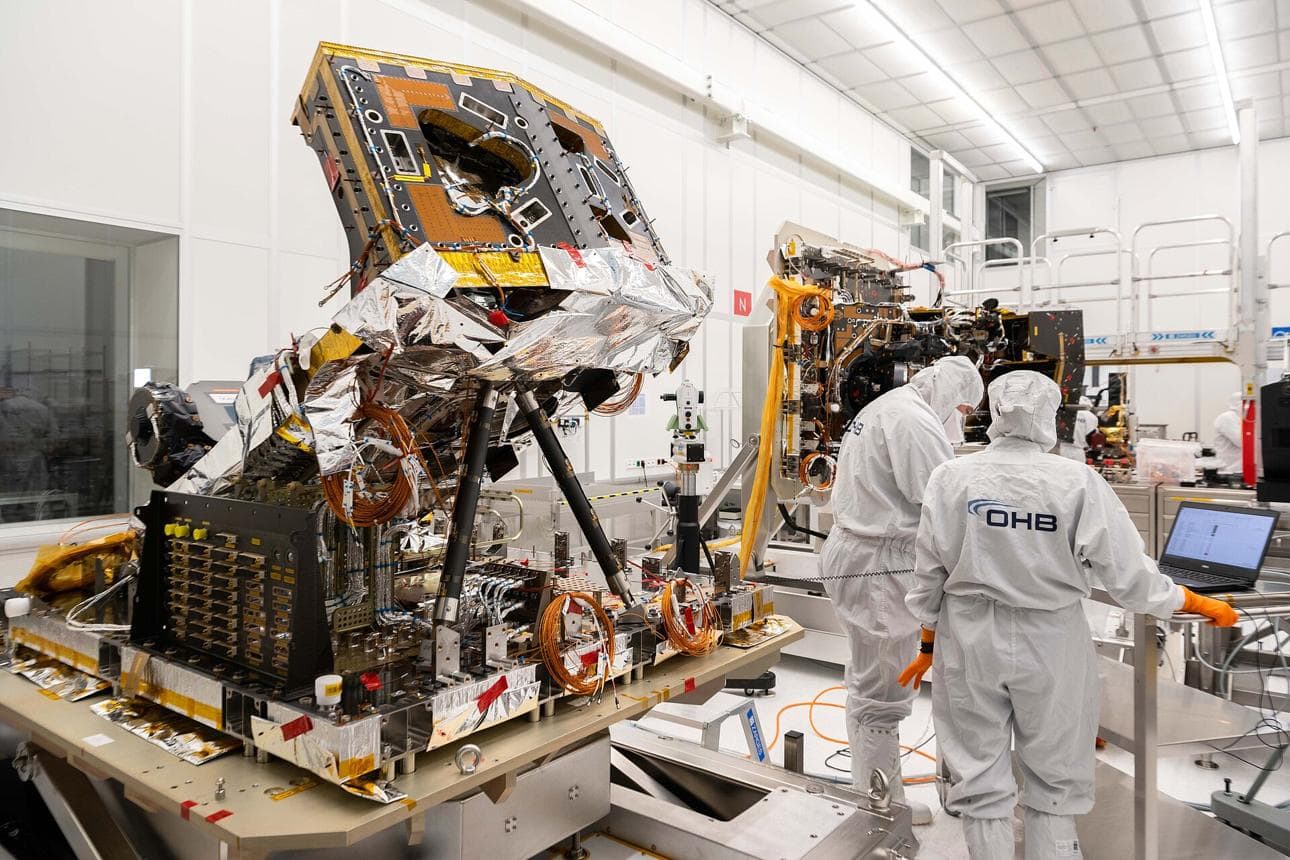
Bremen: Satellite manufacturers in northern Germany are building hardware for a market whose rulebook does not exist yet, because the Space Act that would govern it enters its decisive negotiating phase only now, in the second half of 2026.

The European Commission published the proposal on 25 June 2025, seeking a single authorisation, registration and supervision regime for space activities across the bloc. Today an operator faces a patchwork of national space laws, and several member states have none at all. The Commission’s case, set out on its Space Act information page, is that fragmentation raises costs for European firms and leaves debris, cybersecurity and environmental obligations unevenly enforced.

Progress since then has been steady rather than quick. The Council tabled a first set of amendments in December 2025. The Parliament rapporteur circulated a draft report on 3 March 2026, and a Presidency compromise text followed the same month. On 8 May 2026 the Council issued a progress report on the state of play ahead of the Competitiveness Council later that month.

That report is the useful document, because it names the disagreements rather than smoothing them over. Three keep recurring. Cybersecurity is the first, specifically how the Space Act’s requirements sit alongside the NIS 2 Directive without forcing operators to comply twice with overlapping obligations. Several delegations want a clean carve-out. Others want the space rules to go further than NIS 2 on ground segment security.

Market access is the second. The proposal reaches third-country operators who provide services into the EU, and the drafting on how far that reach extends has changed repeatedly. Non-European launch providers and constellation operators read the current text as a conditional market entry regime, and their governments have said so. Getting the equivalence mechanism right decides whether the Space Act reads as a safety rulebook or as an industrial policy instrument.

Scope is the third. Smaller operators and university missions argue that debris mitigation and collision avoidance duties written for large constellations become disproportionate when applied to a handful of cubesats. Successive compromise texts have added thresholds and simplifications, and each round of simplification narrows what the regulation actually catches.

Timing sharpens all of it. European launch capacity has tightened, national space laws in France, Austria and Denmark already impose their own authorisation duties, and operators planning missions for the end of the decade must design against rules that could still shift substantially. Companies generally prefer a demanding rule they can read to a lenient one they cannot.

The counterargument deserves an airing. A single regime removes the ability of individual member states to run lighter national regimes as a competitive lure, which is exactly what some smaller capitals have used to attract operators. Harmonisation here means someone loses an advantage, and those governments will not concede it without something in return.

Parliament and Council now begin substantive deliberations, which in practice moves the file from working groups into political negotiation. The proposal itself remains available in full on EUR-Lex. Whether the Space Act reaches a trilogue conclusion before the end of 2026 depends almost entirely on whether negotiators settle the cybersecurity and third-country questions together rather than in sequence.