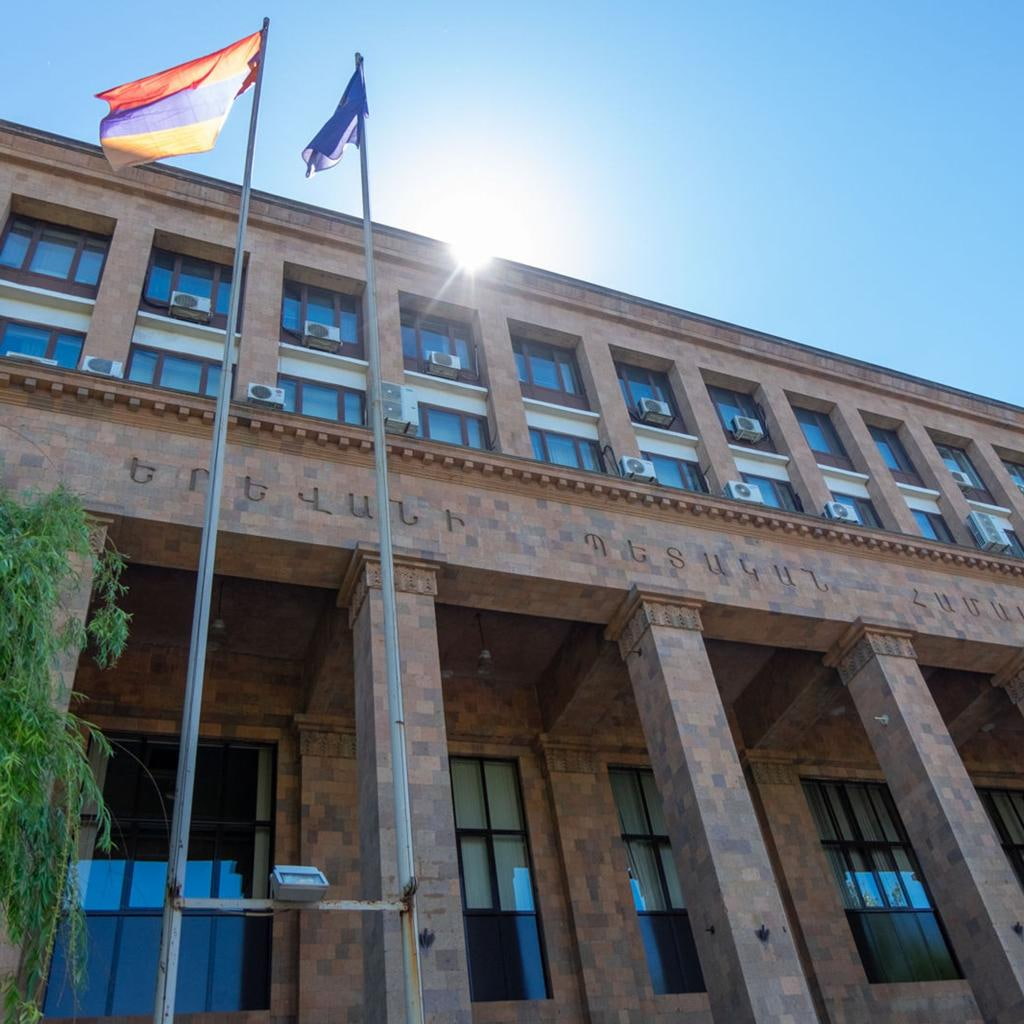
Yerevan: The interior ministry officials who gathered here on 12 August did not announce anything. They met as a task force, worked through a list, and went home. That list is the reason the Armenia visa file now moves faster than almost anything else in the Eastern Neighbourhood, and it explains why a country with no membership prospect has become the most closely monitored reform partner the European Union currently runs.
The European Union opened its visa liberalisation dialogue with Armenia in September 2024. It remains the only such dialogue Brussels is running with any country today. The Commission handed Yerevan the action plan in November 2025 after two scoping missions the previous spring, and the document sets 74 benchmarks across four areas: document security including biometrics, integrated border and migration and asylum management, public order and security, and fundamental rights connected to freedom of movement.
Those benchmarks arrive in two phases. The first asks Armenia to build the legislative and policy architecture. The second asks it to prove the architecture works in practice. The Commission published its first progress report on 30 April 2026 and handed it to the Armenian government on 5 May. It concluded that Armenia has made good progress on the first-phase benchmarks, and it placed document security and migration management at an advanced stage of fulfilment.
Read carefully, that assessment is narrower than the headlines suggested in Yerevan. Passing a law on biometric passports and passing an inspection of how those passports get issued are different exercises, and the second one takes longer. Georgia and the Western Balkans both learned that the legislative phase moves quickly because governments control it outright, while the implementation phase depends on registry offices, border posts, prosecutors and courts that no minister can reform by decree.
Brussels has put money behind the technical half of the problem. A two-year assistance project worth 2.2 million euros started on 1 June 2026, targeting border management, document security and law enforcement reform. That is a modest sum against the scale of the task, and it signals what the Commission believes the binding constraint to be: not political will, which Armenian ministers have supplied in abundance, but administrative capacity inside institutions that have never faced an audit against Schengen standards.
The wider relationship has thickened around the visa track. The two sides agreed on 2 July 2026 to deepen cooperation on resilience, trade and connectivity, and Armenia has spent two years diversifying away from a security architecture it no longer trusts. A new partnership agenda gives that diversification a written form. Visa liberalisation gives it something citizens can feel, which is precisely why the Armenian government wants it and precisely why the Commission will not rush it.
The awkward question sits in the fourth benchmark area. Visa-free travel hands the European Union very little leverage once granted, and revoking it costs any government that tries. The suspension mechanism exists, member states strengthened it, and nobody enjoys using it. So the Commission front-loads its scrutiny, and the fundamental rights and public order chapters close slowest because they touch judicial independence, asylum practice and the handling of irregular migration through a country that borders Iran and Turkey.
Armenia also carries a caseload that no benchmark list captures cleanly. More than a hundred thousand people displaced from Nagorno-Karabakh in 2023 remain in the country, and how the state documents, houses and eventually naturalises them shapes both its migration management score and its fundamental rights score. The Council keeps that file separate from the visa dialogue in its published policy summary on Armenia, but assessment missions cannot avoid it on the ground.
Expect further expert missions before the second progress report. Expect the legislative column to keep filling in while the implementation column stalls for a year or more. Armenian officials who talk about visa-free travel by 2028 are describing an optimistic reading of a process that has never taken fewer than four years anywhere it has succeeded. The August task force meeting made no news at all. That is exactly what makes it the right indicator to watch.