
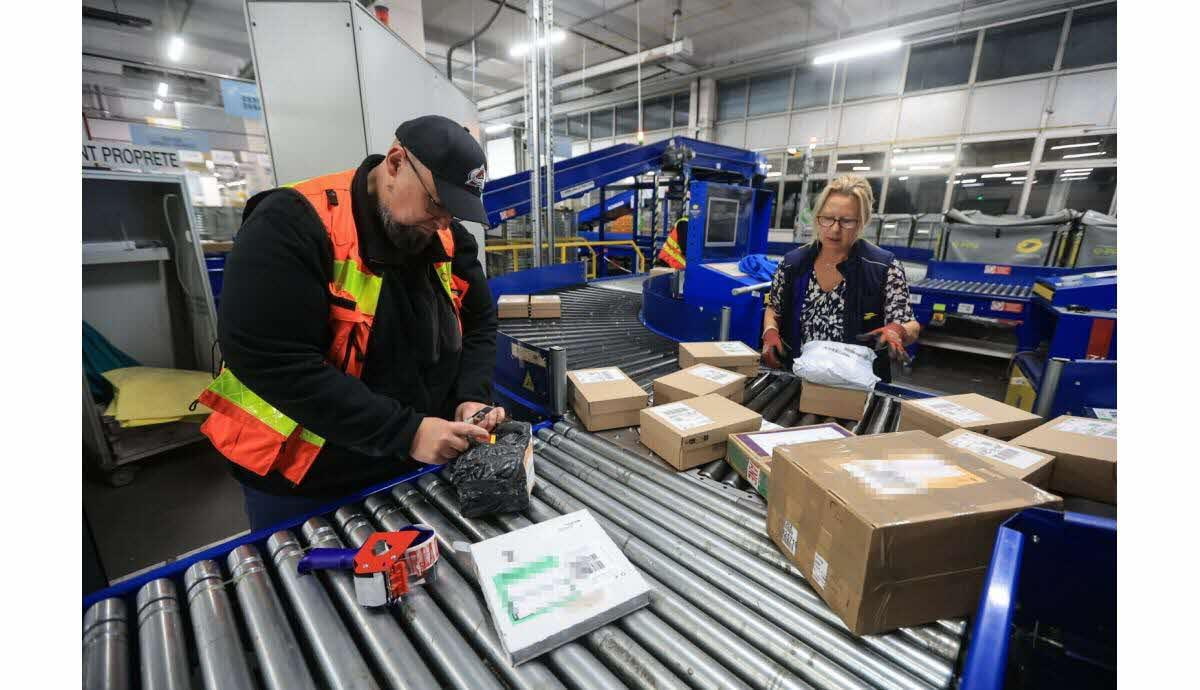
Small parcels stopped being free at the border on 1 July. The question now is what the charge actually pays for.
Under Council Regulation (EU) 2026/382, the Union scrapped the exemption that let consignments worth 150 euro or less enter without customs duty, and replaced it with a flat charge of three euro per item. The measure is explicitly transitional. It runs until 1 July 2028, when the Customs Data Hub for e-commerce is expected to come online and normal duties based on each product’s tariff classification take over. The Commission published guidance and the legal text in June, and set out the underlying decision to scrap the threshold in an earlier notice.
A flat three euro is a blunt instrument by design. Classifying every phone case, hair clip and cable individually would swamp national administrations handling billions of low-value consignments a year, so the Union picked a number and moved on. Blunt instruments distribute costs unevenly, though. Three euro on a forty euro garment barely registers. Three euro on a four euro accessory doubles the price and quietly kills a business model built on selling cheap things one at a time.
The duty is only half the picture. The Commission has also proposed an EU-wide handling fee on e-commerce goods, intended to recover what customs processing genuinely costs rather than to protect European producers. The amount and start date land in the autumn. The Council’s mandate from June 2025 pointed to collection from November 2026, so a decision is due within weeks rather than months.
Capitals have not waited patiently. Italy legislated a two euro national handling fee in its 2026 budget. Belgium debated a two euro charge of its own and then decided to lean on the EU-level three euro duty instead. That divergence is the interesting part. A single customs union with different national surcharges invites traders to route parcels through whichever member state charges least, which is precisely the arbitrage the union exists to prevent. Whoever declares first sets the floor, and the Commission’s autumn proposal will either absorb these national schemes or compete with them.
Consumers will notice, and the political framing matters. Officials describe the charge as cost recovery. Shoppers will read it as a tax on cheap goods, and the price of a small order is the most visible number in the whole customs union. Retailers based in Europe, who have argued for years that they compete against imports facing neither duty nor equivalent product compliance checks, will say the correction arrived late.
The deeper constraint is staffing and systems rather than policy. A flat fee only functions if administrations can identify which consignments qualify, and the 2028 handover assumes the data hub works and that customs services have the people to run it. Neither assumption is safe. If the hub slips, the transitional three euro becomes semi-permanent, and a measure sold as a bridge turns into the regime.
Watch the autumn proposal for the handling fee figure, and watch whether it pre-empts national charges or merely stacks on top of them. That answer will tell European shoppers what they pay, and tell traders where their parcels should enter.


