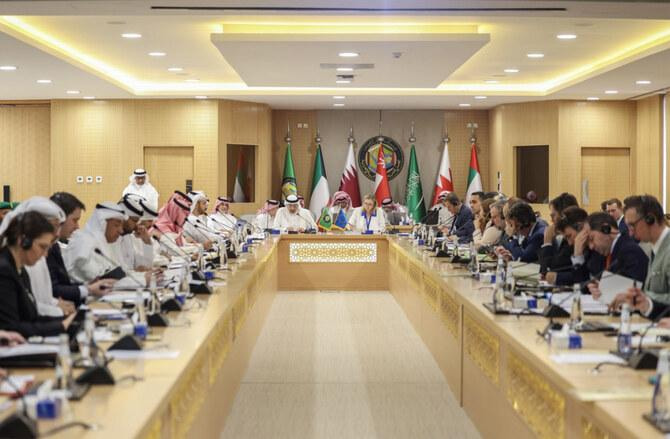
Riyadh: Saudi Arabia will host the second gathering of European and Gulf leaders this autumn, and the GCC summit arrives with a question its organisers have not answered. What exactly did the first one produce?
Leaders met in Brussels in October 2024 under the banner of a strategic partnership and agreed to reconvene every two years. Foreign ministers held their twenty-ninth Joint Council in October 2025 and issued a joint statement running to several dense pages. In July the Gulf bloc’s secretary general and the European High Representative spoke by telephone about preparations.
None of that amounts to an instrument. Two years on, the relationship still rests on dialogue formats, a special representative post created in 2022, and a free trade negotiation that both sides suspended in 2008 and neither has restarted.
The gap matters more than the diplomatic choreography suggests. Gulf sovereign funds now rank among the largest single sources of inbound investment into European infrastructure, logistics and sport, while European firms hold the engineering contracts underpinning Saudi and Emirati industrial diversification. Money moves in both directions at scale. The legal architecture governing it does not exist.
Europe’s own screening rules complicate matters further. Member states have tightened foreign investment review since 2020, and Gulf state-backed capital increasingly triggers the same scrutiny that Chinese capital does. Gulf officials notice the parallel and resent it, given that their governments buy European defence equipment and host European troops.
Energy supplies the obvious summit deliverable. Qatar signed long-term liquefied gas contracts with German and Italian buyers after 2022, and the Emirates has courted European offtakers for green hydrogen and ammonia. Yet Gulf producers have watched European climate legislation with growing irritation, particularly the corporate sustainability rules that Qatari officials publicly warned could jeopardise gas supply. Whether the Riyadh text acknowledges that friction will reveal how candid the two sides intend to be.
Regional security offers the harder test. Europe wants Gulf money for reconstruction in Gaza and Syria, and Gulf capitals want European political weight behind arrangements they have largely negotiated with Washington. Neither side quite trusts the other to deliver. European governments split visibly over the Middle East throughout 2024 and 2025, and Gulf leaders read those divisions accurately.
Connectivity gives the summit its most plausible concrete output. The corridor concept linking India through the Gulf to European ports survived the wars that interrupted it, and the European investment package could fund the Mediterranean end of it. A named project with a budget line would count for more than another partnership declaration.
Visas represent the low-hanging alternative. The bloc extended multi-entry Schengen arrangements for Gulf nationals in 2024, and further liberalisation costs Brussels little while playing well across the Gulf press. Summits reach for such measures when the substantive files refuse to close.
Judge the outcome by instruments, not language. A restarted trade negotiation, an aviation agreement, a signed hydrogen framework or a funded corridor project would each mark real movement. A communique praising shared values and announcing the thirtieth Joint Council would confirm that the partnership remains a schedule rather than a policy.
Gulf governments have grown adept at extracting commitments from partners who need them. Europe needs energy, capital and diplomatic cover in a region where its influence has thinned considerably. Riyadh understands that arithmetic. The partnership framework will only acquire substance when European negotiators arrive prepared to trade something they would rather keep.