August 29, 2026
LATEST
Data Rules Agreed With Seoul Now Wait on Parliament’s ConsentChina Listed Fourteen European Firms and November Ends the TruceWhy Australia’s Finished Trade Deal Still Has No Signature DateLate Application Leaves Tokyo Outside the Defence Loan QueueCyber Resilience Rules Give Makers 24 Hours From SeptemberWinter Stocks Test Europe’s New Gas Storage Flexibility RulesInnovation Theory Meets Merger Control in a New Commission StudyMercosur Tariffs Fell in May and the Court Has Not Ruled YetBilaterals III Now Turns on Which Referendum Switzerland PicksDark Patterns Face the EU Digital Fairness ActFifteen Chapters Stand Between Montenegro and 2028Who Blinks First in the FP10 Research Budget FightCustoms Reform Landed in March and Its Data Hub Opens in 2028Victims Rights Gain an EU Helpline and Capitals Have Two YearsIreland Must Move the EU Budget Box Before the October SummitFertiliser Prices Sit 71 Percent Above Their 2024 Average LevelState Aid Exemptions Face a Rewrite With Four Months to SpareIrregular Crossings Fell 37 Percent and Spain Is the ExceptionSpring Growth Went to Ireland and Skipped Belgium EntirelyEurope’s Drought Pushed Four Great Rivers to Record LowsData Rules Agreed With Seoul Now Wait on Parliament’s ConsentChina Listed Fourteen European Firms and November Ends the TruceWhy Australia’s Finished Trade Deal Still Has No Signature DateLate Application Leaves Tokyo Outside the Defence Loan QueueCyber Resilience Rules Give Makers 24 Hours From SeptemberWinter Stocks Test Europe’s New Gas Storage Flexibility RulesInnovation Theory Meets Merger Control in a New Commission StudyMercosur Tariffs Fell in May and the Court Has Not Ruled YetBilaterals III Now Turns on Which Referendum Switzerland PicksDark Patterns Face the EU Digital Fairness ActFifteen Chapters Stand Between Montenegro and 2028Who Blinks First in the FP10 Research Budget FightCustoms Reform Landed in March and Its Data Hub Opens in 2028Victims Rights Gain an EU Helpline and Capitals Have Two YearsIreland Must Move the EU Budget Box Before the October SummitFertiliser Prices Sit 71 Percent Above Their 2024 Average LevelState Aid Exemptions Face a Rewrite With Four Months to SpareIrregular Crossings Fell 37 Percent and Spain Is the ExceptionSpring Growth Went to Ireland and Skipped Belgium EntirelyEurope’s Drought Pushed Four Great Rivers to Record Lows
August 29, 2026
LATEST
Data Rules Agreed With Seoul Now Wait on Parliament’s ConsentChina Listed Fourteen European Firms and November Ends the TruceWhy Australia’s Finished Trade Deal Still Has No Signature DateLate Application Leaves Tokyo Outside the Defence Loan QueueCyber Resilience Rules Give Makers 24 Hours From SeptemberWinter Stocks Test Europe’s New Gas Storage Flexibility RulesInnovation Theory Meets Merger Control in a New Commission StudyMercosur Tariffs Fell in May and the Court Has Not Ruled YetBilaterals III Now Turns on Which Referendum Switzerland PicksDark Patterns Face the EU Digital Fairness ActFifteen Chapters Stand Between Montenegro and 2028Who Blinks First in the FP10 Research Budget FightCustoms Reform Landed in March and Its Data Hub Opens in 2028Victims Rights Gain an EU Helpline and Capitals Have Two YearsIreland Must Move the EU Budget Box Before the October SummitFertiliser Prices Sit 71 Percent Above Their 2024 Average LevelState Aid Exemptions Face a Rewrite With Four Months to SpareIrregular Crossings Fell 37 Percent and Spain Is the ExceptionSpring Growth Went to Ireland and Skipped Belgium EntirelyEurope’s Drought Pushed Four Great Rivers to Record LowsData Rules Agreed With Seoul Now Wait on Parliament’s ConsentChina Listed Fourteen European Firms and November Ends the TruceWhy Australia’s Finished Trade Deal Still Has No Signature DateLate Application Leaves Tokyo Outside the Defence Loan QueueCyber Resilience Rules Give Makers 24 Hours From SeptemberWinter Stocks Test Europe’s New Gas Storage Flexibility RulesInnovation Theory Meets Merger Control in a New Commission StudyMercosur Tariffs Fell in May and the Court Has Not Ruled YetBilaterals III Now Turns on Which Referendum Switzerland PicksDark Patterns Face the EU Digital Fairness ActFifteen Chapters Stand Between Montenegro and 2028Who Blinks First in the FP10 Research Budget FightCustoms Reform Landed in March and Its Data Hub Opens in 2028Victims Rights Gain an EU Helpline and Capitals Have Two YearsIreland Must Move the EU Budget Box Before the October SummitFertiliser Prices Sit 71 Percent Above Their 2024 Average LevelState Aid Exemptions Face a Rewrite With Four Months to SpareIrregular Crossings Fell 37 Percent and Spain Is the ExceptionSpring Growth Went to Ireland and Skipped Belgium EntirelyEurope’s Drought Pushed Four Great Rivers to Record Lows

China’s Rare Earth Pause Runs Out in November and Europe Knows It

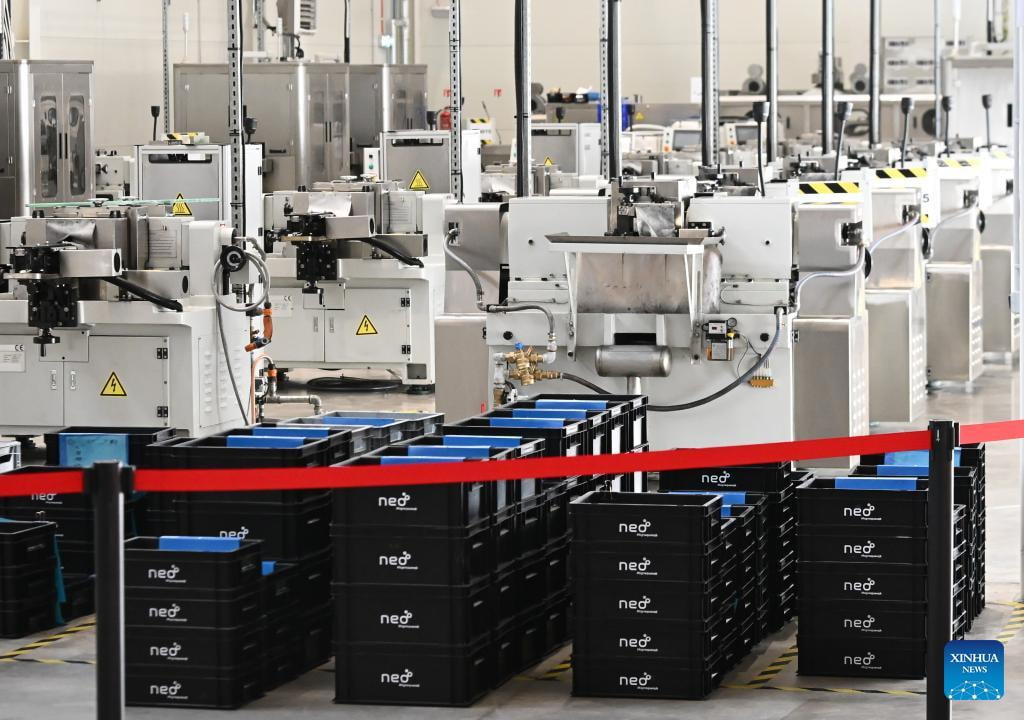
Narva: The magnet plant that Neo Performance Materials built on Estonia’s eastern border is the closest thing Europe has to an answer on rare earths, and it still cannot cover a fraction of what the continent consumes. The site sinters neodymium-iron-boron magnets for electric drivetrains and wind turbines. Its raw feedstock, though, traces back through refiners and separation plants that sit almost entirely in one country.

That dependency now carries a date. Beijing introduced two waves of export controls on rare-earth elements during 2025, in April and again in October, each justified on national-security grounds and each timed against American tariff decisions. On 7 November 2025 the Chinese government suspended the second wave for twelve months. The suspension lapses on 10 November 2026, which gives European buyers roughly ten weeks of visibility before the question reopens.

European industry has spent the interval measuring how deep the exposure runs. Analysts at the European Central Bank found that more than 80 percent of large European firms sit no more than three intermediaries away from a Chinese rare-earth producer. A carmaker in Bavaria may buy from a German tier-one supplier, which buys from a magnet maker, which buys separated oxide from Ganzhou. The chain looks European until the third link.

The European Parliament’s research service reached a blunt conclusion in its assessment of the controls, noting that the affected elements underpin the digital, green and defence industries simultaneously. Read the analysis at the Parliament think tank. Defence procurement offices felt the squeeze first, because guidance packages and actuators tolerate no substitution.

Brussels has responded with two instruments that pull in opposite directions. The Critical Raw Materials Act, agreed in 2023, sets benchmarks for 2030 covering domestic extraction, processing and recycling, and caps reliance on any single third country at 65 percent of demand for each strategic material. The Commission then added RESourceEU, a plan to accelerate those targets, and proposed restricting exports of rare-earth-bearing waste and battery scrap so that recyclable material stays inside the bloc.

The second measure deserves scrutiny. Europe currently ships scrap out because it lacks the separation capacity to process it. Restricting the export does not create that capacity. It creates a stock of material sitting in yards waiting for plants that permitting authorities have not yet approved. Industry associations have made this point repeatedly, and the Commission has not answered it convincingly.

Supporters of the restriction argue that a guaranteed feedstock is exactly what investors need before committing to a separation facility, and that the sequencing objection mistakes a signal for a solution. That argument has force. It also assumes permitting timelines shorten, which no member state has yet demonstrated.

What happens after 10 November matters less than what Europe does before it. If Beijing extends the suspension, the pressure eases and the investment case weakens, which is the pattern that produced the current dependency. If the controls return, magnet buyers face licensing queues during a quarter when defence contracts already run tight. Either way the structural position stays the same. The Commission’s own raw materials brief sets 2030 as the horizon for meaningful change, and 2030 is four winters away.