Wicklow: Defence ministers from the twenty-seven member states gather in Ireland on 31 August and 1 September for two days of informal talks, and one file on the table carries a deadline barely four months away. The European Drone Defence Initiative, the counter-drone programme the Union assembled after a year of airspace incursions, is supposed to reach an initial operational capability before 2026 ends.
That date comes from the Readiness Roadmap 2030, the planning document the Commission and the High Representative issued in October 2025. The roadmap did something European defence papers rarely do. It named a short list of flagship capability projects and attached calendar dates to each one. Two of them concern the eastern border directly. The drone initiative should work in outline by the close of this year and reach full function by the end of 2027. Eastern Flank Watch, the broader land, air and maritime surveillance layer, starts implementation during 2026 and reaches full function by the end of 2028.
Ireland holds the Council presidency for the second half of 2026, which places a militarily neutral state in the chair while ministers review a programme built around Russian and Belarusian threat scenarios. That contrast shapes the politics of the meeting more than the engineering.
What the drone wall actually contains
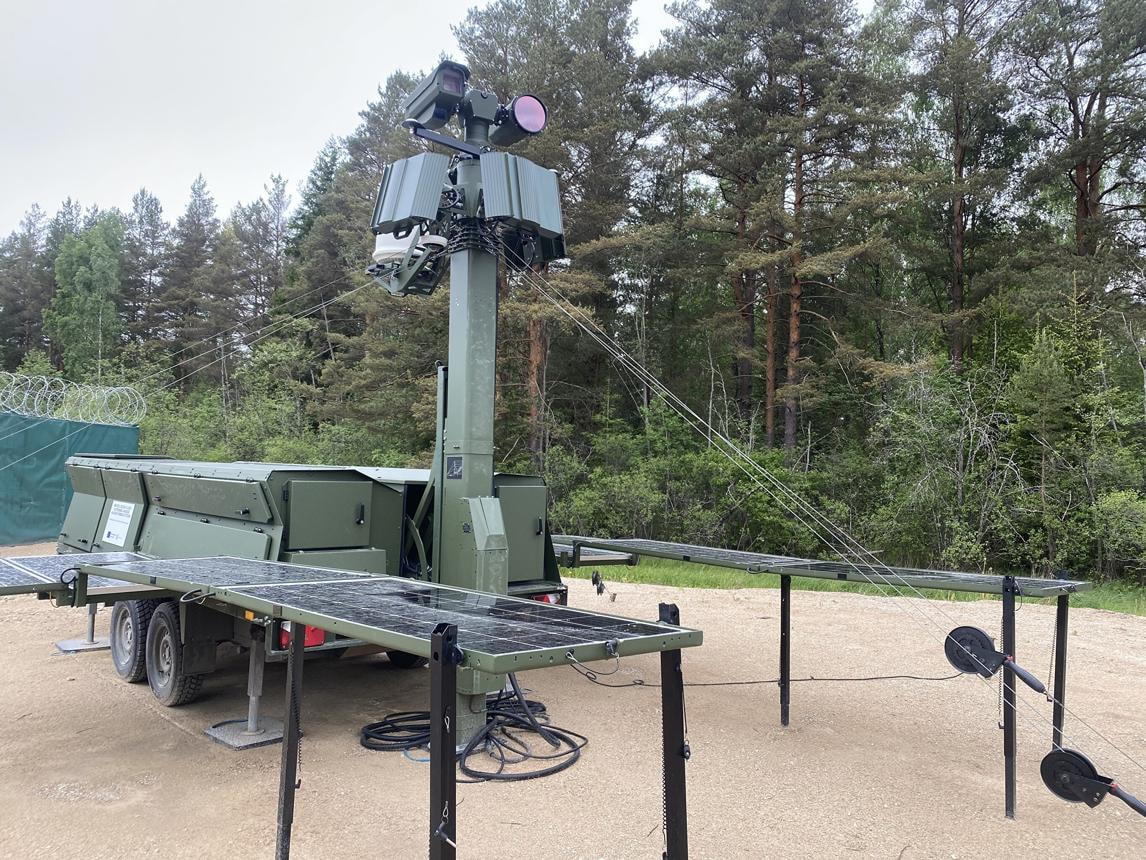
The shorthand misleads. Nothing in the initiative resembles a wall. The design layers four separate functions along the eastern approaches. Sensors detect small airborne objects that conventional air defence radar was never built to see. Command systems fuse those tracks across borders. Electronic warfare equipment jams control links. Interceptors, increasingly drones themselves, destroy what jamming cannot turn away. Each layer sits with a different owner, and the integration between them defines whether the whole thing works.
National projects preceded the European one. Estonia, Latvia, Lithuania, Poland and Finland announced a joint Baltic drone wall in January 2025, aiming to link radars, sensors and interceptor drones into a single managed network by the end of 2026. The Commission followed in February 2026 with an action plan on drone and counter-drone security, which addressed civil airports and critical sites alongside military airspace. The European layer therefore inherits national systems already under construction rather than starting from an empty map.
Money arrives through several channels at once. The SAFE instrument opened 150 billion euro in loans to member states for joint procurement. The European Defence Fund continues to finance development work. National budgets carry the rest. No single figure exists for what counter-drone capability costs across the eastern flank, and no institution publishes one.
The gap between a roadmap and a radar
An initial operational capability is a modest claim. It means some part of the system detects and responds under real conditions, not that the border is covered. Analysts tracking the file expect the first version to concentrate on a handful of high-value sites rather than a continuous line, because sensor procurement, tower construction and software integration each run on lead times measured in quarters.
Two evidence gaps deserve attention. First, no public baseline states how many sensors currently watch the eastern border, which makes progress impossible to measure from outside. The European Parliament research service set out the architecture in late 2025 without publishing quantities, and nothing since has filled that hole. Second, the relationship with NATO remains described rather than specified. Eastern Flank Watch overlaps geographically with the alliance operation covering the same airspace, and ministers have not published how tracks pass between the two command chains.
Those gaps carry a cost beyond transparency. Counter-drone systems fail in characteristic ways. They lose small targets against ground clutter, they saturate when many objects arrive at once, and they struggle to distinguish a hostile airframe from a civil one in seconds. Testing reveals those weaknesses. Roadmaps do not.
Ministers in Wicklow will not resolve any of this over two days of informal discussion. The value of the meeting lies elsewhere. It sets expectations for the autumn, when the Commission reports against the roadmap dates and the 2027 budget cycle begins. If the December capability milestone slips, the pressure will surface then. The roadmap itself supplies the standard against which the delay gets judged, which is the strongest argument for having written the dates down.