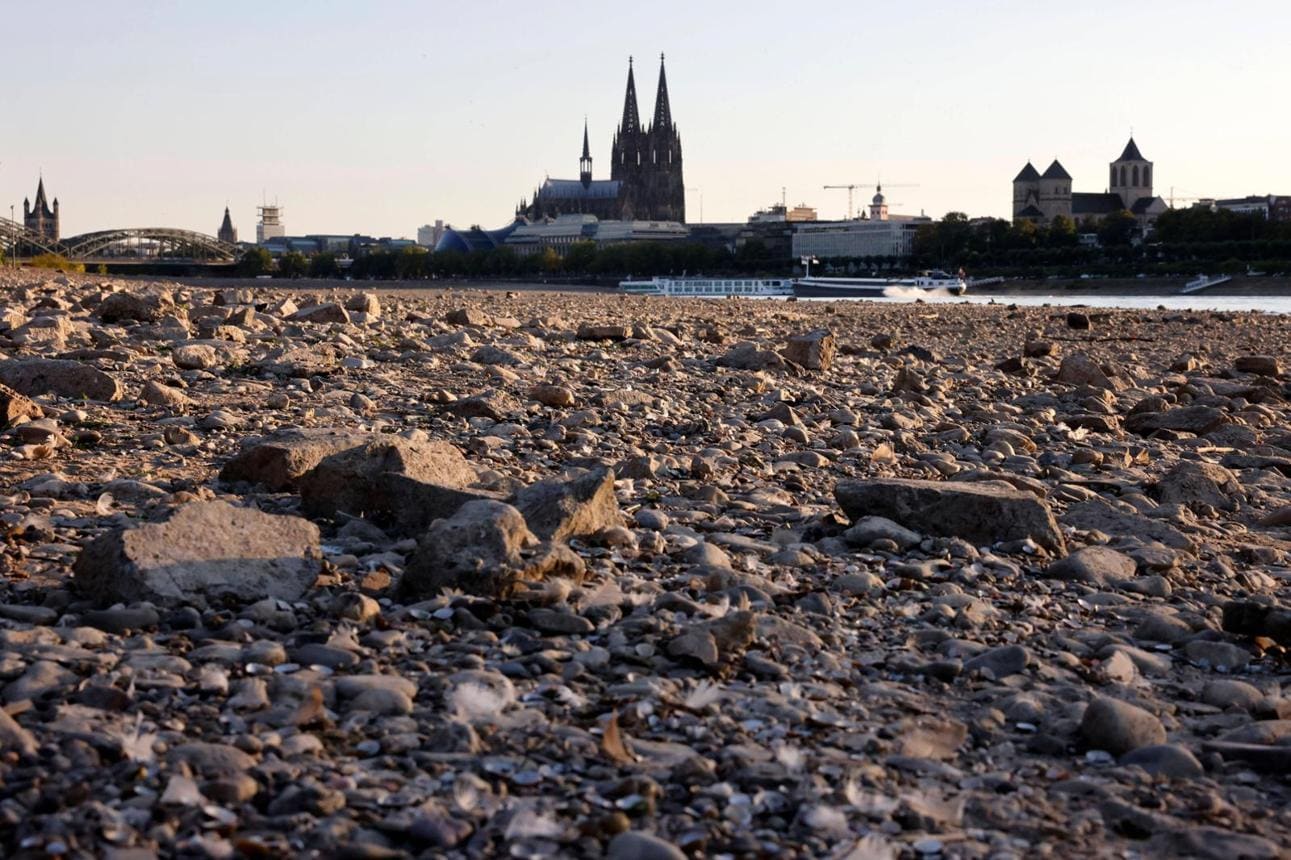
Rivers make poor politicians but excellent witnesses. The Loire, the Po, the Rhine and the Danube all fell to record low levels this month, and the Commission’s own scientists put the finding in writing. The Joint Research Centre reported in mid-August that drought across the continent deteriorated sharply through July and into August, with alert conditions holding across France, southern Germany, northern Italy, parts of the Iberian Peninsula and stretches of Poland.
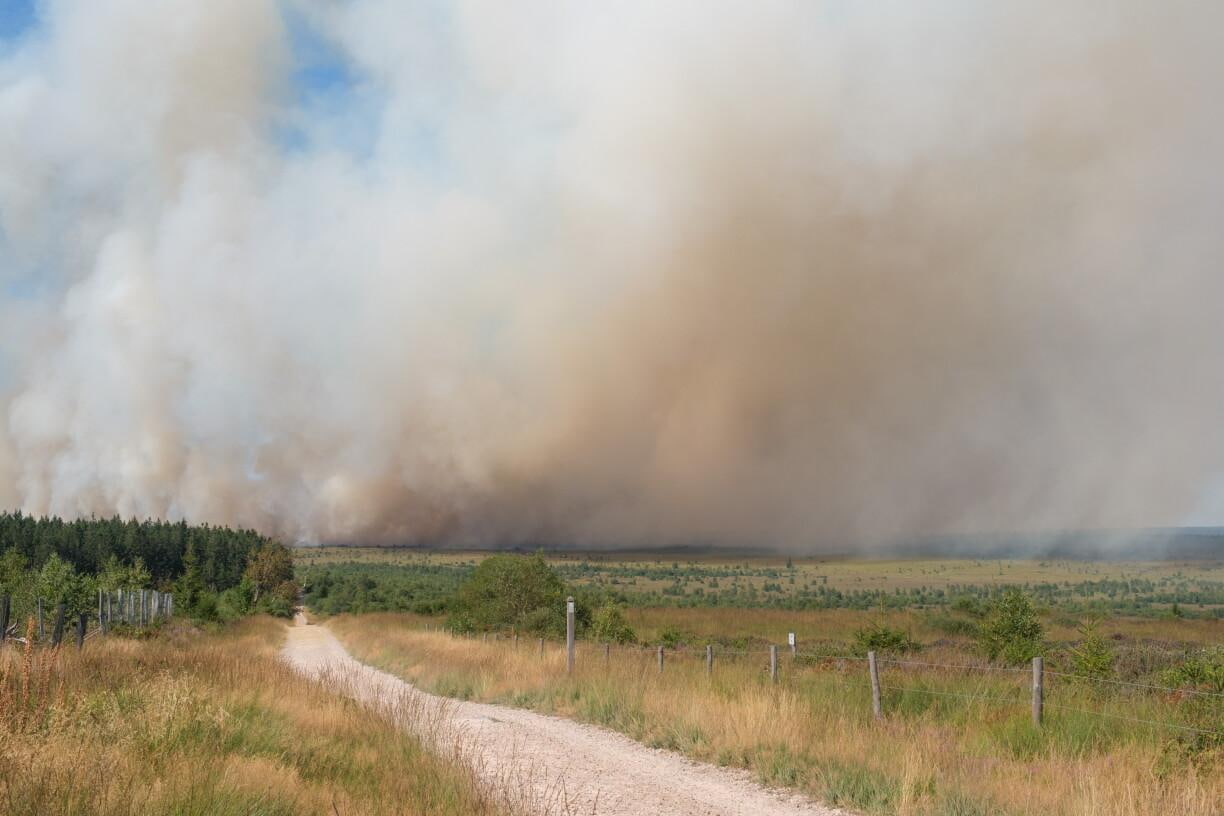
The mechanism is unglamorous and cumulative. Rainfall ran below average from early spring, temperatures ran above it, and soils entered the summer already depleted. Each heatwave then pulled more moisture out of ground that had none to spare. By the end of July the burned area across Europe had reached roughly two and a half times the seasonal norm, because dry vegetation does not need much to catch.
Low water on those four rivers translates into economic damage that arrives quietly. Barge operators on the Rhine load lighter to clear the shallows, which raises the cost per tonne of every chemical feedstock and coal shipment moving between Rotterdam and Basel. Italian farmers along the Po draw irrigation from a river running below the level their permits assume. French nuclear operators face cooling-water constraints when flow rates drop, and reduced output on hot days pushes wholesale power prices upward precisely when demand for cooling peaks.
The Union’s response machinery handles emergencies well and chronic scarcity poorly. Civil protection deploys aircraft when a fire starts. No comparable mechanism moves water, and none exists to compensate a region that loses a harvest to a rainfall deficit rather than to a storm. Agricultural crisis reserves pay out after losses are counted, which helps a farmer stay solvent but does nothing to keep the crop alive.
Water governance also sits awkwardly in the treaties. Member states manage their own resources, while rivers ignore borders entirely. Upstream abstraction on the Danube affects downstream flow in states that had no say in the decision. The Water Framework Directive sets ecological status targets without allocating volumes between countries, and the international river commissions that could arbitrate carry little enforcement power.
Attribution research has stopped hedging on the underlying cause. Analysts now describe the intensity and frequency of these European droughts as consistent with a warming climate rather than as natural variability, and the modelling points toward more of them. That shifts the policy question away from emergency response and toward infrastructure that takes a decade to build, including storage, leak reduction in distribution networks and water reuse standards that most member states have not adopted.
Municipal leakage rates offer the clearest measure of how far that work has to go. Several southern European networks lose between a third and a half of treated water before it reaches a tap. Fixing those pipes costs money that regional budgets do not hold and delivers a benefit that appears in nobody’s electoral cycle.
The Joint Research Centre publishes its assessments through the European Drought Observatory, and the mid-August analysis of heat, fires and river flows is available on the Centre’s news page.
Autumn rain will refill the rivers and the maps will turn green again. The structural deficit underneath them will not move.