September 22, 2026
LATEST
One Ticket Promise Meets Its First Real Test Inside the CouncilCyprus Judge Takes Over a General Court Still Absorbing CasesSkills Portability Act Sets Five Weeks as the New Recognition LimitIreland Reopens the Digital Omnibus With Cookies Back in PlayMinisters Weigh the Long-Term Budget Before a Negotiating BoxSocial Partners Have One Week Left to Shape the Quality Jobs ActPhuket Round Decides Whether Thailand Closes Its Deal This YearSyria’s Banks Reconnect While Europe’s Risk Premium Stays PutMercosur’s First Health Ban Tests a Deal Still Being RatifiedBudget Performance Regulation Slips Toward a 2027 VotePontes Digital Euro Platform Goes Live for 13 BanksEU Arctic Drilling Ban Survives Norway’s Lobbying PushPrivacy Watchdog Wants Tighter Limits on Eurojust’s New DatabasesScrutiny Board Sends Europe’s Circular Economy Act Back for ReworkLow-LEO Studies Open the Next Chapter for Europe’s IRIS2 PlanFour Indo-Pacific Partners Join Europe’s Ministers in New YorkWildfire Season Closes Above Average as the rescEU Fleet GrowsQuality Education Roadmap Lands in November With Three FrontsPartnership Plans Recast Cohesion Policy Before Anyone VotesHandling Fee on Small Parcels Must Be Ready by 1 November 2026One Ticket Promise Meets Its First Real Test Inside the CouncilCyprus Judge Takes Over a General Court Still Absorbing CasesSkills Portability Act Sets Five Weeks as the New Recognition LimitIreland Reopens the Digital Omnibus With Cookies Back in PlayMinisters Weigh the Long-Term Budget Before a Negotiating BoxSocial Partners Have One Week Left to Shape the Quality Jobs ActPhuket Round Decides Whether Thailand Closes Its Deal This YearSyria’s Banks Reconnect While Europe’s Risk Premium Stays PutMercosur’s First Health Ban Tests a Deal Still Being RatifiedBudget Performance Regulation Slips Toward a 2027 VotePontes Digital Euro Platform Goes Live for 13 BanksEU Arctic Drilling Ban Survives Norway’s Lobbying PushPrivacy Watchdog Wants Tighter Limits on Eurojust’s New DatabasesScrutiny Board Sends Europe’s Circular Economy Act Back for ReworkLow-LEO Studies Open the Next Chapter for Europe’s IRIS2 PlanFour Indo-Pacific Partners Join Europe’s Ministers in New YorkWildfire Season Closes Above Average as the rescEU Fleet GrowsQuality Education Roadmap Lands in November With Three FrontsPartnership Plans Recast Cohesion Policy Before Anyone VotesHandling Fee on Small Parcels Must Be Ready by 1 November 2026
September 22, 2026
LATEST
One Ticket Promise Meets Its First Real Test Inside the CouncilCyprus Judge Takes Over a General Court Still Absorbing CasesSkills Portability Act Sets Five Weeks as the New Recognition LimitIreland Reopens the Digital Omnibus With Cookies Back in PlayMinisters Weigh the Long-Term Budget Before a Negotiating BoxSocial Partners Have One Week Left to Shape the Quality Jobs ActPhuket Round Decides Whether Thailand Closes Its Deal This YearSyria’s Banks Reconnect While Europe’s Risk Premium Stays PutMercosur’s First Health Ban Tests a Deal Still Being RatifiedBudget Performance Regulation Slips Toward a 2027 VotePontes Digital Euro Platform Goes Live for 13 BanksEU Arctic Drilling Ban Survives Norway’s Lobbying PushPrivacy Watchdog Wants Tighter Limits on Eurojust’s New DatabasesScrutiny Board Sends Europe’s Circular Economy Act Back for ReworkLow-LEO Studies Open the Next Chapter for Europe’s IRIS2 PlanFour Indo-Pacific Partners Join Europe’s Ministers in New YorkWildfire Season Closes Above Average as the rescEU Fleet GrowsQuality Education Roadmap Lands in November With Three FrontsPartnership Plans Recast Cohesion Policy Before Anyone VotesHandling Fee on Small Parcels Must Be Ready by 1 November 2026One Ticket Promise Meets Its First Real Test Inside the CouncilCyprus Judge Takes Over a General Court Still Absorbing CasesSkills Portability Act Sets Five Weeks as the New Recognition LimitIreland Reopens the Digital Omnibus With Cookies Back in PlayMinisters Weigh the Long-Term Budget Before a Negotiating BoxSocial Partners Have One Week Left to Shape the Quality Jobs ActPhuket Round Decides Whether Thailand Closes Its Deal This YearSyria’s Banks Reconnect While Europe’s Risk Premium Stays PutMercosur’s First Health Ban Tests a Deal Still Being RatifiedBudget Performance Regulation Slips Toward a 2027 VotePontes Digital Euro Platform Goes Live for 13 BanksEU Arctic Drilling Ban Survives Norway’s Lobbying PushPrivacy Watchdog Wants Tighter Limits on Eurojust’s New DatabasesScrutiny Board Sends Europe’s Circular Economy Act Back for ReworkLow-LEO Studies Open the Next Chapter for Europe’s IRIS2 PlanFour Indo-Pacific Partners Join Europe’s Ministers in New YorkWildfire Season Closes Above Average as the rescEU Fleet GrowsQuality Education Roadmap Lands in November With Three FrontsPartnership Plans Recast Cohesion Policy Before Anyone VotesHandling Fee on Small Parcels Must Be Ready by 1 November 2026

Albania Closed Three Chapters and Still Needs Twenty More

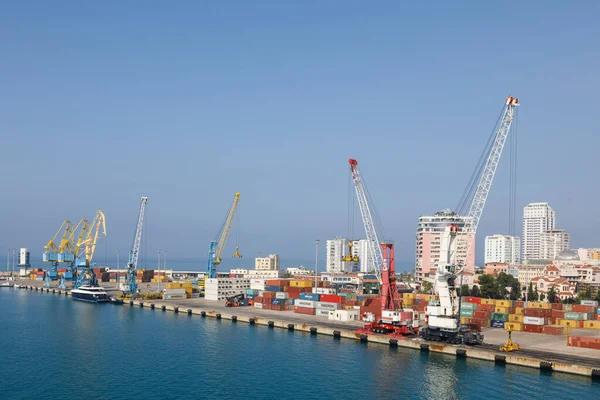
Durres: The container terminal on Albania’s main port handles cargo that will eventually move inside the Union’s customs territory, if the timetable the government has set for itself survives contact with arithmetic.

Albania opened all 33 negotiating chapters in roughly thirteen months, finishing with the resources, agriculture and cohesion cluster in late 2025. Opening chapters proves political will. Closing them proves administrative capacity, and Albania has now started that second phase.

The ninth accession conference on 14 July provisionally closed three chapters: science and research, education and culture, and external relations. Those are the chapters most candidates close first, because they demand alignment rather than institutional reconstruction. The Council confirmed the closures alongside conferences held with other candidates the same day.

Getting there required an earlier decision. In May, the Commission assessed that Albania had met the interim benchmarks for the fundamentals cluster, the judiciary, rule of law and public administration package that gates everything else. Enlargement Commissioner Marta Kos described the country as having moved into the concluding phase of negotiations. Under the revised methodology, no chapter closes until the fundamentals hold, which is why that assessment mattered more than any individual chapter.

The government targets completion of negotiations by 2027 and membership shortly after. Analysts in Tirana and Brussels treat the first date as ambitious and the second as optimistic. Thirty chapters remain open, and the ones still standing include competition, agriculture, environment and public procurement, each requiring institutions that function on ordinary Tuesdays rather than during monitoring visits.

Two constraints sit outside Albania’s control. Every closure requires unanimity among twenty-seven governments, and enlargement politics inside several member states has hardened rather than softened. Ratification of an accession treaty then needs twenty-seven parliaments, and in at least one country a referendum.

The pace nonetheless carries a message. The Union spent a decade telling Western Balkan governments that reform would be rewarded, while delivering little movement. Albania’s rapid opening and now its first closures give that promise some evidence behind it, which matters for neighbours watching to see whether the process still functions.

Reform fatigue is the risk on the domestic side. Judicial vetting removed a large share of Albanian judges and prosecutors, and the resulting backlog affects ordinary litigants who care nothing for accession chapters. Sustaining that effort through several more years of technical negotiation demands political capital that any government eventually spends.

Three chapters closed, thirty to go, and a deadline that gets harder each quarter it survives.