September 18, 2026
LATEST
Riyadh Gets a Summit Date Before the Gulf Trade Text Is WrittenMontenegro Has Fifteen Chapters and Six Months Left to Close ThemPyongyang Earns European Salaries Through Staff Nobody Ever MetNew Zealand Is the Partner Europe Talks To but Has Not SignedIndonesia Wants an October Signature Europe Has Not ScheduledNine Parliaments Still Stand Between Hanoi and Its Investment PactMEPs Back a Democracy Shield That Still Lacks a Legal ActWhy Due Cause Rarely Saves a Political Parody in CourtErasmus Budget Heads for an October Vote With Its Shares UnsettledEurope’s Pharma Package Waits on One Final Parliament Vote in AutumnCouncil Must Sign Off Five Defence Projects Before EDIP Pays OutInvestors Bid 152 Billion for 11 Billion of EU-BondsEgypt’s Macro-Financial Assistance Nears Its Most Political PaymentGreen Hydrogen Gets Fifty-Eight Million of a Twelve-Billion PledgeFerronickel Supply Puts a Chinese Mining Deal in DoubtEU Solidarity Fund Sends 489 Million After Winter StormsForeign Money Now Faces One Screening Rulebook Across the UnionFinland Entered the Deficit List While Nine Older Cases WaitMember States Must Now Criminalise the Abuse of Public OfficePaperless Trade Is the Part of the Singapore Deal That BitesRiyadh Gets a Summit Date Before the Gulf Trade Text Is WrittenMontenegro Has Fifteen Chapters and Six Months Left to Close ThemPyongyang Earns European Salaries Through Staff Nobody Ever MetNew Zealand Is the Partner Europe Talks To but Has Not SignedIndonesia Wants an October Signature Europe Has Not ScheduledNine Parliaments Still Stand Between Hanoi and Its Investment PactMEPs Back a Democracy Shield That Still Lacks a Legal ActWhy Due Cause Rarely Saves a Political Parody in CourtErasmus Budget Heads for an October Vote With Its Shares UnsettledEurope’s Pharma Package Waits on One Final Parliament Vote in AutumnCouncil Must Sign Off Five Defence Projects Before EDIP Pays OutInvestors Bid 152 Billion for 11 Billion of EU-BondsEgypt’s Macro-Financial Assistance Nears Its Most Political PaymentGreen Hydrogen Gets Fifty-Eight Million of a Twelve-Billion PledgeFerronickel Supply Puts a Chinese Mining Deal in DoubtEU Solidarity Fund Sends 489 Million After Winter StormsForeign Money Now Faces One Screening Rulebook Across the UnionFinland Entered the Deficit List While Nine Older Cases WaitMember States Must Now Criminalise the Abuse of Public OfficePaperless Trade Is the Part of the Singapore Deal That Bites
September 18, 2026
LATEST
Riyadh Gets a Summit Date Before the Gulf Trade Text Is WrittenMontenegro Has Fifteen Chapters and Six Months Left to Close ThemPyongyang Earns European Salaries Through Staff Nobody Ever MetNew Zealand Is the Partner Europe Talks To but Has Not SignedIndonesia Wants an October Signature Europe Has Not ScheduledNine Parliaments Still Stand Between Hanoi and Its Investment PactMEPs Back a Democracy Shield That Still Lacks a Legal ActWhy Due Cause Rarely Saves a Political Parody in CourtErasmus Budget Heads for an October Vote With Its Shares UnsettledEurope’s Pharma Package Waits on One Final Parliament Vote in AutumnCouncil Must Sign Off Five Defence Projects Before EDIP Pays OutInvestors Bid 152 Billion for 11 Billion of EU-BondsEgypt’s Macro-Financial Assistance Nears Its Most Political PaymentGreen Hydrogen Gets Fifty-Eight Million of a Twelve-Billion PledgeFerronickel Supply Puts a Chinese Mining Deal in DoubtEU Solidarity Fund Sends 489 Million After Winter StormsForeign Money Now Faces One Screening Rulebook Across the UnionFinland Entered the Deficit List While Nine Older Cases WaitMember States Must Now Criminalise the Abuse of Public OfficePaperless Trade Is the Part of the Singapore Deal That BitesRiyadh Gets a Summit Date Before the Gulf Trade Text Is WrittenMontenegro Has Fifteen Chapters and Six Months Left to Close ThemPyongyang Earns European Salaries Through Staff Nobody Ever MetNew Zealand Is the Partner Europe Talks To but Has Not SignedIndonesia Wants an October Signature Europe Has Not ScheduledNine Parliaments Still Stand Between Hanoi and Its Investment PactMEPs Back a Democracy Shield That Still Lacks a Legal ActWhy Due Cause Rarely Saves a Political Parody in CourtErasmus Budget Heads for an October Vote With Its Shares UnsettledEurope’s Pharma Package Waits on One Final Parliament Vote in AutumnCouncil Must Sign Off Five Defence Projects Before EDIP Pays OutInvestors Bid 152 Billion for 11 Billion of EU-BondsEgypt’s Macro-Financial Assistance Nears Its Most Political PaymentGreen Hydrogen Gets Fifty-Eight Million of a Twelve-Billion PledgeFerronickel Supply Puts a Chinese Mining Deal in DoubtEU Solidarity Fund Sends 489 Million After Winter StormsForeign Money Now Faces One Screening Rulebook Across the UnionFinland Entered the Deficit List While Nine Older Cases WaitMember States Must Now Criminalise the Abuse of Public OfficePaperless Trade Is the Part of the Singapore Deal That Bites

Council Must Sign Off Five Defence Projects Before EDIP Pays Out

Vilnius: The European Commission handed EU governments five joint defence projects on 3 July 2026, and eleven weeks later the Council has still not adopted the list that turns those defence projects into something the bloc’s new industrial programme can actually pay for. Lithuanian officials, whose eastern border anchors one of the five strands, treat the delay as more than procedural housekeeping.

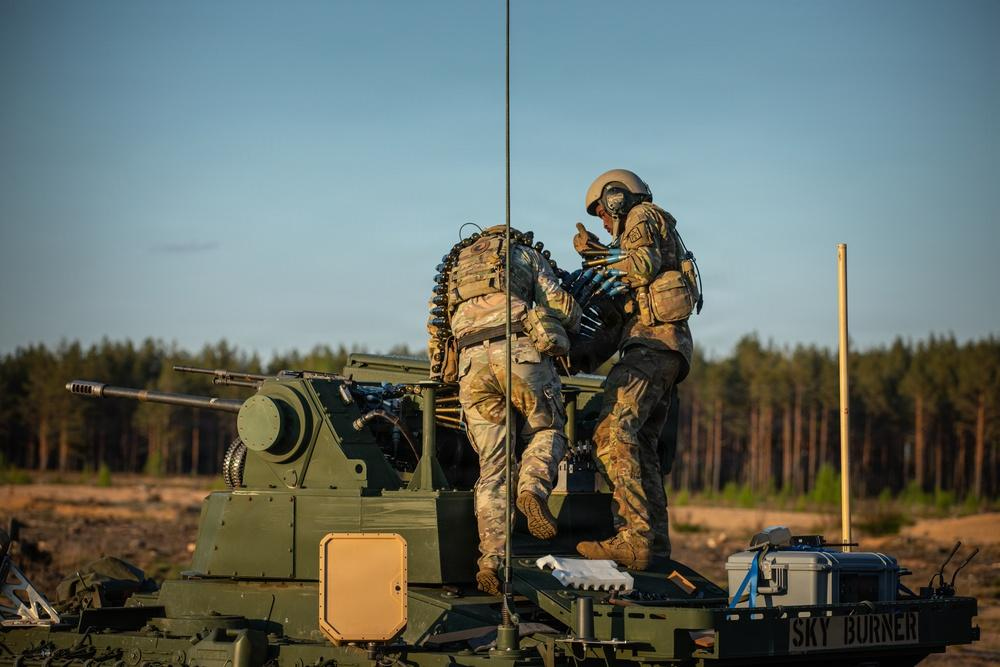
The five European Defence Projects of Common Interest cover drones and counter-drone systems, maritime and seabed defence, space, air and missile defence, and the Eastern Flank Watch. An average of 18 member states signed up to each project. Ukraine joins four of the five.

Money follows the Council here, not the Commission. The EDIP work programme adopted on 30 March 2026 ring-fenced €325 million for these projects, yet Regulation (EU) 2025/2643 releases that money only once ministers formally establish the list, name the participating countries and set out the investment each project should generate.

These new, ambitious, and long-term defence projects will act as key initiatives to strengthen EU defence readiness and bolster our strategic autonomy. — Andrius Kubilius, Commissioner for Defence and Space

Kubilius priced the combined ambition of the five defence projects at roughly €190 billion by 2036. Set against a €325 million EU grant, that ratio defines the whole design. The grant buys initial deployment and a governance frame; national budgets and the proposed European Competitiveness Fund are expected to carry everything after that.

The rest of the €1.5 billion programme did not wait for ministers. The Commission divided it this way:

  • more than €700 million to raise production of counter-drone systems, missiles and ammunition
  • €325 million for the five projects of common interest
  • €260 million through the Ukraine Support Instrument for Ukraine’s defence industrial base
  • €240 million for joint procurement, capped at €20 million per consortium of contracting authorities
  • €100 million in equity for defence start-ups and small mid-caps through the FAST fund
  • €35.3 million for BraveTech EU innovation work with Ukrainian and European firms

Those calls went live on the EU Funding and Tenders Portal on 31 March 2026, and the first deadlines arrive during this autumn. Companies bidding into the production and procurement strands therefore know their timetable. Consortia built around the five flagship projects do not, because the Council decision that makes them eligible has no fixed date.

National capitals have reasons to move slowly. Establishing an EDPCI commits a government to milestones the Commission will monitor, and several ministries want the participation rules for Norway and Ukraine settled before they sign. Others are waiting to see how the next long-term budget treats defence, since a project blessed in 2026 will need funding well beyond the 2026-2027 window EDIP covers.

The programme itself arrived late in the cycle. EU legislators adopted the EDIP Regulation in December 2025, after two years of argument over how much industrial policy the Union can run on defence files that treaties leave largely to member states. The compromise gave the Commission a small budget, a broad mandate and an explicit instruction to reduce fragmentation in a market where 27 armies still buy different equipment from different suppliers.

That fragmentation explains why the five projects look like capability shopping lists rather than research themes. Air and missile defence, seabed protection and counter-drone work each suffer from duplicated national programmes, and the Commission argues that pooling them lowers unit costs while keeping production inside Europe. The proposal published in July aligns each strand with NATO capability priorities, a deliberate signal to governments that treat the alliance as the real planning authority.

Sceptics inside national defence ministries point out that EDIP grants remain marginal beside the sums governments now spend directly, and that a Council decision cannot conjure factory capacity. The counter-argument is procedural rather than financial: once the list exists, the projects gain a legal identity, a participant register and a milestone schedule that outlives any single presidency. Ministers meet again in the coming weeks, and the list is on their table.