September 18, 2026
LATEST
Riyadh Gets a Summit Date Before the Gulf Trade Text Is WrittenMontenegro Has Fifteen Chapters and Six Months Left to Close ThemPyongyang Earns European Salaries Through Staff Nobody Ever MetNew Zealand Is the Partner Europe Talks To but Has Not SignedIndonesia Wants an October Signature Europe Has Not ScheduledNine Parliaments Still Stand Between Hanoi and Its Investment PactMEPs Back a Democracy Shield That Still Lacks a Legal ActWhy Due Cause Rarely Saves a Political Parody in CourtErasmus Budget Heads for an October Vote With Its Shares UnsettledEurope’s Pharma Package Waits on One Final Parliament Vote in AutumnCouncil Must Sign Off Five Defence Projects Before EDIP Pays OutInvestors Bid 152 Billion for 11 Billion of EU-BondsEgypt’s Macro-Financial Assistance Nears Its Most Political PaymentGreen Hydrogen Gets Fifty-Eight Million of a Twelve-Billion PledgeFerronickel Supply Puts a Chinese Mining Deal in DoubtEU Solidarity Fund Sends 489 Million After Winter StormsForeign Money Now Faces One Screening Rulebook Across the UnionFinland Entered the Deficit List While Nine Older Cases WaitMember States Must Now Criminalise the Abuse of Public OfficePaperless Trade Is the Part of the Singapore Deal That BitesRiyadh Gets a Summit Date Before the Gulf Trade Text Is WrittenMontenegro Has Fifteen Chapters and Six Months Left to Close ThemPyongyang Earns European Salaries Through Staff Nobody Ever MetNew Zealand Is the Partner Europe Talks To but Has Not SignedIndonesia Wants an October Signature Europe Has Not ScheduledNine Parliaments Still Stand Between Hanoi and Its Investment PactMEPs Back a Democracy Shield That Still Lacks a Legal ActWhy Due Cause Rarely Saves a Political Parody in CourtErasmus Budget Heads for an October Vote With Its Shares UnsettledEurope’s Pharma Package Waits on One Final Parliament Vote in AutumnCouncil Must Sign Off Five Defence Projects Before EDIP Pays OutInvestors Bid 152 Billion for 11 Billion of EU-BondsEgypt’s Macro-Financial Assistance Nears Its Most Political PaymentGreen Hydrogen Gets Fifty-Eight Million of a Twelve-Billion PledgeFerronickel Supply Puts a Chinese Mining Deal in DoubtEU Solidarity Fund Sends 489 Million After Winter StormsForeign Money Now Faces One Screening Rulebook Across the UnionFinland Entered the Deficit List While Nine Older Cases WaitMember States Must Now Criminalise the Abuse of Public OfficePaperless Trade Is the Part of the Singapore Deal That Bites
September 18, 2026
LATEST
Riyadh Gets a Summit Date Before the Gulf Trade Text Is WrittenMontenegro Has Fifteen Chapters and Six Months Left to Close ThemPyongyang Earns European Salaries Through Staff Nobody Ever MetNew Zealand Is the Partner Europe Talks To but Has Not SignedIndonesia Wants an October Signature Europe Has Not ScheduledNine Parliaments Still Stand Between Hanoi and Its Investment PactMEPs Back a Democracy Shield That Still Lacks a Legal ActWhy Due Cause Rarely Saves a Political Parody in CourtErasmus Budget Heads for an October Vote With Its Shares UnsettledEurope’s Pharma Package Waits on One Final Parliament Vote in AutumnCouncil Must Sign Off Five Defence Projects Before EDIP Pays OutInvestors Bid 152 Billion for 11 Billion of EU-BondsEgypt’s Macro-Financial Assistance Nears Its Most Political PaymentGreen Hydrogen Gets Fifty-Eight Million of a Twelve-Billion PledgeFerronickel Supply Puts a Chinese Mining Deal in DoubtEU Solidarity Fund Sends 489 Million After Winter StormsForeign Money Now Faces One Screening Rulebook Across the UnionFinland Entered the Deficit List While Nine Older Cases WaitMember States Must Now Criminalise the Abuse of Public OfficePaperless Trade Is the Part of the Singapore Deal That BitesRiyadh Gets a Summit Date Before the Gulf Trade Text Is WrittenMontenegro Has Fifteen Chapters and Six Months Left to Close ThemPyongyang Earns European Salaries Through Staff Nobody Ever MetNew Zealand Is the Partner Europe Talks To but Has Not SignedIndonesia Wants an October Signature Europe Has Not ScheduledNine Parliaments Still Stand Between Hanoi and Its Investment PactMEPs Back a Democracy Shield That Still Lacks a Legal ActWhy Due Cause Rarely Saves a Political Parody in CourtErasmus Budget Heads for an October Vote With Its Shares UnsettledEurope’s Pharma Package Waits on One Final Parliament Vote in AutumnCouncil Must Sign Off Five Defence Projects Before EDIP Pays OutInvestors Bid 152 Billion for 11 Billion of EU-BondsEgypt’s Macro-Financial Assistance Nears Its Most Political PaymentGreen Hydrogen Gets Fifty-Eight Million of a Twelve-Billion PledgeFerronickel Supply Puts a Chinese Mining Deal in DoubtEU Solidarity Fund Sends 489 Million After Winter StormsForeign Money Now Faces One Screening Rulebook Across the UnionFinland Entered the Deficit List While Nine Older Cases WaitMember States Must Now Criminalise the Abuse of Public OfficePaperless Trade Is the Part of the Singapore Deal That Bites

Montenegro Has Fifteen Chapters and Six Months Left to Close Them

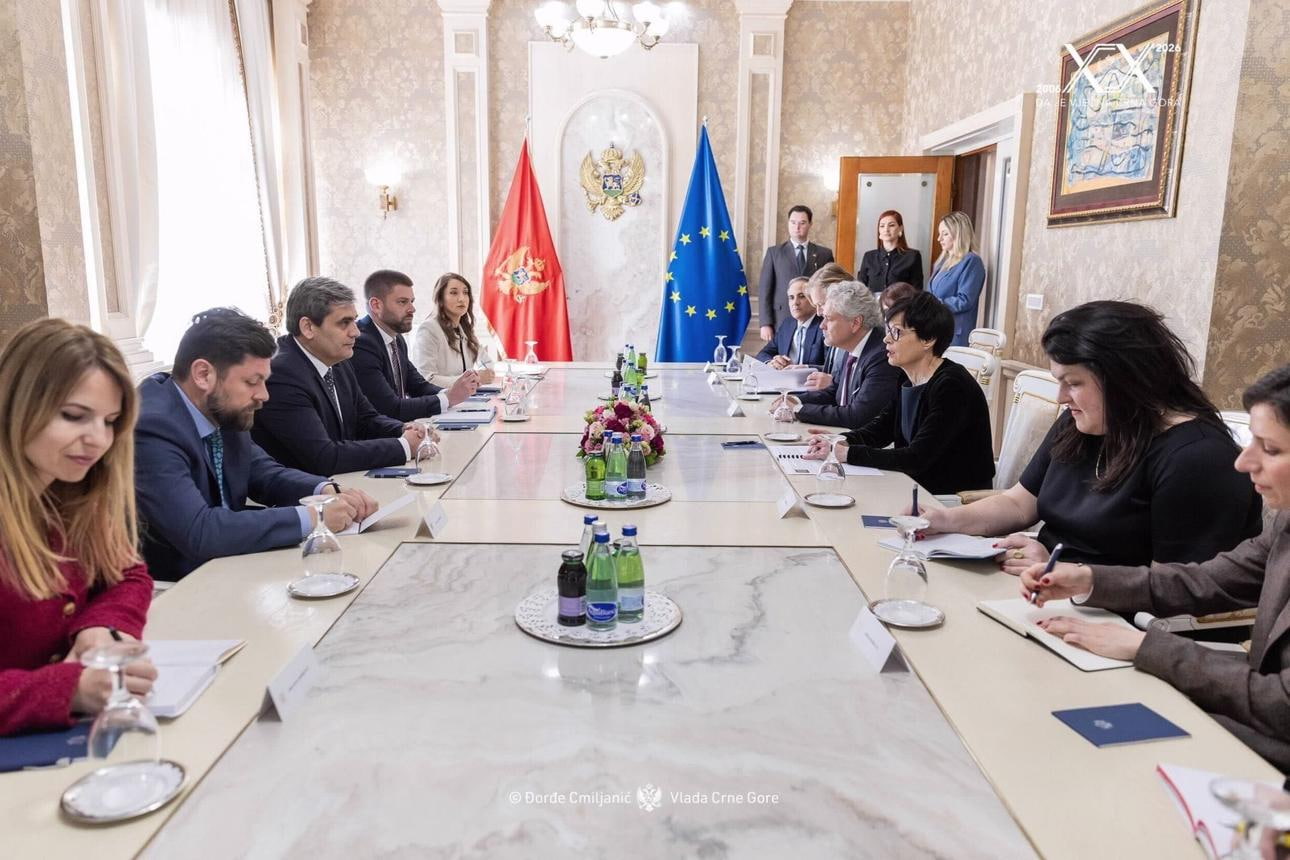
Podgorica: Montenegro has opened all 33 of its negotiating chapters and provisionally closed 18 of them. That leaves fifteen, and rather less than six months in which the current Council presidency intends to finish them. Ireland took the chair on 1 July having named the completion of Montenegrin accession talks as a headline objective, which is an unusual thing for a presidency to promise, because presidencies are normally careful not to stake credibility on outcomes that depend on someone else’s administrative capacity.

The mechanics are further along than the chapter count suggests. EU ambassadors endorsed the creation of an ad hoc working party to draft the accession treaty on 22 April, and the group began work on 13 May. Drafting a treaty while chapters remain open is not premature in this process; the two tracks normally overlap, and starting early is the only way to protect a target date. Montenegro’s target is membership in 2028 as the twenty-eighth member state, and the arithmetic behind it is tight enough to explain the hurry.

Ratification is where accession calendars actually break. An accession treaty must be signed, consented to by the European Parliament, and then ratified by every national parliament in the Union, several of which schedule such votes around their own electoral cycles rather than around enlargement timetables. Croatia signed in December 2011 and joined in July 2013, and that was considered brisk. Applying the same eighteen months to Montenegro means a signature no later than the first half of 2027, which means negotiations genuinely concluded within roughly a year. The fifteen remaining chapters are therefore not a bureaucratic remainder. They are the whole schedule.

Montenegro’s advantage is scale. A country of around 620,000 people presents no meaningful budgetary or labour-market question to the Union it is joining, and no member state government faces a difficult conversation with its own voters about absorbing it. That is precisely why it was chosen as the test case. The purpose of admitting Montenegro is not economic. It is to demonstrate that the enlargement process still terminates in membership, a proposition the Western Balkans has had reason to doubt for a decade and which the Union needs to prove before it asks Ukraine, Moldova or anyone else to take the process seriously.

Albania is the control group. It has six clusters and thirty chapters open and three chapters provisionally closed so far, among them external relations, education and culture, and science and research, and it is working towards concluding in 2027. Tirana is moving faster than Podgorica did at the equivalent stage, which tells you the bottleneck was never only the candidate’s paperwork.

The risk that is rarely stated plainly is that closing a chapter is reversible in substance if not in form. Rule of law commitments are assessed continuously, and a government that slips after closure invites member states to raise the matter at ratification, where any one parliament can stall everything. Montenegro’s incentive over the next two years is therefore to behave as though the chapters are still open, because politically they are.

The Union has spent a decade telling candidate states that enlargement is merit-based and not geopolitical theatre. Montenegro is the first opportunity in years to prove the sentence by finishing something. Missing the 2028 date would not be a scheduling embarrassment. It would be an argument, delivered to every capital in the region, that the process does not end.