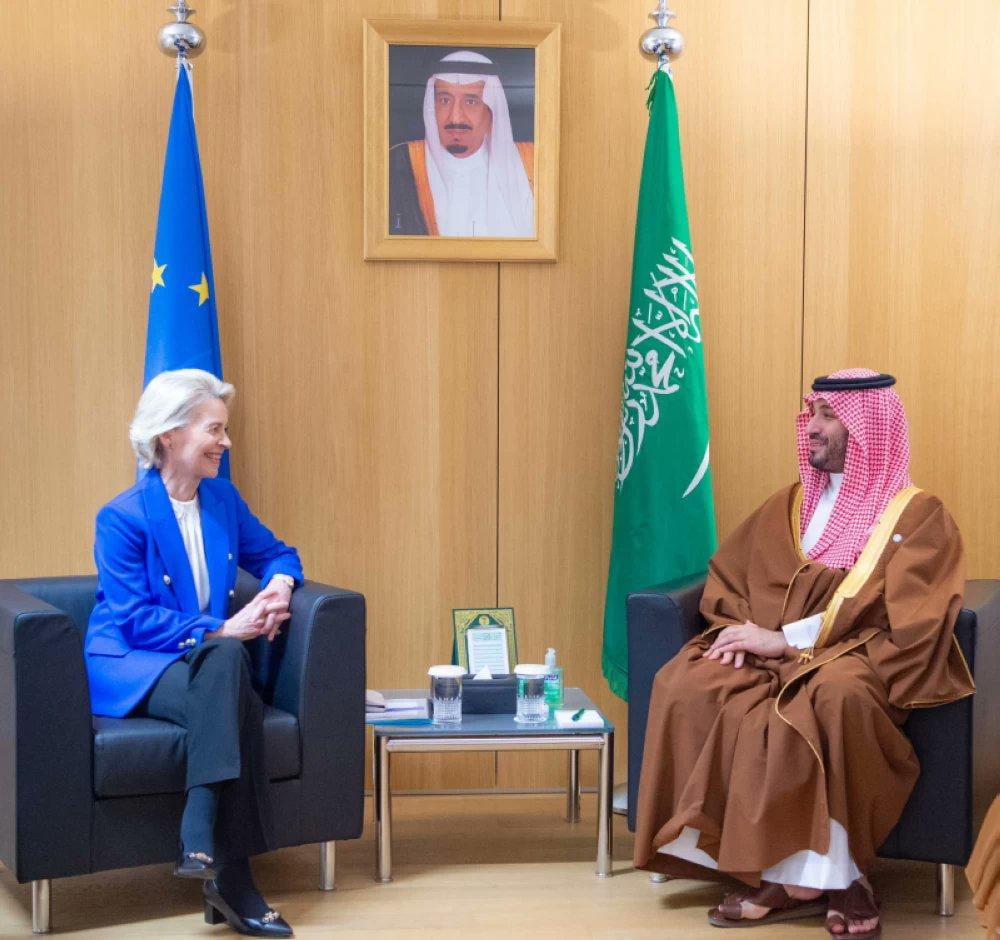
Riyadh: The Saudi capital has a date, a guest list and a co-chair for 24 October. What it does not yet have is a trade text worth the flights. The European Council confirmed on 4 September that the second summit between the European Union and the Gulf Cooperation Council will be held in Saudi Arabia, co-chaired by Antonio Costa with Ursula von der Leyen alongside him. The invitations went out ahead of the substance, which is ordinary summit practice and unusually consequential here, because the advertised prize is a commercial relationship that has resisted definition since 1990.
That is the year bloc-to-bloc negotiations opened. They were suspended in 2008 and never meaningfully resumed. The obstacles were not mysterious. Gulf governments objected to European duties on petrochemicals and aluminium and to the political and human rights clauses Brussels attaches to its agreements as standard. European negotiators objected to Gulf export pricing on energy feedstocks. Eighteen years of silence followed, during which Britain, China and India all signed or advanced deals in the region while the European Union kept a mandate it could not use.
What has changed is not the appetite but the method. Brussels has stopped trying to write one treaty with six governments that price energy differently, regulate labour differently and disagree among themselves about the depth of their own customs union. In July 2025 member states authorised the Commission to negotiate bilateral Strategic Partnership Agreements with each of the six states individually. A full free trade negotiation with the United Arab Emirates launched separately in May 2025 and held its first round a month later. The instrument now being drafted at GCC level looks less like a customs arrangement than a frame: renewable energy, digital trade, industrial supply chains, with the hard market access buried in the bilateral texts underneath.
This is a concession presented as an innovation. Region-to-region negotiation has always been the European preference, because it exports the European template and spares the Commission from running six parallel processes with six different sets of domestic politics. Abandoning it hands leverage to the Gulf side. A government negotiating alone with Brussels can watch what its neighbour conceded, wait, and ask for better. The Emirates go first and the rest will read the text.
The predictable cost is fragmentation. Six strategic partnership agreements layered over one incomplete customs union will produce divergent rules of origin, divergent services commitments and divergent standards recognition inside a market European exporters treat as a single logistical unit. A German machinery firm shipping through Jebel Ali into Saudi Arabia may find that the two legs of its route sit under different legal instruments with different paperwork. Businesses asked for simplification and are being offered coverage.
The defence of the approach is unglamorous and probably correct. The single-treaty format produced nothing across three and a half decades. Sectoral and bilateral texts produce something, and something can be amended later. Trade policy accumulates; it rarely arrives whole.
The test on 24 October is linguistic. If the communique names a scope and a target date for the GCC-level instrument, the negotiation is real and the summit did work. If it welcomes progress, notes momentum and instructs officials to continue, Riyadh will have hosted a photograph. Those two sentences cost the same to write and mean entirely different things, and everyone in the room will know which one they have agreed to.