September 19, 2026
LATEST
Small Parcels Get a Handling Fee as Europe’s Customs Reform ClearsManila Must Open Public Contracts Before Europe Signs AnythingEurope’s KIDS Act Would Put Parents Back in Charge of AccountsArmenian Apricots Reach Europe Only Through Narrow Tariff QuotasMyanmar’s Crisis Outgrows the Aid Envelope Europe Built for ItJapan Joins Horizon Europe for the Price of a Rounding ErrorIndia’s Trade Deal Now Waits on the Council and Two ParliamentsBeijing Gets an October Date and a Very Short Deliverables ListJudges Strike Down Estonia’s Deposit for European CandidatesSolidarity Fund Pays for Storms Eight Months After the WaterFreight Tariffs Decide Whether the Middle Corridor Reaches ScaleFolding the Diplomatic Service Into the Commission Needs UnanimityCritical Raw Materials Corporation Tests EU StockpilingHeatwave Plan Tests Europe’s Climate Adaptation GapEuropean Security Council Faces a Missing Legal BaseNature Restoration Plans Arrive With a Year of Haggling AheadPlatform Work Rules Arrive in December With Most States UnreadyDominant Firms Face Europe’s First Rulebook on Exclusionary AbuseInnovation Act Reaches Council With EU Preference Still DisputedSecondary Raw Materials Await an Act That Has Not Been TabledSmall Parcels Get a Handling Fee as Europe’s Customs Reform ClearsManila Must Open Public Contracts Before Europe Signs AnythingEurope’s KIDS Act Would Put Parents Back in Charge of AccountsArmenian Apricots Reach Europe Only Through Narrow Tariff QuotasMyanmar’s Crisis Outgrows the Aid Envelope Europe Built for ItJapan Joins Horizon Europe for the Price of a Rounding ErrorIndia’s Trade Deal Now Waits on the Council and Two ParliamentsBeijing Gets an October Date and a Very Short Deliverables ListJudges Strike Down Estonia’s Deposit for European CandidatesSolidarity Fund Pays for Storms Eight Months After the WaterFreight Tariffs Decide Whether the Middle Corridor Reaches ScaleFolding the Diplomatic Service Into the Commission Needs UnanimityCritical Raw Materials Corporation Tests EU StockpilingHeatwave Plan Tests Europe’s Climate Adaptation GapEuropean Security Council Faces a Missing Legal BaseNature Restoration Plans Arrive With a Year of Haggling AheadPlatform Work Rules Arrive in December With Most States UnreadyDominant Firms Face Europe’s First Rulebook on Exclusionary AbuseInnovation Act Reaches Council With EU Preference Still DisputedSecondary Raw Materials Await an Act That Has Not Been Tabled
September 19, 2026
LATEST
Small Parcels Get a Handling Fee as Europe’s Customs Reform ClearsManila Must Open Public Contracts Before Europe Signs AnythingEurope’s KIDS Act Would Put Parents Back in Charge of AccountsArmenian Apricots Reach Europe Only Through Narrow Tariff QuotasMyanmar’s Crisis Outgrows the Aid Envelope Europe Built for ItJapan Joins Horizon Europe for the Price of a Rounding ErrorIndia’s Trade Deal Now Waits on the Council and Two ParliamentsBeijing Gets an October Date and a Very Short Deliverables ListJudges Strike Down Estonia’s Deposit for European CandidatesSolidarity Fund Pays for Storms Eight Months After the WaterFreight Tariffs Decide Whether the Middle Corridor Reaches ScaleFolding the Diplomatic Service Into the Commission Needs UnanimityCritical Raw Materials Corporation Tests EU StockpilingHeatwave Plan Tests Europe’s Climate Adaptation GapEuropean Security Council Faces a Missing Legal BaseNature Restoration Plans Arrive With a Year of Haggling AheadPlatform Work Rules Arrive in December With Most States UnreadyDominant Firms Face Europe’s First Rulebook on Exclusionary AbuseInnovation Act Reaches Council With EU Preference Still DisputedSecondary Raw Materials Await an Act That Has Not Been TabledSmall Parcels Get a Handling Fee as Europe’s Customs Reform ClearsManila Must Open Public Contracts Before Europe Signs AnythingEurope’s KIDS Act Would Put Parents Back in Charge of AccountsArmenian Apricots Reach Europe Only Through Narrow Tariff QuotasMyanmar’s Crisis Outgrows the Aid Envelope Europe Built for ItJapan Joins Horizon Europe for the Price of a Rounding ErrorIndia’s Trade Deal Now Waits on the Council and Two ParliamentsBeijing Gets an October Date and a Very Short Deliverables ListJudges Strike Down Estonia’s Deposit for European CandidatesSolidarity Fund Pays for Storms Eight Months After the WaterFreight Tariffs Decide Whether the Middle Corridor Reaches ScaleFolding the Diplomatic Service Into the Commission Needs UnanimityCritical Raw Materials Corporation Tests EU StockpilingHeatwave Plan Tests Europe’s Climate Adaptation GapEuropean Security Council Faces a Missing Legal BaseNature Restoration Plans Arrive With a Year of Haggling AheadPlatform Work Rules Arrive in December With Most States UnreadyDominant Firms Face Europe’s First Rulebook on Exclusionary AbuseInnovation Act Reaches Council With EU Preference Still DisputedSecondary Raw Materials Await an Act That Has Not Been Tabled

New Zealand Is the Partner Europe Talks To but Has Not Signed

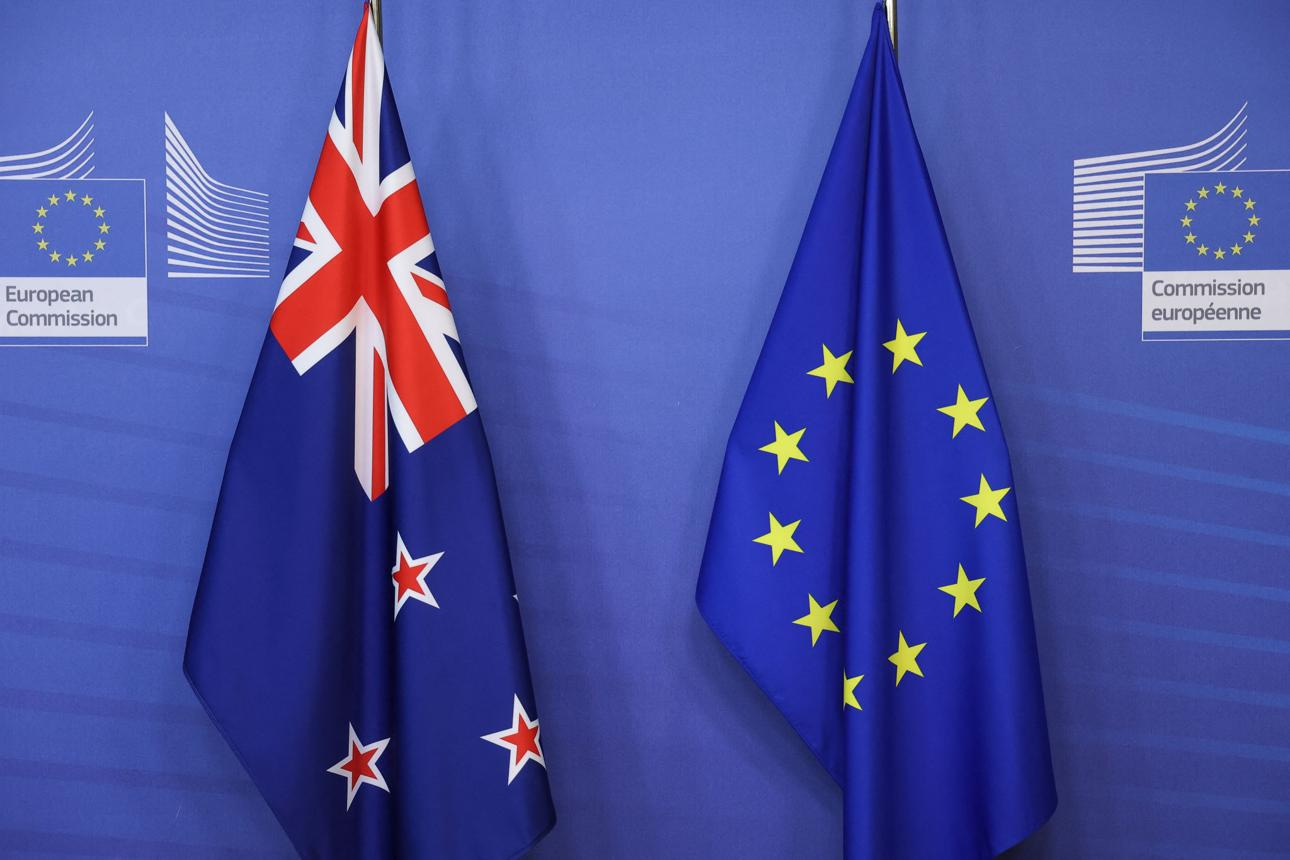
Devonport: The naval base on Auckland’s north shore hosts a fleet small enough to be counted on two hands, and that modesty has always been the point of New Zealand’s defence posture. It contributes selectively, it contributes credibly, and it does so without the industrial baggage that complicates larger partnerships. Which makes the current state of its relationship with Brussels slightly odd. The European Union has spent eighteen months signing security and defence partnerships at a pace no one predicted, and New Zealand is not among the signatories.

The instrument itself is light. A Security and Defence Partnership commits neither side to mutual defence and obliges neither to spend anything. It establishes an annual dialogue, names the areas where cooperation is wanted, and opens the door to participation in European defence industrial programmes on terms to be settled later. Nine such partnerships now exist, the most recent concluded with India. Australia signed in March 2026, alongside the trade agreement that had taken rather longer.

New Zealand’s own engagement has not been idle. On 21 May 2026, officials held the first high-level security and defence exchanges with the European Union in Wellington, covering maritime security, cyber, space, non-proliferation and counter-terrorism. That is the substantive agenda of a partnership without the document. The question worth asking is whether the document would add anything, and the honest answer is that it would add access rather than obligation.

Access is the live issue. European defence financing has moved decisively towards instruments with eligibility rules attached. The loan facility agreed in 2025 to accelerate joint procurement, and the industrial programme that follows it, both draw a boundary around who can participate in funded consortia and on what terms. Third countries outside that boundary do not lose the ability to sell to European buyers, but they lose the ability to be designed into European programmes from the start. For a small defence industrial base with genuine niche strengths — maritime surveillance software, aerospace composites, space tracking from the southern hemisphere — that distinction determines whether firms are subcontractors or partners.

There is also a geography argument that Europe has been slower to make than its own documents suggest. The Union’s Indo-Pacific strategy identifies maritime domain awareness as the capability most worth building with regional partners, and New Zealand’s surveillance responsibilities cover an expanse of the South Pacific that no European asset will ever routinely patrol. The practical value flows in Europe’s direction as much as the other way.

What has held things up is less strategic than procedural. Wellington’s foreign policy tradition is careful about anything that reads as bloc alignment, and successive governments have preserved an independent line that domestic opinion still values. A partnership that carries no defence guarantee should be easy to reconcile with that tradition, but the reconciliation has to be argued publicly rather than assumed. On the European side, the sequencing has followed political attention rather than strategic logic, and attention has been elsewhere.

The cost of drift is not dramatic. It is cumulative. Each European programme that reaches its eligibility decision without New Zealand in the room sets a precedent that later negotiations inherit. Australia’s signature in March did not create an obligation towards Canberra; it created a template, and templates harden. The exchanges held in Wellington in May demonstrated that both sides already agree on the agenda. Converting agreement into a signed text is the smallest remaining step, and it is the one nobody has scheduled.