September 18, 2026
LATEST
Riyadh Gets a Summit Date Before the Gulf Trade Text Is WrittenMontenegro Has Fifteen Chapters and Six Months Left to Close ThemPyongyang Earns European Salaries Through Staff Nobody Ever MetNew Zealand Is the Partner Europe Talks To but Has Not SignedIndonesia Wants an October Signature Europe Has Not ScheduledNine Parliaments Still Stand Between Hanoi and Its Investment PactMEPs Back a Democracy Shield That Still Lacks a Legal ActWhy Due Cause Rarely Saves a Political Parody in CourtErasmus Budget Heads for an October Vote With Its Shares UnsettledEurope’s Pharma Package Waits on One Final Parliament Vote in AutumnCouncil Must Sign Off Five Defence Projects Before EDIP Pays OutInvestors Bid 152 Billion for 11 Billion of EU-BondsEgypt’s Macro-Financial Assistance Nears Its Most Political PaymentGreen Hydrogen Gets Fifty-Eight Million of a Twelve-Billion PledgeFerronickel Supply Puts a Chinese Mining Deal in DoubtEU Solidarity Fund Sends 489 Million After Winter StormsForeign Money Now Faces One Screening Rulebook Across the UnionFinland Entered the Deficit List While Nine Older Cases WaitMember States Must Now Criminalise the Abuse of Public OfficePaperless Trade Is the Part of the Singapore Deal That BitesRiyadh Gets a Summit Date Before the Gulf Trade Text Is WrittenMontenegro Has Fifteen Chapters and Six Months Left to Close ThemPyongyang Earns European Salaries Through Staff Nobody Ever MetNew Zealand Is the Partner Europe Talks To but Has Not SignedIndonesia Wants an October Signature Europe Has Not ScheduledNine Parliaments Still Stand Between Hanoi and Its Investment PactMEPs Back a Democracy Shield That Still Lacks a Legal ActWhy Due Cause Rarely Saves a Political Parody in CourtErasmus Budget Heads for an October Vote With Its Shares UnsettledEurope’s Pharma Package Waits on One Final Parliament Vote in AutumnCouncil Must Sign Off Five Defence Projects Before EDIP Pays OutInvestors Bid 152 Billion for 11 Billion of EU-BondsEgypt’s Macro-Financial Assistance Nears Its Most Political PaymentGreen Hydrogen Gets Fifty-Eight Million of a Twelve-Billion PledgeFerronickel Supply Puts a Chinese Mining Deal in DoubtEU Solidarity Fund Sends 489 Million After Winter StormsForeign Money Now Faces One Screening Rulebook Across the UnionFinland Entered the Deficit List While Nine Older Cases WaitMember States Must Now Criminalise the Abuse of Public OfficePaperless Trade Is the Part of the Singapore Deal That Bites
September 18, 2026
LATEST
Riyadh Gets a Summit Date Before the Gulf Trade Text Is WrittenMontenegro Has Fifteen Chapters and Six Months Left to Close ThemPyongyang Earns European Salaries Through Staff Nobody Ever MetNew Zealand Is the Partner Europe Talks To but Has Not SignedIndonesia Wants an October Signature Europe Has Not ScheduledNine Parliaments Still Stand Between Hanoi and Its Investment PactMEPs Back a Democracy Shield That Still Lacks a Legal ActWhy Due Cause Rarely Saves a Political Parody in CourtErasmus Budget Heads for an October Vote With Its Shares UnsettledEurope’s Pharma Package Waits on One Final Parliament Vote in AutumnCouncil Must Sign Off Five Defence Projects Before EDIP Pays OutInvestors Bid 152 Billion for 11 Billion of EU-BondsEgypt’s Macro-Financial Assistance Nears Its Most Political PaymentGreen Hydrogen Gets Fifty-Eight Million of a Twelve-Billion PledgeFerronickel Supply Puts a Chinese Mining Deal in DoubtEU Solidarity Fund Sends 489 Million After Winter StormsForeign Money Now Faces One Screening Rulebook Across the UnionFinland Entered the Deficit List While Nine Older Cases WaitMember States Must Now Criminalise the Abuse of Public OfficePaperless Trade Is the Part of the Singapore Deal That BitesRiyadh Gets a Summit Date Before the Gulf Trade Text Is WrittenMontenegro Has Fifteen Chapters and Six Months Left to Close ThemPyongyang Earns European Salaries Through Staff Nobody Ever MetNew Zealand Is the Partner Europe Talks To but Has Not SignedIndonesia Wants an October Signature Europe Has Not ScheduledNine Parliaments Still Stand Between Hanoi and Its Investment PactMEPs Back a Democracy Shield That Still Lacks a Legal ActWhy Due Cause Rarely Saves a Political Parody in CourtErasmus Budget Heads for an October Vote With Its Shares UnsettledEurope’s Pharma Package Waits on One Final Parliament Vote in AutumnCouncil Must Sign Off Five Defence Projects Before EDIP Pays OutInvestors Bid 152 Billion for 11 Billion of EU-BondsEgypt’s Macro-Financial Assistance Nears Its Most Political PaymentGreen Hydrogen Gets Fifty-Eight Million of a Twelve-Billion PledgeFerronickel Supply Puts a Chinese Mining Deal in DoubtEU Solidarity Fund Sends 489 Million After Winter StormsForeign Money Now Faces One Screening Rulebook Across the UnionFinland Entered the Deficit List While Nine Older Cases WaitMember States Must Now Criminalise the Abuse of Public OfficePaperless Trade Is the Part of the Singapore Deal That Bites

Egypt’s Macro-Financial Assistance Nears Its Most Political Payment

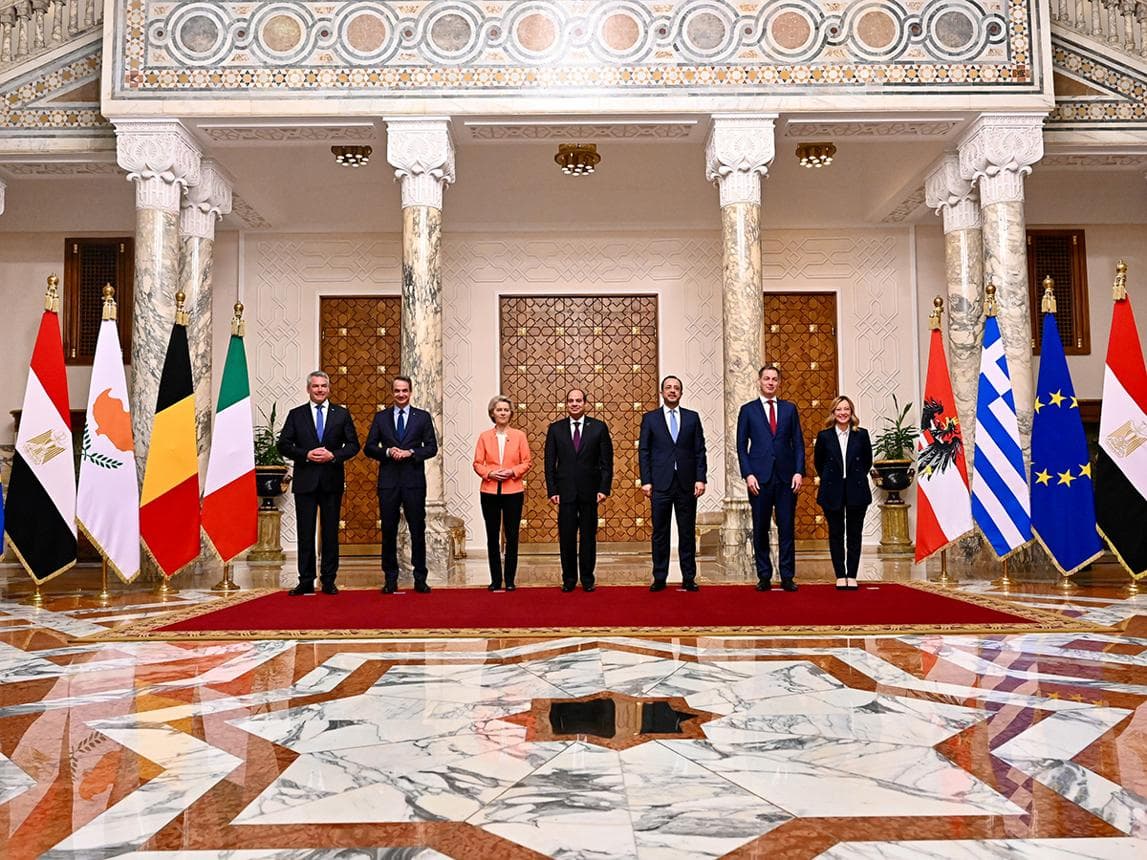
Cairo: Egypt banked 1.5 billion euros from Brussels on 24 July, the second of three instalments under a 4 billion euro loan operation. One payment remains. It is the instalment that will show whether the political conditions European legislators fought for in 2025 carry any weight.

The structure is worth setting out, because commentary routinely blurs it. Europe approved 1 billion euros in short-term support in 2024 and a separate 4 billion euro operation in June 2025, both flowing from the Strategic and Comprehensive Partnership signed in March 2024. The larger loan covers Egypt’s external financing gap from July 2025 to June 2027 and runs alongside an International Monetary Fund programme. Brussels has now released 3.5 billion euros of the combined 5 billion, leaving a final 1.5 billion outstanding.

Each release depends on three things. Egypt must keep the IMF programme on track, deliver policy measures agreed with the Commission, and satisfy the political requirements written into the memorandum of understanding. The Commission judged all three met in July.

Parliament added one further obligation during the 2025 negotiation. The Commission must produce an annual report examining progress on the memorandum’s economic conditions and on the steps Egypt takes towards respecting democratic mechanisms, the rule of law and human rights, as the Council and Parliament agreed in May 2025.

Members who won that clause should read it carefully. A reporting duty is not a payment trigger. The report informs a debate; it does not gate a disbursement. Whatever the report concludes, the legal question at release remains whether the memorandum’s conditions were met, and the Commission both writes that memorandum and grades it.

Leverage is also draining away with each payment. Conditionality works when the recipient needs the next tranche more than it resents the terms. Egypt’s external position has improved since 2024, helped by large Gulf inflows and successive IMF reviews. A final 1.5 billion euros matters to Cairo’s budget arithmetic, but it no longer decides whether the country can pay its import bill. The last instalment is always the weakest instrument in the sequence.

The counterargument holds more than critics allow. Macro-financial assistance was designed to stabilise economies on Europe’s periphery, not to reform their politics. Egypt sits on the southern flank of a union that wants fewer irregular departures from the Mediterranean, a functioning partner in Gaza reconstruction and a Suez route that stays open. Judged against those aims, the loan is working, and the human rights language was the price of Parliament’s consent rather than the purpose of the instrument.

Three signals will tell the story this autumn. Whether the Commission publishes its annual report before or after it proposes the third instalment. Whether that report names specific cases or retreats into process language. And whether any political group asks the Commission to explain, on the record, which memorandum conditions it considers unfulfilled. Silence on the third point would answer the first two.