September 18, 2026
LATEST
Nature Restoration Plans Arrive With a Year of Haggling AheadPlatform Work Rules Arrive in December With Most States UnreadyInnovation Act Reaches Council With EU Preference Still DisputedSecondary Raw Materials Await an Act That Has Not Been TabledRiyadh Gets a Summit Date Before the Gulf Trade Text Is WrittenParliament Calls Ceuta an Invasion and Splits Its Own MajorityMontenegro Has Fifteen Chapters and Six Months Left to Close ThemPyongyang Earns European Salaries Through Staff Nobody Ever MetNew Zealand Is the Partner Europe Talks To but Has Not SignedIndonesia Wants an October Signature Europe Has Not ScheduledNine Parliaments Still Stand Between Hanoi and Its Investment PactMEPs Back a Democracy Shield That Still Lacks a Legal ActWhy Due Cause Rarely Saves a Political Parody in CourtErasmus Budget Heads for an October Vote With Its Shares UnsettledEurope’s Pharma Package Waits on One Final Parliament Vote in AutumnCouncil Must Sign Off Five Defence Projects Before EDIP Pays OutInvestors Bid 152 Billion for 11 Billion of EU-BondsEgypt’s Macro-Financial Assistance Nears Its Most Political PaymentGreen Hydrogen Gets Fifty-Eight Million of a Twelve-Billion PledgeFerronickel Supply Puts a Chinese Mining Deal in DoubtNature Restoration Plans Arrive With a Year of Haggling AheadPlatform Work Rules Arrive in December With Most States UnreadyInnovation Act Reaches Council With EU Preference Still DisputedSecondary Raw Materials Await an Act That Has Not Been TabledRiyadh Gets a Summit Date Before the Gulf Trade Text Is WrittenParliament Calls Ceuta an Invasion and Splits Its Own MajorityMontenegro Has Fifteen Chapters and Six Months Left to Close ThemPyongyang Earns European Salaries Through Staff Nobody Ever MetNew Zealand Is the Partner Europe Talks To but Has Not SignedIndonesia Wants an October Signature Europe Has Not ScheduledNine Parliaments Still Stand Between Hanoi and Its Investment PactMEPs Back a Democracy Shield That Still Lacks a Legal ActWhy Due Cause Rarely Saves a Political Parody in CourtErasmus Budget Heads for an October Vote With Its Shares UnsettledEurope’s Pharma Package Waits on One Final Parliament Vote in AutumnCouncil Must Sign Off Five Defence Projects Before EDIP Pays OutInvestors Bid 152 Billion for 11 Billion of EU-BondsEgypt’s Macro-Financial Assistance Nears Its Most Political PaymentGreen Hydrogen Gets Fifty-Eight Million of a Twelve-Billion PledgeFerronickel Supply Puts a Chinese Mining Deal in Doubt
September 18, 2026
LATEST
Nature Restoration Plans Arrive With a Year of Haggling AheadPlatform Work Rules Arrive in December With Most States UnreadyInnovation Act Reaches Council With EU Preference Still DisputedSecondary Raw Materials Await an Act That Has Not Been TabledRiyadh Gets a Summit Date Before the Gulf Trade Text Is WrittenParliament Calls Ceuta an Invasion and Splits Its Own MajorityMontenegro Has Fifteen Chapters and Six Months Left to Close ThemPyongyang Earns European Salaries Through Staff Nobody Ever MetNew Zealand Is the Partner Europe Talks To but Has Not SignedIndonesia Wants an October Signature Europe Has Not ScheduledNine Parliaments Still Stand Between Hanoi and Its Investment PactMEPs Back a Democracy Shield That Still Lacks a Legal ActWhy Due Cause Rarely Saves a Political Parody in CourtErasmus Budget Heads for an October Vote With Its Shares UnsettledEurope’s Pharma Package Waits on One Final Parliament Vote in AutumnCouncil Must Sign Off Five Defence Projects Before EDIP Pays OutInvestors Bid 152 Billion for 11 Billion of EU-BondsEgypt’s Macro-Financial Assistance Nears Its Most Political PaymentGreen Hydrogen Gets Fifty-Eight Million of a Twelve-Billion PledgeFerronickel Supply Puts a Chinese Mining Deal in DoubtNature Restoration Plans Arrive With a Year of Haggling AheadPlatform Work Rules Arrive in December With Most States UnreadyInnovation Act Reaches Council With EU Preference Still DisputedSecondary Raw Materials Await an Act That Has Not Been TabledRiyadh Gets a Summit Date Before the Gulf Trade Text Is WrittenParliament Calls Ceuta an Invasion and Splits Its Own MajorityMontenegro Has Fifteen Chapters and Six Months Left to Close ThemPyongyang Earns European Salaries Through Staff Nobody Ever MetNew Zealand Is the Partner Europe Talks To but Has Not SignedIndonesia Wants an October Signature Europe Has Not ScheduledNine Parliaments Still Stand Between Hanoi and Its Investment PactMEPs Back a Democracy Shield That Still Lacks a Legal ActWhy Due Cause Rarely Saves a Political Parody in CourtErasmus Budget Heads for an October Vote With Its Shares UnsettledEurope’s Pharma Package Waits on One Final Parliament Vote in AutumnCouncil Must Sign Off Five Defence Projects Before EDIP Pays OutInvestors Bid 152 Billion for 11 Billion of EU-BondsEgypt’s Macro-Financial Assistance Nears Its Most Political PaymentGreen Hydrogen Gets Fifty-Eight Million of a Twelve-Billion PledgeFerronickel Supply Puts a Chinese Mining Deal in Doubt

Secondary Raw Materials Await an Act That Has Not Been Tabled

Ten months have passed since the Commission closed its call for evidence on the Circular Economy Act, and the proposal is still not public. The legislative calendar places it in the third quarter of 2026, which expires in twelve days, with most Brussels practitioners now assuming a slip into the fourth. For an industry that has been asked to invest ahead of the rules, the delay has a cost that does not appear in any impact assessment.

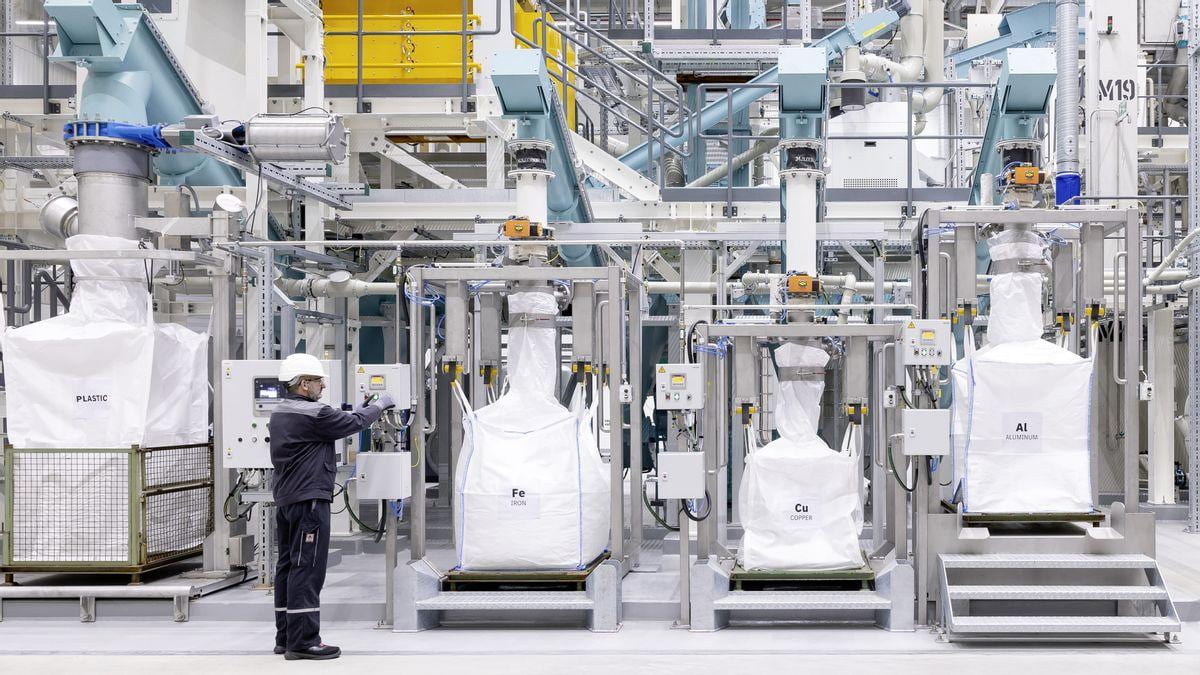
The Act is meant to do one thing that nothing in existing EU law does properly: create a genuine single market for secondary raw materials. Today a recycler in one member state and a manufacturer in another can agree a price for recovered plastic or recovered metal and still be unable to move it efficiently, because the material’s legal status changes at the border. End-of-waste criteria are set nationally, sometimes regionally, and a stream that counts as a product in one jurisdiction remains waste in the next. That single inconsistency explains a large share of why European recycled content trades at a discount to its technical quality and why recycling capacity is built where permits are easy rather than where feedstock is.

The Commission’s targeted consultation in December 2025 tested the instruments it is considering. Four of them matter commercially. Harmonised end-of-waste criteria would settle the status question. Reform of extended producer responsibility would change who pays for collection and on what basis, with fee modulation rewarding designs that can actually be recycled. Sector-specific recycled content targets would create demand that does not currently exist at scale, because voluntary pledges have repeatedly been abandoned when virgin material got cheap. And circularity criteria in public procurement would put the purchasing power of European administrations behind the same objective, which is the fastest lever available and the one least dependent on private willingness.

The strategic case has shifted since this file was first conceived. Circularity began as an environmental programme and is now argued in supply-security terms, sitting alongside the Critical Raw Materials Act within the Clean Industrial Deal. Recycled copper, aluminium, nickel and rare earths are domestic supply that does not require a mining permit, a new port or a diplomatic partnership. The logic is sound. The scale is not yet there. For most materials on the critical list, recovery rates remain low enough that recycling cannot be described as a substitute for imports within this decade, only as a contribution that grows if the investment is made now.

One piece of the architecture has already arrived. The Digital Waste Shipment System has applied since 21 May 2026, replacing paper notification procedures for cross-border movements with electronic ones. It is unglamorous and consequential. Waste shipment paperwork has been a routine reason for loads sitting still, and digitisation removes friction from exactly the flows the Act is supposed to encourage. It also generates data. For the first time, the Commission will have a reliable picture of what moves where, which is a precondition for setting targets that mean anything.

The headline ambition is to double the Union’s circular material use rate by 2030. From a starting point around twelve percent, that is a steep line on any chart, and it will not be reached by an act adopted in late 2026 that then needs eighteen months of negotiation and a transposition period. The realistic function of this proposal is to fix the market plumbing so that the 2030s can be different. That is a defensible objective, and it would be better served by publication than by another quarter of drafting.