September 22, 2026
LATEST
One Ticket Promise Meets Its First Real Test Inside the CouncilCyprus Judge Takes Over a General Court Still Absorbing CasesSkills Portability Act Sets Five Weeks as the New Recognition LimitIreland Reopens the Digital Omnibus With Cookies Back in PlayMinisters Weigh the Long-Term Budget Before a Negotiating BoxSocial Partners Have One Week Left to Shape the Quality Jobs ActPhuket Round Decides Whether Thailand Closes Its Deal This YearSyria’s Banks Reconnect While Europe’s Risk Premium Stays PutMercosur’s First Health Ban Tests a Deal Still Being RatifiedBudget Performance Regulation Slips Toward a 2027 VotePontes Digital Euro Platform Goes Live for 13 BanksEU Arctic Drilling Ban Survives Norway’s Lobbying PushPrivacy Watchdog Wants Tighter Limits on Eurojust’s New DatabasesScrutiny Board Sends Europe’s Circular Economy Act Back for ReworkLow-LEO Studies Open the Next Chapter for Europe’s IRIS2 PlanFour Indo-Pacific Partners Join Europe’s Ministers in New YorkWildfire Season Closes Above Average as the rescEU Fleet GrowsQuality Education Roadmap Lands in November With Three FrontsPartnership Plans Recast Cohesion Policy Before Anyone VotesHandling Fee on Small Parcels Must Be Ready by 1 November 2026One Ticket Promise Meets Its First Real Test Inside the CouncilCyprus Judge Takes Over a General Court Still Absorbing CasesSkills Portability Act Sets Five Weeks as the New Recognition LimitIreland Reopens the Digital Omnibus With Cookies Back in PlayMinisters Weigh the Long-Term Budget Before a Negotiating BoxSocial Partners Have One Week Left to Shape the Quality Jobs ActPhuket Round Decides Whether Thailand Closes Its Deal This YearSyria’s Banks Reconnect While Europe’s Risk Premium Stays PutMercosur’s First Health Ban Tests a Deal Still Being RatifiedBudget Performance Regulation Slips Toward a 2027 VotePontes Digital Euro Platform Goes Live for 13 BanksEU Arctic Drilling Ban Survives Norway’s Lobbying PushPrivacy Watchdog Wants Tighter Limits on Eurojust’s New DatabasesScrutiny Board Sends Europe’s Circular Economy Act Back for ReworkLow-LEO Studies Open the Next Chapter for Europe’s IRIS2 PlanFour Indo-Pacific Partners Join Europe’s Ministers in New YorkWildfire Season Closes Above Average as the rescEU Fleet GrowsQuality Education Roadmap Lands in November With Three FrontsPartnership Plans Recast Cohesion Policy Before Anyone VotesHandling Fee on Small Parcels Must Be Ready by 1 November 2026
September 22, 2026
LATEST
One Ticket Promise Meets Its First Real Test Inside the CouncilCyprus Judge Takes Over a General Court Still Absorbing CasesSkills Portability Act Sets Five Weeks as the New Recognition LimitIreland Reopens the Digital Omnibus With Cookies Back in PlayMinisters Weigh the Long-Term Budget Before a Negotiating BoxSocial Partners Have One Week Left to Shape the Quality Jobs ActPhuket Round Decides Whether Thailand Closes Its Deal This YearSyria’s Banks Reconnect While Europe’s Risk Premium Stays PutMercosur’s First Health Ban Tests a Deal Still Being RatifiedBudget Performance Regulation Slips Toward a 2027 VotePontes Digital Euro Platform Goes Live for 13 BanksEU Arctic Drilling Ban Survives Norway’s Lobbying PushPrivacy Watchdog Wants Tighter Limits on Eurojust’s New DatabasesScrutiny Board Sends Europe’s Circular Economy Act Back for ReworkLow-LEO Studies Open the Next Chapter for Europe’s IRIS2 PlanFour Indo-Pacific Partners Join Europe’s Ministers in New YorkWildfire Season Closes Above Average as the rescEU Fleet GrowsQuality Education Roadmap Lands in November With Three FrontsPartnership Plans Recast Cohesion Policy Before Anyone VotesHandling Fee on Small Parcels Must Be Ready by 1 November 2026One Ticket Promise Meets Its First Real Test Inside the CouncilCyprus Judge Takes Over a General Court Still Absorbing CasesSkills Portability Act Sets Five Weeks as the New Recognition LimitIreland Reopens the Digital Omnibus With Cookies Back in PlayMinisters Weigh the Long-Term Budget Before a Negotiating BoxSocial Partners Have One Week Left to Shape the Quality Jobs ActPhuket Round Decides Whether Thailand Closes Its Deal This YearSyria’s Banks Reconnect While Europe’s Risk Premium Stays PutMercosur’s First Health Ban Tests a Deal Still Being RatifiedBudget Performance Regulation Slips Toward a 2027 VotePontes Digital Euro Platform Goes Live for 13 BanksEU Arctic Drilling Ban Survives Norway’s Lobbying PushPrivacy Watchdog Wants Tighter Limits on Eurojust’s New DatabasesScrutiny Board Sends Europe’s Circular Economy Act Back for ReworkLow-LEO Studies Open the Next Chapter for Europe’s IRIS2 PlanFour Indo-Pacific Partners Join Europe’s Ministers in New YorkWildfire Season Closes Above Average as the rescEU Fleet GrowsQuality Education Roadmap Lands in November With Three FrontsPartnership Plans Recast Cohesion Policy Before Anyone VotesHandling Fee on Small Parcels Must Be Ready by 1 November 2026

Irish Presidency Will Table Its EU Budget Text in Early October

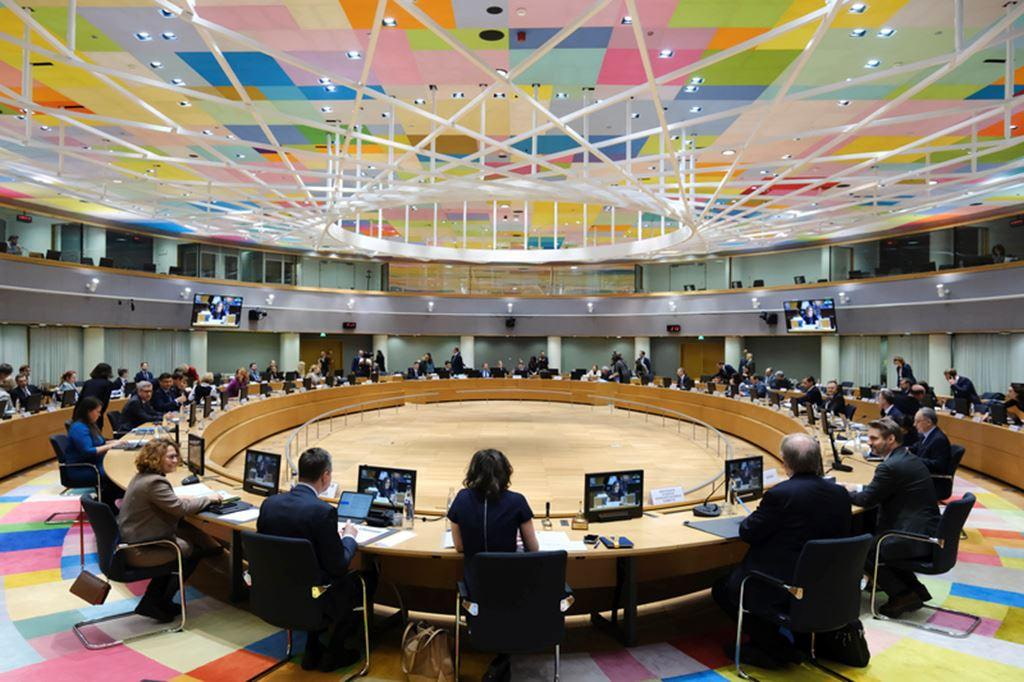
Brussels: European affairs ministers return to the long-term EU budget at the General Affairs Council on 22 September 2026, the last scheduled ministerial discussion before the Irish presidency tables its own negotiating box on the 2028 to 2034 Multiannual Financial Framework in the first week of October.

The Council agenda pairs that policy debate with preparation for the October European Council, a Commission letter of intent, an exchange of views on legislative programming for 2027 and the annual rule of law dialogue. The budget item carries the weight, because the presidency has to convert twenty-seven national positions into a single figure-bearing text within roughly two weeks of the meeting.

That conversion has not gone well so far. Ministers discussed the framework on 3 September in Brussels and again at an informal General Affairs Council in Dublin on 4 September, and the two days produced no notable movement. Capitals restated positions they have held for months on the overall ceiling, on the share reserved for cohesion and agriculture, and on whether new own resources belong in the package at all.

Thomas Byrne, Ireland’s Minister of State for European Affairs, has nonetheless held to the presidency’s timetable, telling reporters on 3 September that

we can manage to conclude an agreement by the end of the year, because it is necessary.

The sequence the presidency is working to is unusually compressed:

  • 22 September 2026, General Affairs Council policy debate in Brussels
  • First week of October, Irish negotiating box tabled with figures updating the Cypriot text of June 2026
  • 15 October 2026, European Council in Brussels takes up the presidency text
  • End of 2026, the political deadline the presidency has set itself for an agreement

Parts of the framework are already settled at Council level. Ministers agreed a position on the European Competitiveness Fund on 16 June 2026 and a partial position on 26 June on the monitoring and evaluation framework for the EU budget. Those pieces matter less than the negotiating box, which is where the money is allocated and where the unresolved fights sit.

Three of those fights recur in every capital’s talking points. Net contributors want the ceiling held near one percent of gross national income. Cohesion and agriculture beneficiaries object to the Commission’s plan to fold regional and farm spending into single national plans, which they read as giving the Commission leverage over money currently allocated by formula. And defence spending has entered the budget conversation at a scale the previous framework never contemplated.

The own resources question sits underneath all three. Without new revenue streams the Union has to repay NextGenerationEU borrowing out of the same ceiling that funds everything else, which tightens every other line from 2028. Several member states decline to discuss new revenue at all until the expenditure side is closed, and the Commission maintains the two cannot sensibly be separated.

A December agreement would be fast by the standards of this negotiation. The 2021 to 2027 framework took roughly two and a half years from proposal to adoption, and Parliament’s consent still has to follow whatever leaders settle. The Council sets out the state of play on its timeline for the long-term budget, and the ministerial agenda is published with the General Affairs Council meeting of 22 September. If the October European Council does not narrow the range, the end-of-year target moves into 2027 and the programmes that depend on the framework start their own delays.