September 22, 2026
LATEST
One Ticket Promise Meets Its First Real Test Inside the CouncilCyprus Judge Takes Over a General Court Still Absorbing CasesSkills Portability Act Sets Five Weeks as the New Recognition LimitIreland Reopens the Digital Omnibus With Cookies Back in PlayMinisters Weigh the Long-Term Budget Before a Negotiating BoxSocial Partners Have One Week Left to Shape the Quality Jobs ActPhuket Round Decides Whether Thailand Closes Its Deal This YearSyria’s Banks Reconnect While Europe’s Risk Premium Stays PutMercosur’s First Health Ban Tests a Deal Still Being RatifiedBudget Performance Regulation Slips Toward a 2027 VotePontes Digital Euro Platform Goes Live for 13 BanksEU Arctic Drilling Ban Survives Norway’s Lobbying PushPrivacy Watchdog Wants Tighter Limits on Eurojust’s New DatabasesScrutiny Board Sends Europe’s Circular Economy Act Back for ReworkLow-LEO Studies Open the Next Chapter for Europe’s IRIS2 PlanFour Indo-Pacific Partners Join Europe’s Ministers in New YorkWildfire Season Closes Above Average as the rescEU Fleet GrowsQuality Education Roadmap Lands in November With Three FrontsPartnership Plans Recast Cohesion Policy Before Anyone VotesHandling Fee on Small Parcels Must Be Ready by 1 November 2026One Ticket Promise Meets Its First Real Test Inside the CouncilCyprus Judge Takes Over a General Court Still Absorbing CasesSkills Portability Act Sets Five Weeks as the New Recognition LimitIreland Reopens the Digital Omnibus With Cookies Back in PlayMinisters Weigh the Long-Term Budget Before a Negotiating BoxSocial Partners Have One Week Left to Shape the Quality Jobs ActPhuket Round Decides Whether Thailand Closes Its Deal This YearSyria’s Banks Reconnect While Europe’s Risk Premium Stays PutMercosur’s First Health Ban Tests a Deal Still Being RatifiedBudget Performance Regulation Slips Toward a 2027 VotePontes Digital Euro Platform Goes Live for 13 BanksEU Arctic Drilling Ban Survives Norway’s Lobbying PushPrivacy Watchdog Wants Tighter Limits on Eurojust’s New DatabasesScrutiny Board Sends Europe’s Circular Economy Act Back for ReworkLow-LEO Studies Open the Next Chapter for Europe’s IRIS2 PlanFour Indo-Pacific Partners Join Europe’s Ministers in New YorkWildfire Season Closes Above Average as the rescEU Fleet GrowsQuality Education Roadmap Lands in November With Three FrontsPartnership Plans Recast Cohesion Policy Before Anyone VotesHandling Fee on Small Parcels Must Be Ready by 1 November 2026
September 22, 2026
LATEST
One Ticket Promise Meets Its First Real Test Inside the CouncilCyprus Judge Takes Over a General Court Still Absorbing CasesSkills Portability Act Sets Five Weeks as the New Recognition LimitIreland Reopens the Digital Omnibus With Cookies Back in PlayMinisters Weigh the Long-Term Budget Before a Negotiating BoxSocial Partners Have One Week Left to Shape the Quality Jobs ActPhuket Round Decides Whether Thailand Closes Its Deal This YearSyria’s Banks Reconnect While Europe’s Risk Premium Stays PutMercosur’s First Health Ban Tests a Deal Still Being RatifiedBudget Performance Regulation Slips Toward a 2027 VotePontes Digital Euro Platform Goes Live for 13 BanksEU Arctic Drilling Ban Survives Norway’s Lobbying PushPrivacy Watchdog Wants Tighter Limits on Eurojust’s New DatabasesScrutiny Board Sends Europe’s Circular Economy Act Back for ReworkLow-LEO Studies Open the Next Chapter for Europe’s IRIS2 PlanFour Indo-Pacific Partners Join Europe’s Ministers in New YorkWildfire Season Closes Above Average as the rescEU Fleet GrowsQuality Education Roadmap Lands in November With Three FrontsPartnership Plans Recast Cohesion Policy Before Anyone VotesHandling Fee on Small Parcels Must Be Ready by 1 November 2026One Ticket Promise Meets Its First Real Test Inside the CouncilCyprus Judge Takes Over a General Court Still Absorbing CasesSkills Portability Act Sets Five Weeks as the New Recognition LimitIreland Reopens the Digital Omnibus With Cookies Back in PlayMinisters Weigh the Long-Term Budget Before a Negotiating BoxSocial Partners Have One Week Left to Shape the Quality Jobs ActPhuket Round Decides Whether Thailand Closes Its Deal This YearSyria’s Banks Reconnect While Europe’s Risk Premium Stays PutMercosur’s First Health Ban Tests a Deal Still Being RatifiedBudget Performance Regulation Slips Toward a 2027 VotePontes Digital Euro Platform Goes Live for 13 BanksEU Arctic Drilling Ban Survives Norway’s Lobbying PushPrivacy Watchdog Wants Tighter Limits on Eurojust’s New DatabasesScrutiny Board Sends Europe’s Circular Economy Act Back for ReworkLow-LEO Studies Open the Next Chapter for Europe’s IRIS2 PlanFour Indo-Pacific Partners Join Europe’s Ministers in New YorkWildfire Season Closes Above Average as the rescEU Fleet GrowsQuality Education Roadmap Lands in November With Three FrontsPartnership Plans Recast Cohesion Policy Before Anyone VotesHandling Fee on Small Parcels Must Be Ready by 1 November 2026

Ministers Take Up Chips Act 2.0 With Europe Still Import Reliant

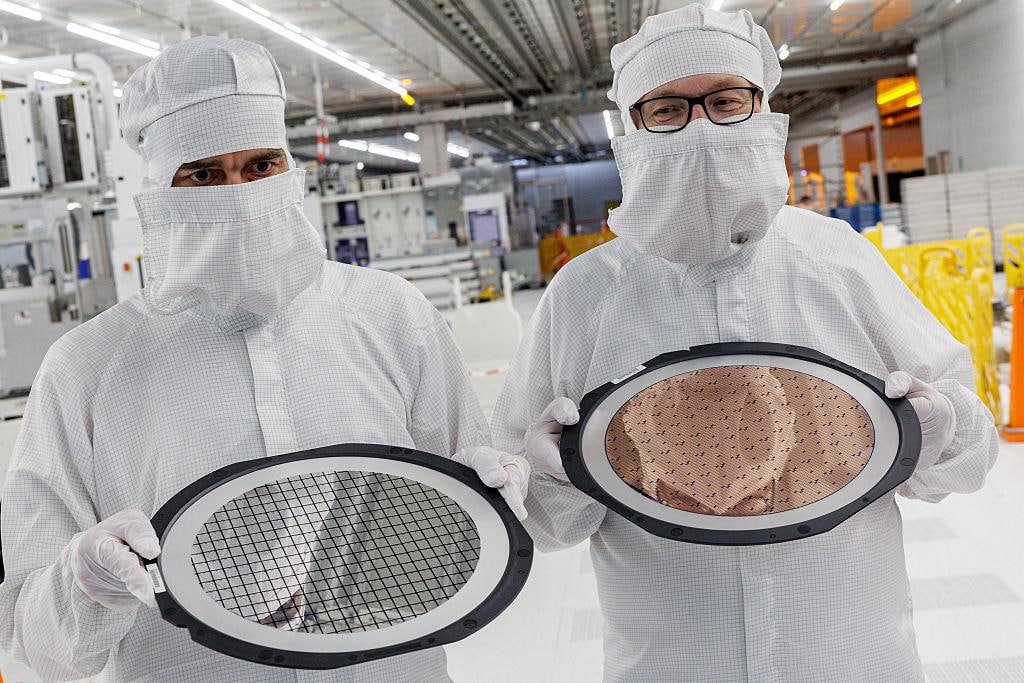
Dresden: European industry ministers will take up the Chips Act 2.0 at the Competitiveness Council in Brussels on 24 September 2026, after the Irish presidency circulated a background note on 11 September conceding that the European Union still depends on third countries across most of the semiconductor value chain. The Commission tabled the regulation on 3 June 2026 inside its European Technological Sovereignty Package, and the Council has pencilled in agreement for the second quarter of 2027.

The presidency note builds its case on one uncomfortable pair of numbers. EU semiconductor consumption reached 41.1 billion euro in 2025, equal to 10.5 per cent of global shipments, yet the majority of the chips Europe consumes are fabricated elsewhere. The first such regulation, adopted in September 2023, drew more than 53 billion euro in combined public and private investment and produced five pilot lines plus a network of national competence centres. It did not close the gap.

The AI revolution has led to an exponential increase in demand for semiconductors, which was not foreseeable when the first Chips Act was adopted.

That sentence, from the Presidency background note circulated to the Permanent Representatives Committee, explains why ministers are revisiting a law barely three years old. Artificial intelligence rewrote demand for advanced logic and memory after 2023, and the original regulation predates that shift.

The new proposal keeps the three-pillar architecture of the original but changes where it applies pressure. Where the 2023 law pushed supply, the successor leans on demand, on the reasoning that European fabs will only rise if European buyers commit to European output first.

Pillar one converts the Chips for Europe Initiative into a Chips for Europe Initiative 2.0, adding innovation procurement, a Demand Forum, Demand Accelerators and a set of Grand Challenges meant to carry designs from laboratory to first industrial deployment. Pillar two targets manufacturing capacity and gives advanced manufacturing for AI chips the highest priority among Strategic Projects. Pillar three creates a voluntary business-to-business supply chain platform so firms can map their own interdependencies before a shortage exposes them.

The concrete commitments ministers will scrutinise include the following:

  • A maximum 12-month permitting process for strategic semiconductor investments.
  • Priority treatment for advanced manufacturing, including AI chips.
  • Diversification of supply sources for exposed downstream sectors, the automotive industry above all.
  • Alignment with the Cloud and AI Development Act, an EU open-source strategy and a digitalisation roadmap for energy.
  • Target date for political agreement: the second quarter of 2027, under the One Europe, One Market Roadmap.

Two external assessments pushed the Commission here. Mario Draghi’s 2024 competitiveness report urged a larger and more centralised semiconductor effort to cut strategic dependencies. The European Court of Auditors went further in its special report of May 2025, finding reasonable progress on implementation but concluding that the bloc was very unlikely to reach the Digital Decade target of a 20 per cent share of global production by 2030 — a target the auditors called overly ambitious to begin with.

Ministers will answer two questions the presidency has put to them. How should the Chips Act 2.0 balance technological sovereignty, competitiveness and international cooperation? And in which technologies or value-chain segments should Europe actually seek global leadership rather than spread resources thin?

The second question carries more weight than it looks. Europe holds real strength in semiconductor equipment, materials and automotive-grade mainstream chips, and almost none in leading-edge logic fabrication. Whether the Chips Act 2.0 funds the strengths or chases the weakness is the argument the Council will have on 24 September, alongside a debate on merger control guidelines and briefings on the industrial accelerator act and the 28th regime. The Competitiveness Council of 24 September 2026 will not settle the file, but it will show which capitals intend to pay for it.