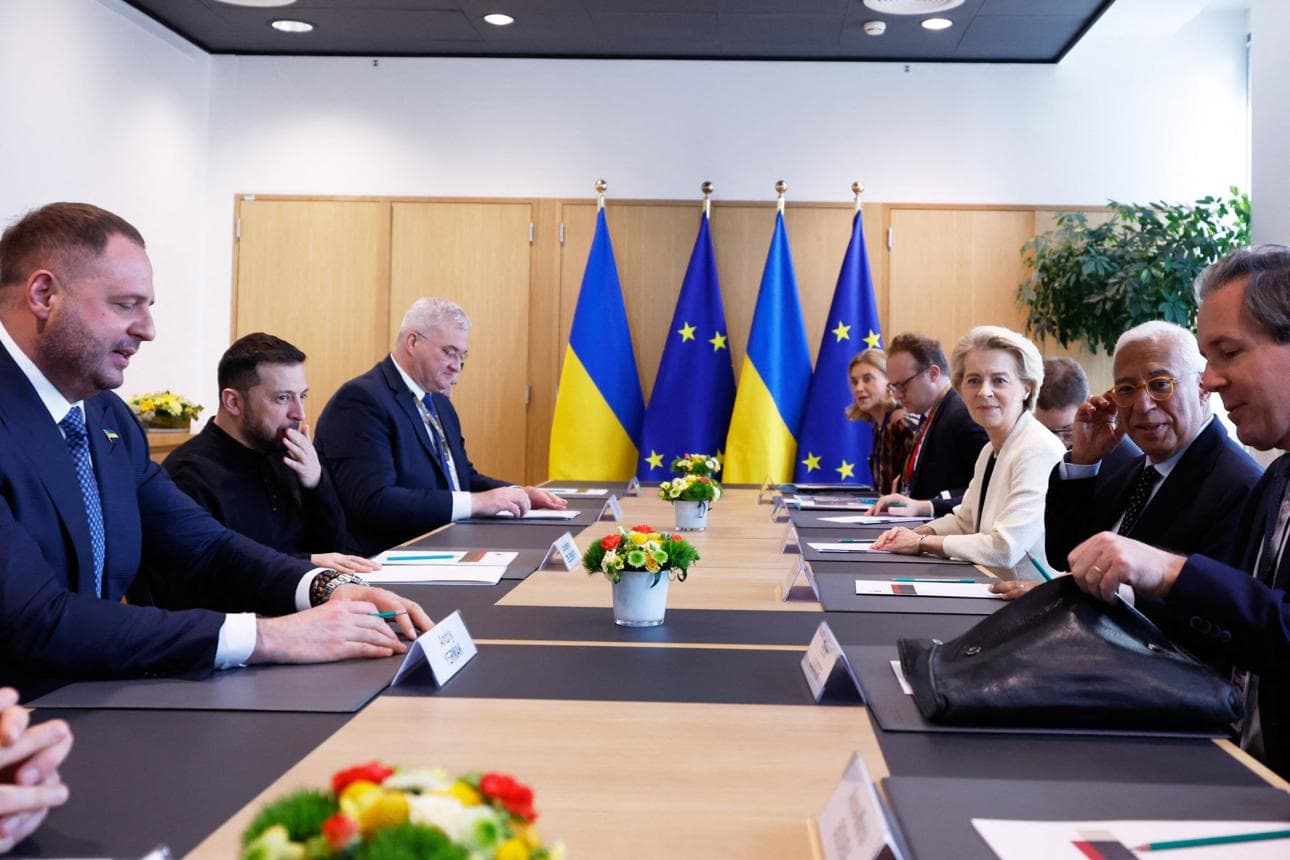
Brussels: The arrival of Péter Magyar at the head of the Hungarian government in early May 2026 has altered the political arithmetic of EU enlargement faster than any procedural reform could have done. For more than two years, the formal opening of substantive negotiation clusters with Ukraine and Moldova has been blocked by Budapest’s reliance on the unanimity rule, leaving both candidates in a curious limbo. They had completed the analytical screening process, satisfied the Commission’s benchmarks, and earned positive annual progress reports, yet remained unable to begin chapter-by-chapter talks. With Hungary’s veto now expected to lift under the new government, the European Council scheduled for 18–19 June in Brussels has acquired an outsized strategic significance.
The analytical case for moving quickly is built on several converging considerations. First, the credibility of the enlargement promise has eroded steadily since the 2003 expansion, with successive waves of declared candidates moving through the process at a pace that no longer matches the geopolitical urgency described in Council conclusions. Second, the war in Ukraine has reshaped the meaning of accession itself. For Kyiv, EU membership is now intertwined with security guarantees, reconstruction financing, and the irreversibility of its Western orientation. Third, Moldova’s own trajectory, marked by successful screening despite documented hybrid pressure, has demonstrated that smaller candidate states can absorb the institutional shock of accession faster than the historical average if external support is sustained.
What remains contested is the sequencing. Some member states favour a tightly coupled track in which Ukraine and Moldova advance in parallel, on the grounds that bundling reduces the political surface area for individual vetoes and projects a coherent message to Eastern partners. Others prefer a differentiated approach that allows Moldova to move ahead on chapters where its readiness is demonstrably stronger, with Ukraine catching up as reconstruction priorities crystallise. Both approaches have analytical merits, and the choice will likely depend less on technical readiness than on the political coalition that the Cypriot presidency assembles before its mandate expires on 30 June.
A second analytical layer concerns the absorptive capacity of the Union itself. Treaty mechanics around qualified majority thresholds, the composition of the European Parliament, the size of the Commission, and the recalibration of cohesion and agricultural envelopes will all be tested by enlargement to a Union of 30 or more members. The Multiannual Financial Framework debate already under way will be the principal vehicle through which these adjustments are negotiated, and the introduction of new candidates into the budgetary baseline will sharpen distributional tensions between net contributors and net beneficiaries. Several Brussels-based think tanks have argued for phased budget reforms that decouple the accession trajectory from the redesign of internal financial flows, but this analytical distinction may be harder to maintain in practice than in theory.
A third consideration is the strategic communication of the process. Public opinion in candidate countries has historically been most enthusiastic about EU membership in the early phases of accession and has tended to cool when negotiations stretch over a decade or more. The Commission’s stated ambition to provisionally close talks with Ukraine and Moldova by 2028 is therefore not merely a technical target but a tool for sustaining popular legitimacy at home. Failing to meet such a deadline, after a political opening has been declared, would carry reputational costs that go beyond the enlargement file and touch the broader credibility of the Union as a transformative actor.
Finally, analysts should attend to the second-order effects of the Magyar shift. Hungary’s pivot does not eliminate intra-EU divisions on enlargement; it relocates them. Questions about rule-of-law conditionality, transitional arrangements for the single market, and access to structural funds will continue to attract reservations from several member states. The next twelve months will offer a stress test of whether the Union can convert a politically favourable moment into procedural progress that survives the inevitable headwinds, or whether the opening collapses into another cycle of declarations without consequential opening of chapters. For Ukraine and Moldova, the calendar between June and December 2026 will determine whether 2028 remains a plausible horizon or recedes into the diplomatic backlog.