August 9, 2026
LATEST
Japan Becomes Europe’s Closest Security Partner in AsiaCan Europe’s New Zealand Deal Anchor It in the Pacific?Chip Research Binds Europe and South Korea CloserMinimum Prices Replace Tariffs in Europe’s China Car DealBrussels and Beijing Keep Talking While the Trade Gap WidensKorean Weapons and EU Loans Now Bankroll Europe’s RearmamentNew EU Gas Market Rules Take Effect With Consumer SafeguardsDeforestation Regulation Holds Its December Deadline Despite CutsDigital Omnibus Delays Europe’s High-Risk AI Deadline to 2027Europe’s Schools Confront a Widening Basic Skills GapRule of Law Report Finds Progress but Trust Still LagsIRIS2 Gains 66 Satellites as Brussels Signs the Rollout DealNature Restoration Plans Come Due as Member States Race a DeadlineECB Rates Hold at 2.25 Percent as Frankfurt Waits on the DataEU Budget Talks Turn to Cohesion as Ireland Takes OverWildfire Response Stretches Europe’s Emergency Fleet ThinCan Europe’s Quantum Plan Match Its Big Ambitions?Armenia Edges West as Moscow’s Grip Slips AwayEurope Inherits the World’s Aid Bill It Cannot Fully PayAir Passenger Rights Get Their First Overhaul in Two DecadesJapan Becomes Europe’s Closest Security Partner in AsiaCan Europe’s New Zealand Deal Anchor It in the Pacific?Chip Research Binds Europe and South Korea CloserMinimum Prices Replace Tariffs in Europe’s China Car DealBrussels and Beijing Keep Talking While the Trade Gap WidensKorean Weapons and EU Loans Now Bankroll Europe’s RearmamentNew EU Gas Market Rules Take Effect With Consumer SafeguardsDeforestation Regulation Holds Its December Deadline Despite CutsDigital Omnibus Delays Europe’s High-Risk AI Deadline to 2027Europe’s Schools Confront a Widening Basic Skills GapRule of Law Report Finds Progress but Trust Still LagsIRIS2 Gains 66 Satellites as Brussels Signs the Rollout DealNature Restoration Plans Come Due as Member States Race a DeadlineECB Rates Hold at 2.25 Percent as Frankfurt Waits on the DataEU Budget Talks Turn to Cohesion as Ireland Takes OverWildfire Response Stretches Europe’s Emergency Fleet ThinCan Europe’s Quantum Plan Match Its Big Ambitions?Armenia Edges West as Moscow’s Grip Slips AwayEurope Inherits the World’s Aid Bill It Cannot Fully PayAir Passenger Rights Get Their First Overhaul in Two Decades
August 9, 2026
LATEST
Japan Becomes Europe’s Closest Security Partner in AsiaCan Europe’s New Zealand Deal Anchor It in the Pacific?Chip Research Binds Europe and South Korea CloserMinimum Prices Replace Tariffs in Europe’s China Car DealBrussels and Beijing Keep Talking While the Trade Gap WidensKorean Weapons and EU Loans Now Bankroll Europe’s RearmamentNew EU Gas Market Rules Take Effect With Consumer SafeguardsDeforestation Regulation Holds Its December Deadline Despite CutsDigital Omnibus Delays Europe’s High-Risk AI Deadline to 2027Europe’s Schools Confront a Widening Basic Skills GapRule of Law Report Finds Progress but Trust Still LagsIRIS2 Gains 66 Satellites as Brussels Signs the Rollout DealNature Restoration Plans Come Due as Member States Race a DeadlineECB Rates Hold at 2.25 Percent as Frankfurt Waits on the DataEU Budget Talks Turn to Cohesion as Ireland Takes OverWildfire Response Stretches Europe’s Emergency Fleet ThinCan Europe’s Quantum Plan Match Its Big Ambitions?Armenia Edges West as Moscow’s Grip Slips AwayEurope Inherits the World’s Aid Bill It Cannot Fully PayAir Passenger Rights Get Their First Overhaul in Two DecadesJapan Becomes Europe’s Closest Security Partner in AsiaCan Europe’s New Zealand Deal Anchor It in the Pacific?Chip Research Binds Europe and South Korea CloserMinimum Prices Replace Tariffs in Europe’s China Car DealBrussels and Beijing Keep Talking While the Trade Gap WidensKorean Weapons and EU Loans Now Bankroll Europe’s RearmamentNew EU Gas Market Rules Take Effect With Consumer SafeguardsDeforestation Regulation Holds Its December Deadline Despite CutsDigital Omnibus Delays Europe’s High-Risk AI Deadline to 2027Europe’s Schools Confront a Widening Basic Skills GapRule of Law Report Finds Progress but Trust Still LagsIRIS2 Gains 66 Satellites as Brussels Signs the Rollout DealNature Restoration Plans Come Due as Member States Race a DeadlineECB Rates Hold at 2.25 Percent as Frankfurt Waits on the DataEU Budget Talks Turn to Cohesion as Ireland Takes OverWildfire Response Stretches Europe’s Emergency Fleet ThinCan Europe’s Quantum Plan Match Its Big Ambitions?Armenia Edges West as Moscow’s Grip Slips AwayEurope Inherits the World’s Aid Bill It Cannot Fully PayAir Passenger Rights Get Their First Overhaul in Two Decades

First EU Japan Defence Industry Dialogue Maps Dual-Use Routes

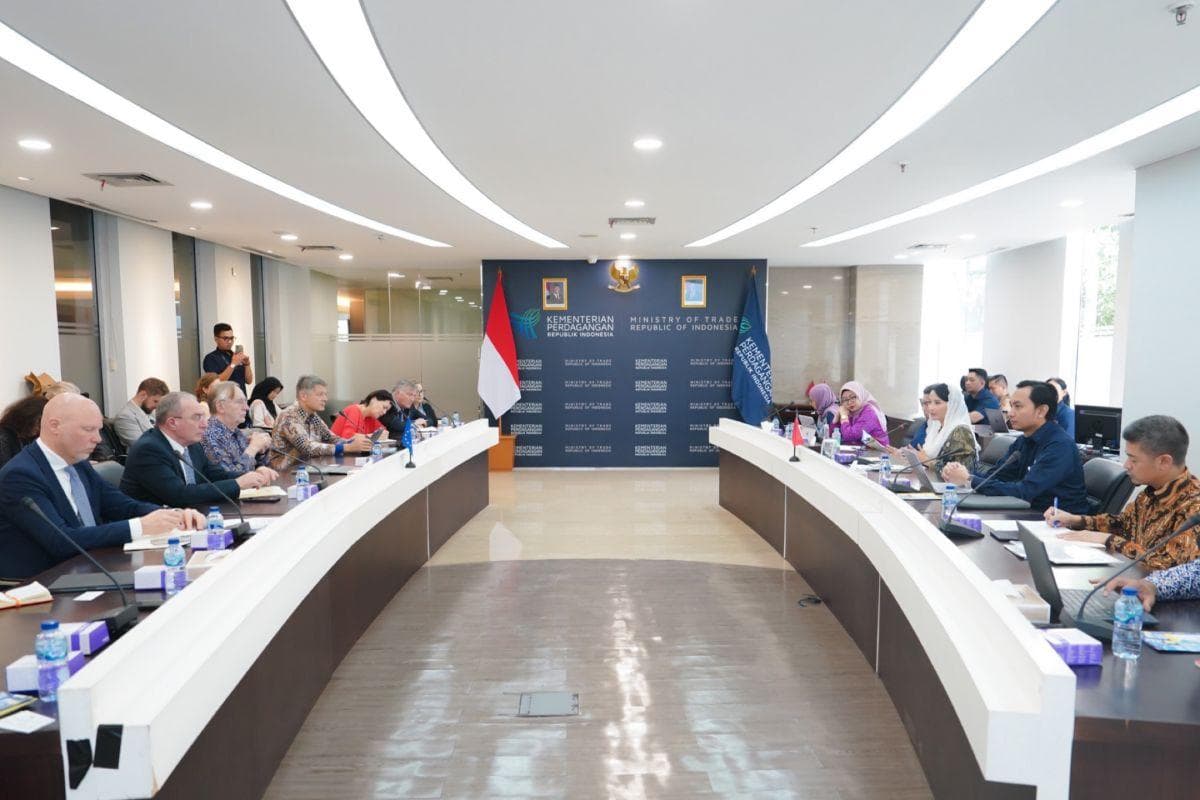
Tokyo: The first European Union and Japan Defence Industry Dialogue, convened in Brussels on the seventeenth of April, has shifted the bilateral security relationship from declaratory rhythm to operational architecture. Around twenty European firms anchored by Saab of Sweden, Thales of France and Leonardo of Italy sat across the table from roughly thirty Japanese counterparts that included Subaru Corporation, Hitachi Limited and NEC Corporation, with Defence and Space Commissioner Andrius Kubilius leading the European delegation and Toshio Ino, State Minister at the Ministry of Economy, Trade and Industry, fronting the Japanese side. Defence Minister Masahisa Miyazaki contributed by video message, a quiet signal that the Tokyo machine wanted defence policy and defence industrial policy in the same room.

The dialogue formally sits under the Competitiveness Alliance that Prime Minister Sanae Takaichi and the European Commission launched at the July 2025 Tokyo summit, and within the legal envelope of the Security and Defence Partnership both sides signed in November 2024. What is new is the resolve to operationalise dual-use technology cooperation through a recurring industrial channel rather than periodic ministerial communiqués. The joint statement names supply chain resilience as a shared priority, identifying critical raw materials, components and dual-use sectors as the early test cases.

For European primes the calculation is less about market access than about second-source insurance. Saab’s discussions in Brussels reportedly touched on sensors and electronic warfare modules, while Leonardo carried portfolios on rotorcraft and trainer aircraft that fit the Japan Self-Defence Force renewal cycle now accelerating after the Takaichi government’s February election landslide. Thales arrived with a digital battlefield agenda that overlaps with Japan’s command-and-control modernisation. None of these conversations will produce contracts in the next quarter, but the catalogue effect matters for European industrial planners trying to anchor longer demand curves outside intra-EU procurement.

Tokyo’s incentives are sharper. The Takaichi cabinet has signalled willingness to liberalise export controls under the Three Principles on Transfer of Defence Equipment and Technology, and it needs European partners to validate the standards architecture that liberalisation requires. The dialogue therefore matters because it ties Japanese industrial actors into European standards setting on certification, interoperability and counter-coercion screening. Japanese officials have read carefully the lessons of the Reciprocal Access Agreements concluded with the United Kingdom in 2023 and Italy through the Global Combat Air Programme, and now want a similar reciprocal logic embedded in the broader European market.

The supply chain track is where the dialogue could produce visible deliverables before the close of 2026. The Administrative Arrangement signed in July 2025 between the Commission and the Japan Organisation for Metals and Energy Security already creates a joint working frame on critical raw materials. Marrying that to the defence industrial dialogue gives European capitals a way to discuss rare earth substitution, semiconductor packaging redundancy and battery cell sovereignty without naming the third country whose policies provoke the conversation. That tact is itself a deliverable. The next dialogue session, expected in Tokyo in late 2026, will reveal whether the catalogue translates into co-development or remains a hedge against a future where unilateral export controls in Beijing or Washington force European and Japanese capitals to act faster than their procurement cycles can move.