August 9, 2026
LATEST
Japan Becomes Europe’s Closest Security Partner in AsiaCan Europe’s New Zealand Deal Anchor It in the Pacific?Chip Research Binds Europe and South Korea CloserMinimum Prices Replace Tariffs in Europe’s China Car DealBrussels and Beijing Keep Talking While the Trade Gap WidensKorean Weapons and EU Loans Now Bankroll Europe’s RearmamentNew EU Gas Market Rules Take Effect With Consumer SafeguardsDeforestation Regulation Holds Its December Deadline Despite CutsDigital Omnibus Delays Europe’s High-Risk AI Deadline to 2027Europe’s Schools Confront a Widening Basic Skills GapRule of Law Report Finds Progress but Trust Still LagsIRIS2 Gains 66 Satellites as Brussels Signs the Rollout DealNature Restoration Plans Come Due as Member States Race a DeadlineECB Rates Hold at 2.25 Percent as Frankfurt Waits on the DataEU Budget Talks Turn to Cohesion as Ireland Takes OverWildfire Response Stretches Europe’s Emergency Fleet ThinCan Europe’s Quantum Plan Match Its Big Ambitions?Armenia Edges West as Moscow’s Grip Slips AwayEurope Inherits the World’s Aid Bill It Cannot Fully PayAir Passenger Rights Get Their First Overhaul in Two DecadesJapan Becomes Europe’s Closest Security Partner in AsiaCan Europe’s New Zealand Deal Anchor It in the Pacific?Chip Research Binds Europe and South Korea CloserMinimum Prices Replace Tariffs in Europe’s China Car DealBrussels and Beijing Keep Talking While the Trade Gap WidensKorean Weapons and EU Loans Now Bankroll Europe’s RearmamentNew EU Gas Market Rules Take Effect With Consumer SafeguardsDeforestation Regulation Holds Its December Deadline Despite CutsDigital Omnibus Delays Europe’s High-Risk AI Deadline to 2027Europe’s Schools Confront a Widening Basic Skills GapRule of Law Report Finds Progress but Trust Still LagsIRIS2 Gains 66 Satellites as Brussels Signs the Rollout DealNature Restoration Plans Come Due as Member States Race a DeadlineECB Rates Hold at 2.25 Percent as Frankfurt Waits on the DataEU Budget Talks Turn to Cohesion as Ireland Takes OverWildfire Response Stretches Europe’s Emergency Fleet ThinCan Europe’s Quantum Plan Match Its Big Ambitions?Armenia Edges West as Moscow’s Grip Slips AwayEurope Inherits the World’s Aid Bill It Cannot Fully PayAir Passenger Rights Get Their First Overhaul in Two Decades
August 9, 2026
LATEST
Japan Becomes Europe’s Closest Security Partner in AsiaCan Europe’s New Zealand Deal Anchor It in the Pacific?Chip Research Binds Europe and South Korea CloserMinimum Prices Replace Tariffs in Europe’s China Car DealBrussels and Beijing Keep Talking While the Trade Gap WidensKorean Weapons and EU Loans Now Bankroll Europe’s RearmamentNew EU Gas Market Rules Take Effect With Consumer SafeguardsDeforestation Regulation Holds Its December Deadline Despite CutsDigital Omnibus Delays Europe’s High-Risk AI Deadline to 2027Europe’s Schools Confront a Widening Basic Skills GapRule of Law Report Finds Progress but Trust Still LagsIRIS2 Gains 66 Satellites as Brussels Signs the Rollout DealNature Restoration Plans Come Due as Member States Race a DeadlineECB Rates Hold at 2.25 Percent as Frankfurt Waits on the DataEU Budget Talks Turn to Cohesion as Ireland Takes OverWildfire Response Stretches Europe’s Emergency Fleet ThinCan Europe’s Quantum Plan Match Its Big Ambitions?Armenia Edges West as Moscow’s Grip Slips AwayEurope Inherits the World’s Aid Bill It Cannot Fully PayAir Passenger Rights Get Their First Overhaul in Two DecadesJapan Becomes Europe’s Closest Security Partner in AsiaCan Europe’s New Zealand Deal Anchor It in the Pacific?Chip Research Binds Europe and South Korea CloserMinimum Prices Replace Tariffs in Europe’s China Car DealBrussels and Beijing Keep Talking While the Trade Gap WidensKorean Weapons and EU Loans Now Bankroll Europe’s RearmamentNew EU Gas Market Rules Take Effect With Consumer SafeguardsDeforestation Regulation Holds Its December Deadline Despite CutsDigital Omnibus Delays Europe’s High-Risk AI Deadline to 2027Europe’s Schools Confront a Widening Basic Skills GapRule of Law Report Finds Progress but Trust Still LagsIRIS2 Gains 66 Satellites as Brussels Signs the Rollout DealNature Restoration Plans Come Due as Member States Race a DeadlineECB Rates Hold at 2.25 Percent as Frankfurt Waits on the DataEU Budget Talks Turn to Cohesion as Ireland Takes OverWildfire Response Stretches Europe’s Emergency Fleet ThinCan Europe’s Quantum Plan Match Its Big Ambitions?Armenia Edges West as Moscow’s Grip Slips AwayEurope Inherits the World’s Aid Bill It Cannot Fully PayAir Passenger Rights Get Their First Overhaul in Two Decades

New Zealand And Europe Begin A First Security And Defence Dialogue

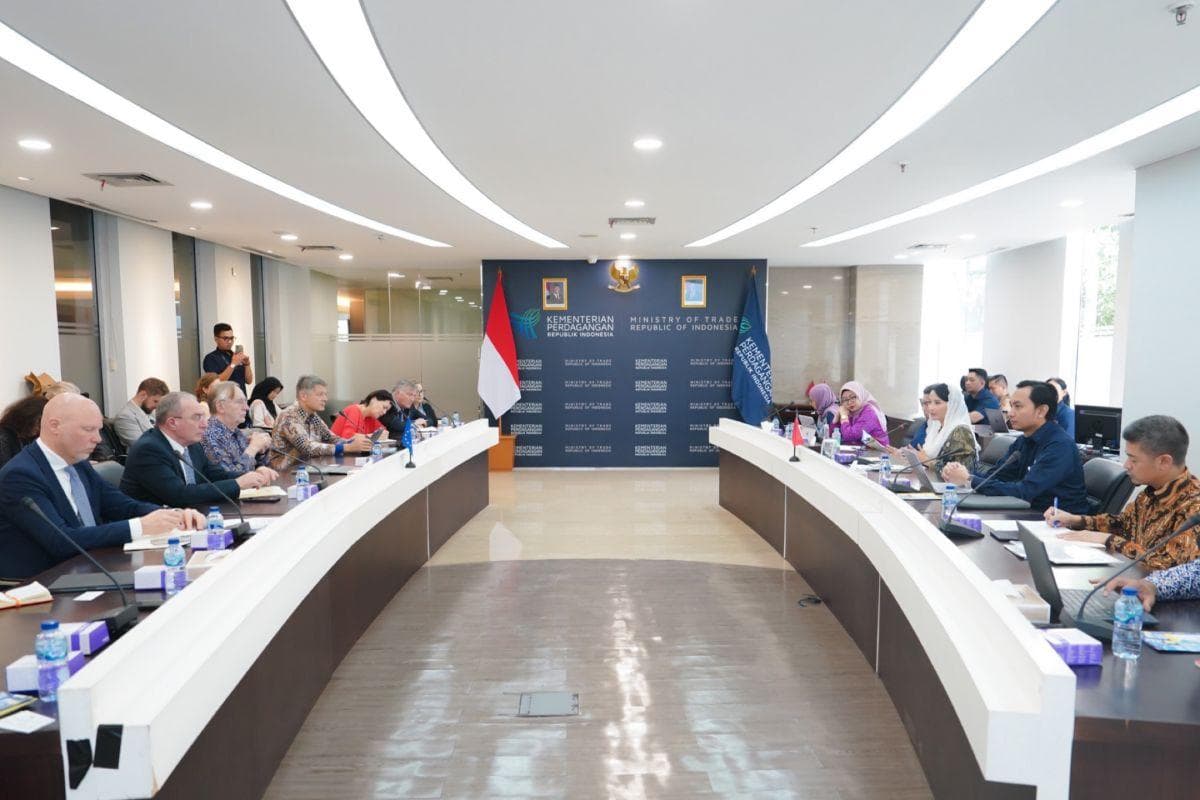
Wellington: For a relationship long defined by lamb quotas and a hard-won free trade deal, the European Union and New Zealand did something quietly novel on 21 May. They held their first high-level exchanges dedicated to security and defence, and agreed to look for concrete ways to work together on maritime security, cyber security, space security, non-proliferation and counter-terrorism. A dialogue about patrol routes and satellite resilience is a long way from the agricultural haggling that dominated the trade negotiations, and that distance is the point.

New Zealand has historically prized a foreign policy of careful balance, reluctant to be drawn too tightly into any bloc and conscious of its economic dependence on China. That Wellington has now opened a structured security conversation with Brussels says as much about the changing Indo-Pacific as it does about Europe. The maritime approaches that New Zealand watches are the same sea lanes through which a large share of European trade travels, and the disruptions that worry one increasingly worry the other.

The agenda the two sides sketched is revealing in its modesty. None of the listed areas commit New Zealand to anything resembling a mutual defence obligation. Maritime domain awareness, cyber resilience and space security are cooperative by nature, low on political cost and high on practical value. They allow a small, capable country to share information and standards with a large partner without surrendering the independence that its public guards jealously. For Europe, the appeal is reach. The bloc has declared itself an Indo-Pacific actor, and partnerships with credible regional democracies are the cheapest way to make that claim look serious.

The trade relationship runs underneath all of this. The free trade agreement that entered force has already produced a functioning trade committee, with the next meeting due in Brussels in the second half of the year, and both governments have made a point of defending the rules-based trading system together. Layering a security dialogue on top of a working commercial framework is how mature partnerships deepen, one file at a time, rather than through a single dramatic treaty.

Sceptics will note the asymmetry. New Zealand’s defence budget is small, its forces are stretched, and there is little it can offer Europe in raw military terms. But that misreads the value of the exercise. What Wellington brings is geography, intelligence on a region Europe struggles to see clearly, and the legitimacy of a partner with no colonial baggage in Asian eyes. What Europe offers in return is technology, standards and a seat at conversations about the global commons that a country of five million could not convene alone.

The risk is that the dialogue stays at the level of communiques. First exchanges are easy to celebrate and easy to forget, and neither government has yet committed money or personnel to specific projects. The test will come in whether the maritime and cyber strands produce joint exercises, shared assessments or interoperable systems. If they do, a relationship that began with trade will have grown into something broader. If they do not, 21 May will read as a pleasant afternoon in Wellington and little more.