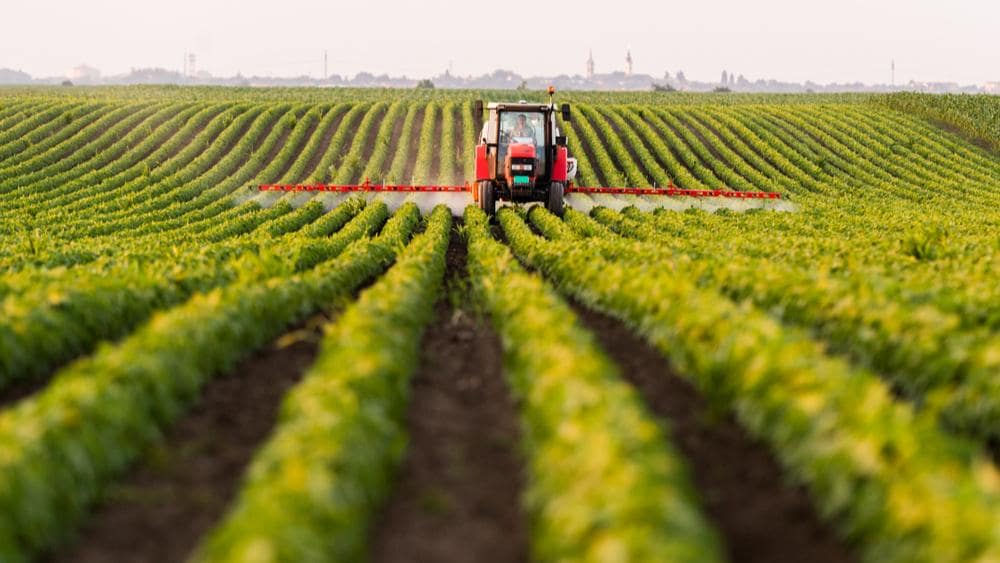
The active farmer definition has become the sharpest dividing line in the Council negotiations on the Common Agricultural Policy after 2027, and ministers have only weeks to narrow it. Agriculture ministers met on 28 September 2026 under the Irish presidency and made incremental progress, but no deal was reached on who qualifies for direct payments. The presidency now aims to secure a partial general approach at the Agriculture Council on 26 and 27 October 2026.
The dispute is easy to state and hard to settle. The Commission’s proposal would require that farming be a person’s main economic activity before they can draw area-based income support, a test meant to keep money away from landowners and investors who do little actual farming. Several capitals object to a single EU-wide rule, arguing that part-time farming is common in their regions and that a rigid test would exclude holdings that keep land managed and rural communities alive. Others want strict criteria so that scarce funds reach people who produce food.
A second argument runs alongside it, over the design of degressive area-based income support. Under this mechanism payments taper as a holding grows, which shifts money towards smaller and medium-sized farms. Sweden has asked whether the structure should favour small farms, young farmers or those in the greatest economic difficulty, and the answer shapes how any active farmer definition is applied in practice. A narrow definition combined with steep tapering would redistribute funds sharply, while a loose definition with gentle tapering would look much like today’s system.
The third thread is the balance between common rules and national flexibility. Many ministers want simpler requirements and less paperwork for farmers, and they argue that member states know their own agricultural structures best. The Commission and several northern capitals counter that too much discretion would weaken the common character of the policy and invite uneven treatment of farmers competing in one single market.
Money hangs over every one of these questions. No budget figures were released at the September meeting because CAP funding depends on the 2028 to 2034 multiannual financial framework, which is negotiated on a separate track. Ministers are therefore drafting rules for a payment system whose size they do not yet know, and that uncertainty makes governments cautious about conceding anything on eligibility.
Ministers also discussed the Commission’s fertiliser action plan over a working lunch. It aims to cut import dependence, raise domestic production and promote organic and bio-based alternatives, but no decisions were taken. Support for regions hit by drought and extreme weather and the market effects of Russia’s war in Ukraine were also on the table, with the Ukrainian agriculture minister joining that discussion.
The next step is the October Council. A partial general approach would give the presidency a mandate to open trilogue talks with the European Parliament and the Commission, and that mandate will have to say something concrete about eligibility. If capitals cannot agree, the file may slip to a later presidency and farmers will wait longer for clarity on their post-2027 income.
For farm organisations, the stakes are practical. Whether a part-time vineyard owner, a mountain herder with a second job or a large investor-owned estate qualifies depends on the wording that emerges. How ministers settle the active farmer definition in the coming weeks will largely decide who receives support from 2028.