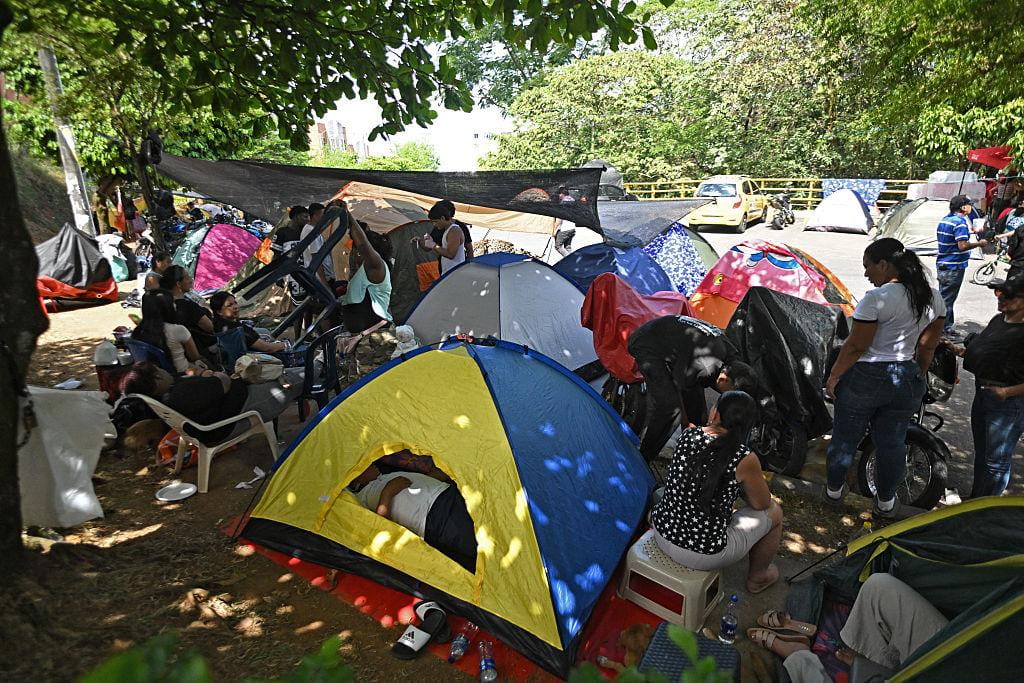
Three national governments emptied warehouse shelves this week faster than the European Union could move a euro of recovery money. The civil protection mechanism delivered tents, blankets, kitchen sets and water filters to Colombia within days of a magnitude 7.4 earthquake, while the cash that will rebuild the affected departments has barely started to flow. That gap says something useful about what the mechanism is and what it is not.
Sweden offered 150 tents and 360 blankets. Germany committed 3,000 kitchen sets and 2,500 water filters. Luxembourg added 79 tents. The Commission announced the combined offers on 17 August and routed them through its emergency response coordination centre, which runs around the clock and matches an affected country’s request against whatever the 27 member states and ten additional participating states already hold in stock.
Speed here comes from pre-positioning rather than from Brussels. Civil protection agencies keep shelter and water-treatment equipment on pallets because they expect to use it at home. When a request arrives from outside Europe, the logistics problem shrinks to transport and customs clearance. Nobody has to procure anything, and nobody has to wait for a budget line to open.
The money moved on a different clock. The Commission announced 2.1 million euro in emergency humanitarian funding on 12 August, five days before the in-kind offers were confirmed. Humanitarian partners are now spending it on health services, water and sanitation, shelter, food and cash transfers. The German Red Cross did not wait for that decision and reallocated 100,000 euro from an existing EU-funded project to reach 2,500 families in Chocó and Valle del Cauca.
That reallocation is the more revealing detail. A partner with an existing grant and existing staff on the ground can redirect resources in hours. A new funding decision, however urgent, still has to clear internal procedures. Emergency humanitarian budgets are designed to be fast by the standards of public finance, and they remain slow by the standards of a collapsed building.
Copernicus satellite mapping went live in the first hours, giving Colombian responders damage assessments before search teams had finished working through the rubble. The Commission also sent a rapid response coordinator to Bogotá to stitch together the civil protection deliveries and the humanitarian spending, two streams that answer to different rules and different reporting lines even when they serve the same families.
Commission President Ursula von der Leyen framed the response as solidarity in action. Preparedness and Crisis Management Commissioner Hadja Lahbib listed the tools deployed, from satellite mapping to shelter and expertise on the ground. Both statements are accurate and both skip the harder question, which is what happens after week three.
The mechanism has no reconstruction mandate. It moves what member states volunteer, it coordinates, and then it steps back. Colombia’s recovery will depend on national budgets, on multilateral lenders and on whatever development financing the EU decides to redirect through its Latin America programmes. None of that is triggered automatically by an earthquake.
There is a capacity question too. European civil protection agencies spent this week responding to emergencies inside Europe as well, which limits how much any single country can release abroad without thinning its own reserves. Voluntary pooling works when demand is staggered. It gets tested when it is not.
What Colombia received is real and it arrived quickly. Judging the mechanism by that alone would still miss the point. The system Europe built is a matching service for physical goods, held together by a coordination centre and a satellite service, and it performs that narrow job well. The recovery money it cannot supply is a separate decision, taken later, by institutions that face no comparable deadline.