August 23, 2026
LATEST
Europe Now Runs Trade Defence Against China One Product at a TimeWhat Seoul Must Sign Before Korean Firms Can Touch SAFE MoneyNorth Korea’s Money Moves Faster Than Europe Can List Its OwnersNew Zealand Is Still Waiting for the Pact Japan and Korea SignedFarmers Won a CAP Budget Floor and Lost the Second PillarAustralia Wants Into Horizon Europe Before the Money DoublesOcean Act Drafters Face a Deadline and Two Rival DirectivesFive Joint Defence Projects Start With 325 Million in Seed MoneyVehicle Circularity Rules Now Land on Suppliers, Not Just CarmakersArmenia Is Halfway Through a Visa Roadmap of 74 BenchmarksSyria Regained a Trade Agreement While Sanctions Remain in PlaceHeatwave Preparedness Now Needs a Law, Not Another PlanEurope’s Tobacco Tax Overhaul Now Doubles as an EU Budget FixCrypto Rules Reopened Two Years After They Took EffectETIAS Has Quietly Lost the Only Launch Date It Ever Committed ToSteel Quotas Fell 47 Percent and Buyers Are Still AdjustingWill the Space Act Survive Its Second Half of Negotiations in CouncilFishermen Want More Herring While Scientists Advise Zero CodDestroying Unsold Clothes Became Illegal and Little Has ChangedCivil Society Gets Double the Money and Loses Its ProgrammeEurope Now Runs Trade Defence Against China One Product at a TimeWhat Seoul Must Sign Before Korean Firms Can Touch SAFE MoneyNorth Korea’s Money Moves Faster Than Europe Can List Its OwnersNew Zealand Is Still Waiting for the Pact Japan and Korea SignedFarmers Won a CAP Budget Floor and Lost the Second PillarAustralia Wants Into Horizon Europe Before the Money DoublesOcean Act Drafters Face a Deadline and Two Rival DirectivesFive Joint Defence Projects Start With 325 Million in Seed MoneyVehicle Circularity Rules Now Land on Suppliers, Not Just CarmakersArmenia Is Halfway Through a Visa Roadmap of 74 BenchmarksSyria Regained a Trade Agreement While Sanctions Remain in PlaceHeatwave Preparedness Now Needs a Law, Not Another PlanEurope’s Tobacco Tax Overhaul Now Doubles as an EU Budget FixCrypto Rules Reopened Two Years After They Took EffectETIAS Has Quietly Lost the Only Launch Date It Ever Committed ToSteel Quotas Fell 47 Percent and Buyers Are Still AdjustingWill the Space Act Survive Its Second Half of Negotiations in CouncilFishermen Want More Herring While Scientists Advise Zero CodDestroying Unsold Clothes Became Illegal and Little Has ChangedCivil Society Gets Double the Money and Loses Its Programme
August 23, 2026
LATEST
Europe Now Runs Trade Defence Against China One Product at a TimeWhat Seoul Must Sign Before Korean Firms Can Touch SAFE MoneyNorth Korea’s Money Moves Faster Than Europe Can List Its OwnersNew Zealand Is Still Waiting for the Pact Japan and Korea SignedFarmers Won a CAP Budget Floor and Lost the Second PillarAustralia Wants Into Horizon Europe Before the Money DoublesOcean Act Drafters Face a Deadline and Two Rival DirectivesFive Joint Defence Projects Start With 325 Million in Seed MoneyVehicle Circularity Rules Now Land on Suppliers, Not Just CarmakersArmenia Is Halfway Through a Visa Roadmap of 74 BenchmarksSyria Regained a Trade Agreement While Sanctions Remain in PlaceHeatwave Preparedness Now Needs a Law, Not Another PlanEurope’s Tobacco Tax Overhaul Now Doubles as an EU Budget FixCrypto Rules Reopened Two Years After They Took EffectETIAS Has Quietly Lost the Only Launch Date It Ever Committed ToSteel Quotas Fell 47 Percent and Buyers Are Still AdjustingWill the Space Act Survive Its Second Half of Negotiations in CouncilFishermen Want More Herring While Scientists Advise Zero CodDestroying Unsold Clothes Became Illegal and Little Has ChangedCivil Society Gets Double the Money and Loses Its ProgrammeEurope Now Runs Trade Defence Against China One Product at a TimeWhat Seoul Must Sign Before Korean Firms Can Touch SAFE MoneyNorth Korea’s Money Moves Faster Than Europe Can List Its OwnersNew Zealand Is Still Waiting for the Pact Japan and Korea SignedFarmers Won a CAP Budget Floor and Lost the Second PillarAustralia Wants Into Horizon Europe Before the Money DoublesOcean Act Drafters Face a Deadline and Two Rival DirectivesFive Joint Defence Projects Start With 325 Million in Seed MoneyVehicle Circularity Rules Now Land on Suppliers, Not Just CarmakersArmenia Is Halfway Through a Visa Roadmap of 74 BenchmarksSyria Regained a Trade Agreement While Sanctions Remain in PlaceHeatwave Preparedness Now Needs a Law, Not Another PlanEurope’s Tobacco Tax Overhaul Now Doubles as an EU Budget FixCrypto Rules Reopened Two Years After They Took EffectETIAS Has Quietly Lost the Only Launch Date It Ever Committed ToSteel Quotas Fell 47 Percent and Buyers Are Still AdjustingWill the Space Act Survive Its Second Half of Negotiations in CouncilFishermen Want More Herring While Scientists Advise Zero CodDestroying Unsold Clothes Became Illegal and Little Has ChangedCivil Society Gets Double the Money and Loses Its Programme

Catch Weighing Rules Replace 44 National Plans Across the EU

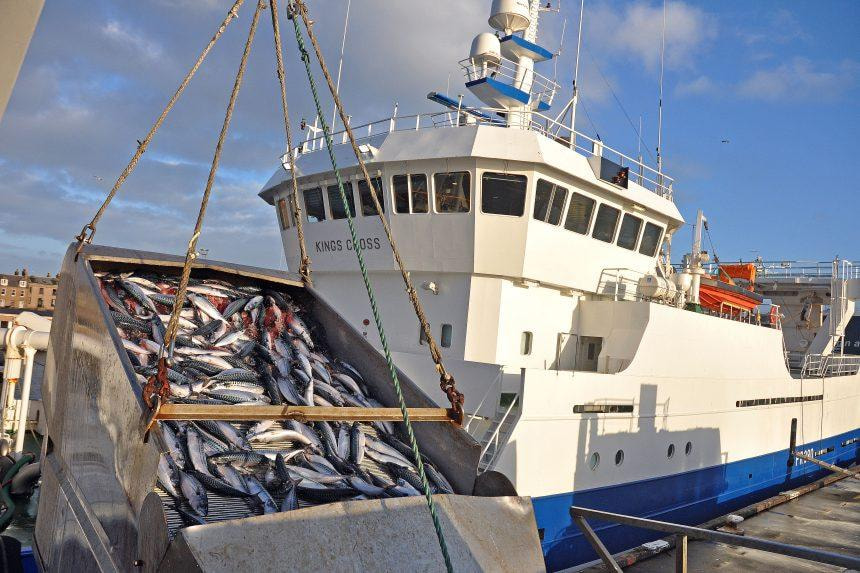
Quota control in Europe rests on a mundane act performed on a wet quayside, and the Commission has now written one rulebook for it. New catch weighing rules reached the Official Journal on 11 August, replacing a patchwork of 44 national plans and programmes with a single framework that applies from 11 January 2027.

Implementing Regulation (EU) 2026/1932 sets common minimum requirements for weighing systems and for the records that must follow every landing. Operators will log the system used, the vessel, the time and place of the weighing, the quantities and the species, identified by FAO code. Inspectors will apply harmonised standards instead of national habit.

The Commission announced the measure on 10 August with a plain justification. Accurate weighing generates the catch data on which everything else depends. Quota uptake, effort monitoring, compliance checks and the scientific advice that sets next year’s limits all trace back to the figure recorded when fish leave a hold.

The old arrangement made that figure hard to compare. Member states ran 44 separate plans and programmes, each carrying its own derogations and thresholds, so a box of herring weighed in one port did not necessarily generate the same evidence as an identical box weighed three hundred kilometres away. Producers who complained about uneven treatment were not inventing a grievance.

The new text also standardises the paperwork behind inspections. It establishes a common structure for sampling plans, control plans and joint control programmes, the instruments national authorities use to decide which landings they check and how thoroughly. Auditors gain something they have lacked, namely a shared yardstick for judging whether a member state takes control work seriously.

Flexibility survives, and that is where the argument will resume. Capitals may still adapt plans to local circumstances, and they may authorise alternative arrangements where operators demonstrate equivalent or better accuracy. The clause makes practical sense, because nobody runs a small artisanal harbour the way they run an industrial pelagic terminal. It also reopens the door through which the previous 44 plans walked in.

Industry will read the regulation as a compliance cost first. Processors and buyers who take fish at the quayside must confirm that their scales, software and record-keeping meet the minimum standards well before January 2027. Firms handling landings in several member states will have to reconcile systems they built separately over two decades. The Commission argues that harmonisation lowers administrative burden over time, which convinces anyone operating across borders and persuades a single-port operator rather less.

The measure completes one piece of the wider fisheries control overhaul that took effect in January 2024, and it replaces the weighing provisions previously buried inside Implementing Regulation 404/2011. That reform promised a risk-based, technology-aware enforcement model built on remote monitoring and electronic reporting. None of it functions when the underlying weights stay soft.

Two questions decide whether the framework delivers. Capacity comes first, because harmonised standards demand inspectors, calibration checks and IT systems, and control budgets in several coastal member states have not grown to match the ambitions drafted here. Transparency comes second. The Commission will need to show how capitals use the flexibility clause, since a derogation nobody audits behaves exactly like the fragmentation this regulation set out to end.

Ministers will not argue about weighing scales at a Council table this autumn. December’s quota negotiations will nonetheless run on the numbers those scales produce, and any delegation pressing for higher catch limits will find its case resting on data gathered under rules it now shares with everyone else. That is a slower kind of politics, and it tends to hold.