August 22, 2026
LATEST
Korea Signed a Digital Trade Deal That Nobody Has RatifiedCritical Minerals in Mongolia Still Have to Cross Two BordersCan an Indonesia Trade Deal Survive Two Years of RatifyingCross-Border Data Orders Went Live Before the Plumbing DidPlatform Work Rules Take Effect in December and Few Are ReadyCan Europe’s Firefighting Fleet Keep Pace With EU WildfiresThe AI Act Deadline Passed on 2 August and Nothing BitWhy Construction Keeps Shrinking While Confidence ImprovesAccession Talks Stall Again and September 1 Is the TestBrussels Applied a Trade Deal It Cannot Yet RatifyAfrica’s Power Market Now Needs Money More Than BlueprintsLong-Term Budget Talks Enter Autumn Without a Council LineForeign Subsidies Enforcement Now Turns on a Dublin RaidWho Writes Europe’s Telecom Rules Once Copper DisappearsDisability Cards Exist on Paper and Nowhere Else Until 2028Losing Visa-Free Travel Now Takes a Thirty Percent SwingTwenty Flagship Actions Will Test Whether the Culture Compass WorksEurope’s Quality Jobs Act Now Rests on What Unions Do by SeptemberDoes a Three Euro Parcel Duty Change Anything About Cheap ImportsEurope’s Satellite Constellation Grew by 66 Before a Single LaunchKorea Signed a Digital Trade Deal That Nobody Has RatifiedCritical Minerals in Mongolia Still Have to Cross Two BordersCan an Indonesia Trade Deal Survive Two Years of RatifyingCross-Border Data Orders Went Live Before the Plumbing DidPlatform Work Rules Take Effect in December and Few Are ReadyCan Europe’s Firefighting Fleet Keep Pace With EU WildfiresThe AI Act Deadline Passed on 2 August and Nothing BitWhy Construction Keeps Shrinking While Confidence ImprovesAccession Talks Stall Again and September 1 Is the TestBrussels Applied a Trade Deal It Cannot Yet RatifyAfrica’s Power Market Now Needs Money More Than BlueprintsLong-Term Budget Talks Enter Autumn Without a Council LineForeign Subsidies Enforcement Now Turns on a Dublin RaidWho Writes Europe’s Telecom Rules Once Copper DisappearsDisability Cards Exist on Paper and Nowhere Else Until 2028Losing Visa-Free Travel Now Takes a Thirty Percent SwingTwenty Flagship Actions Will Test Whether the Culture Compass WorksEurope’s Quality Jobs Act Now Rests on What Unions Do by SeptemberDoes a Three Euro Parcel Duty Change Anything About Cheap ImportsEurope’s Satellite Constellation Grew by 66 Before a Single Launch
August 22, 2026
LATEST
Korea Signed a Digital Trade Deal That Nobody Has RatifiedCritical Minerals in Mongolia Still Have to Cross Two BordersCan an Indonesia Trade Deal Survive Two Years of RatifyingCross-Border Data Orders Went Live Before the Plumbing DidPlatform Work Rules Take Effect in December and Few Are ReadyCan Europe’s Firefighting Fleet Keep Pace With EU WildfiresThe AI Act Deadline Passed on 2 August and Nothing BitWhy Construction Keeps Shrinking While Confidence ImprovesAccession Talks Stall Again and September 1 Is the TestBrussels Applied a Trade Deal It Cannot Yet RatifyAfrica’s Power Market Now Needs Money More Than BlueprintsLong-Term Budget Talks Enter Autumn Without a Council LineForeign Subsidies Enforcement Now Turns on a Dublin RaidWho Writes Europe’s Telecom Rules Once Copper DisappearsDisability Cards Exist on Paper and Nowhere Else Until 2028Losing Visa-Free Travel Now Takes a Thirty Percent SwingTwenty Flagship Actions Will Test Whether the Culture Compass WorksEurope’s Quality Jobs Act Now Rests on What Unions Do by SeptemberDoes a Three Euro Parcel Duty Change Anything About Cheap ImportsEurope’s Satellite Constellation Grew by 66 Before a Single LaunchKorea Signed a Digital Trade Deal That Nobody Has RatifiedCritical Minerals in Mongolia Still Have to Cross Two BordersCan an Indonesia Trade Deal Survive Two Years of RatifyingCross-Border Data Orders Went Live Before the Plumbing DidPlatform Work Rules Take Effect in December and Few Are ReadyCan Europe’s Firefighting Fleet Keep Pace With EU WildfiresThe AI Act Deadline Passed on 2 August and Nothing BitWhy Construction Keeps Shrinking While Confidence ImprovesAccession Talks Stall Again and September 1 Is the TestBrussels Applied a Trade Deal It Cannot Yet RatifyAfrica’s Power Market Now Needs Money More Than BlueprintsLong-Term Budget Talks Enter Autumn Without a Council LineForeign Subsidies Enforcement Now Turns on a Dublin RaidWho Writes Europe’s Telecom Rules Once Copper DisappearsDisability Cards Exist on Paper and Nowhere Else Until 2028Losing Visa-Free Travel Now Takes a Thirty Percent SwingTwenty Flagship Actions Will Test Whether the Culture Compass WorksEurope’s Quality Jobs Act Now Rests on What Unions Do by SeptemberDoes a Three Euro Parcel Duty Change Anything About Cheap ImportsEurope’s Satellite Constellation Grew by 66 Before a Single Launch

A Screening Pilot on Lampedusa Previews the Pact’s Real Test

Screening a person at Europe’s external border used to mean a passport check and a form. Under the rules that took effect this summer it means identity checks, security screening, a vulnerability assessment and a health check, all completed inside a fixed window, all recorded, and all feeding a decision about which procedure the person enters next.

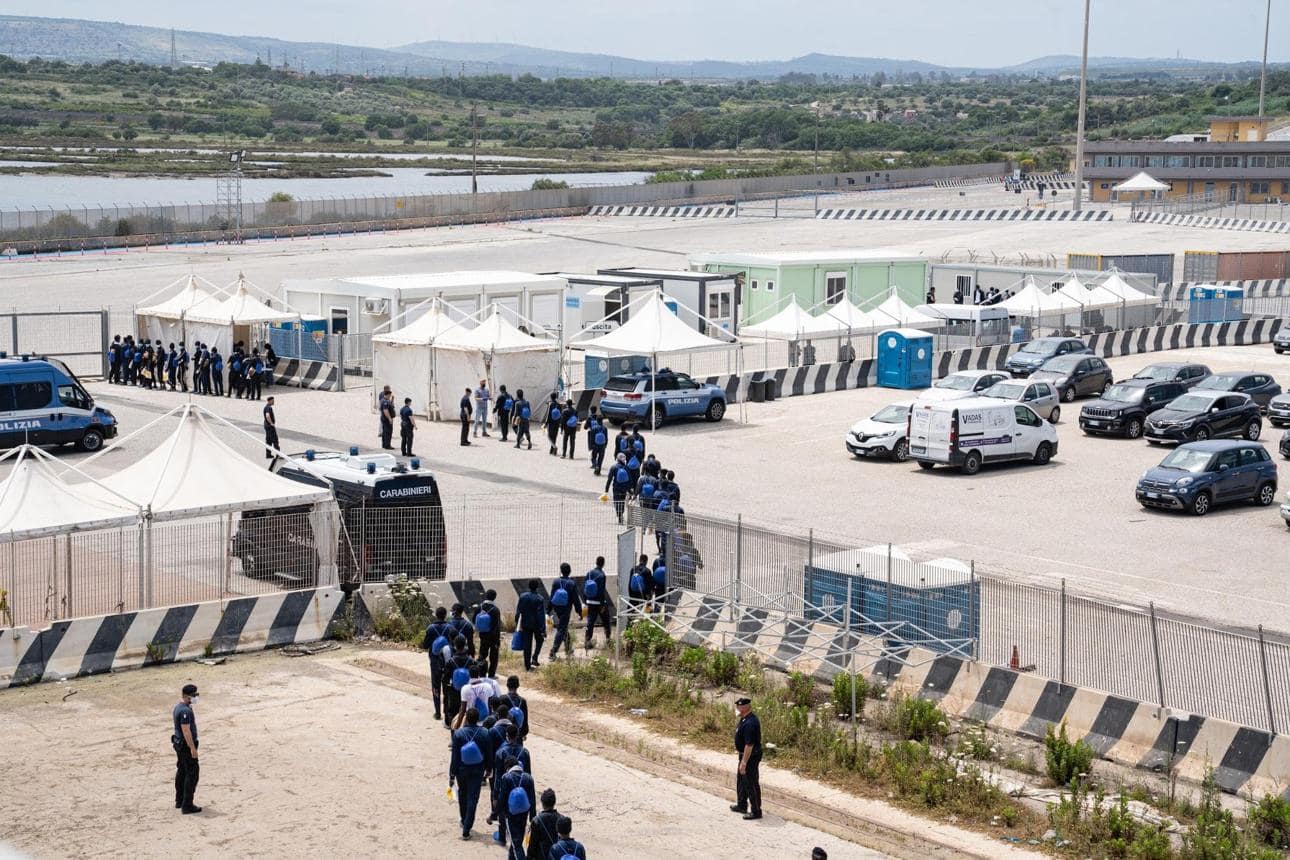
Italy’s smallest inhabited frontier became the place where that machinery was rehearsed. Frontex, the European Union Agency for Asylum, Europol and Italian authorities ran a joint screening exercise on Lampedusa designed to find out what the new sequence demands of the officers who have to deliver it. The asylum agency has since opened an office on the island, sharing the premises with UNHCR, the International Organization for Migration, Save the Children and UNICEF.

That co-location is not a detail. The Pact on Migration and Asylum distributes responsibility across agencies that historically worked in parallel rather than together, and the screening stage is where their mandates collide. Europol brings security databases. Frontex brings border surveillance and registration. The asylum agency brings the vulnerability assessment that determines whether a person can lawfully be routed into the accelerated border procedure at all. Get the sequence wrong and the legal consequences land on the member state, not on the agency that supplied the officer.

Numbers currently favour the governments that pushed the Pact through. Frontex recorded irregular crossings down by roughly 40 percent across the first five months of 2026 against the same period a year earlier. Interior ministers read that as vindication. Analysts who track the routes read it more cautiously, because arrival figures respond to weather, to North African enforcement and to smuggler pricing long before they respond to European legislation. The Central Mediterranean has produced steep annual swings in both directions for a decade.

One figure has not improved. Close to 1,300 people have died attempting the crossing this year. A screening regime, however well designed, operates only on those who reach a European shore, and nothing in the Pact governs what happens between a Libyan beach and Italian territorial waters. Search and rescue remains a national competence exercised by governments with sharply different appetites for it.

The operational question now facing capitals is capacity. Screening must finish within days, and the border procedure that follows runs on its own clock. Both assume reception places, interpreters, medical staff and case officers available in the right place at the right moment. Lampedusa in August is precisely when those assumptions fail. Italy has argued for years that solidarity mechanisms promise support in principle and deliver it slowly in practice, and the Pact’s relocation arrangements have not yet been tested against a genuine surge.

Lawyers are watching a different clock. The border procedure compresses timelines for appeals, and national courts across Europe will spend the next two years deciding whether that compression respects the right to an effective remedy. Rulings in Italy, Greece and the Netherlands could reshape the practical meaning of the legislation faster than any Commission implementing act.

Officials in Brussels describe the current phase as consolidation. The rules apply, the agencies have staff on the ground, and the first full reporting cycle will show which member states built the infrastructure they promised. Until those returns arrive, the pilot on a rock between Sicily and Tunisia remains the clearest picture anyone has of whether Europe’s asylum system can actually run at the speed its own law now requires.