The European Union has quietly doubled down on a satellite programme that spent most of its short life being described as late. On 7 August 2026 the Commission and the SpaceRISE consortium signed an implementation agreement that expands IRIS2 to 348 satellites and moves the constellation out of design and into full-scale deployment. Seven months of negotiation produced a bigger system than the one the concession contract originally described, and a schedule that pulls the first launches forward to 2029.
The architecture matters more than the headline number. Of the 348 satellites, 330 sit in higher low Earth orbit and 18 in medium Earth orbit, deployed in successive phases. On top of the baseline the Commission has added an advanced set of 66 higher-LEO satellites dedicated to defence, security and emergency services. The Commission says the revised design delivers 60 percent more secure governmental capacity inside the Union and 54 percent more worldwide.
That is a different programme from the one member states approved in 2023. IRIS2 began life as a connectivity project with a security wrapper. It now reads as a defence communications asset that also sells commercial broadband. The shift explains why negotiations ran from January to August: the parties were not haggling over price alone, they were rewriting what the system is for.
The commercial logic underneath remains awkward. IRIS2 is a concession, which means private partners carry a large share of the capital risk and expect to recover it from users who are not governments. Every satellite added for defence purposes improves the public case and complicates the private one, because sovereign capacity is not the part of the market where the volume sits. Expanding the constellation raises the revenue the concession must eventually generate.
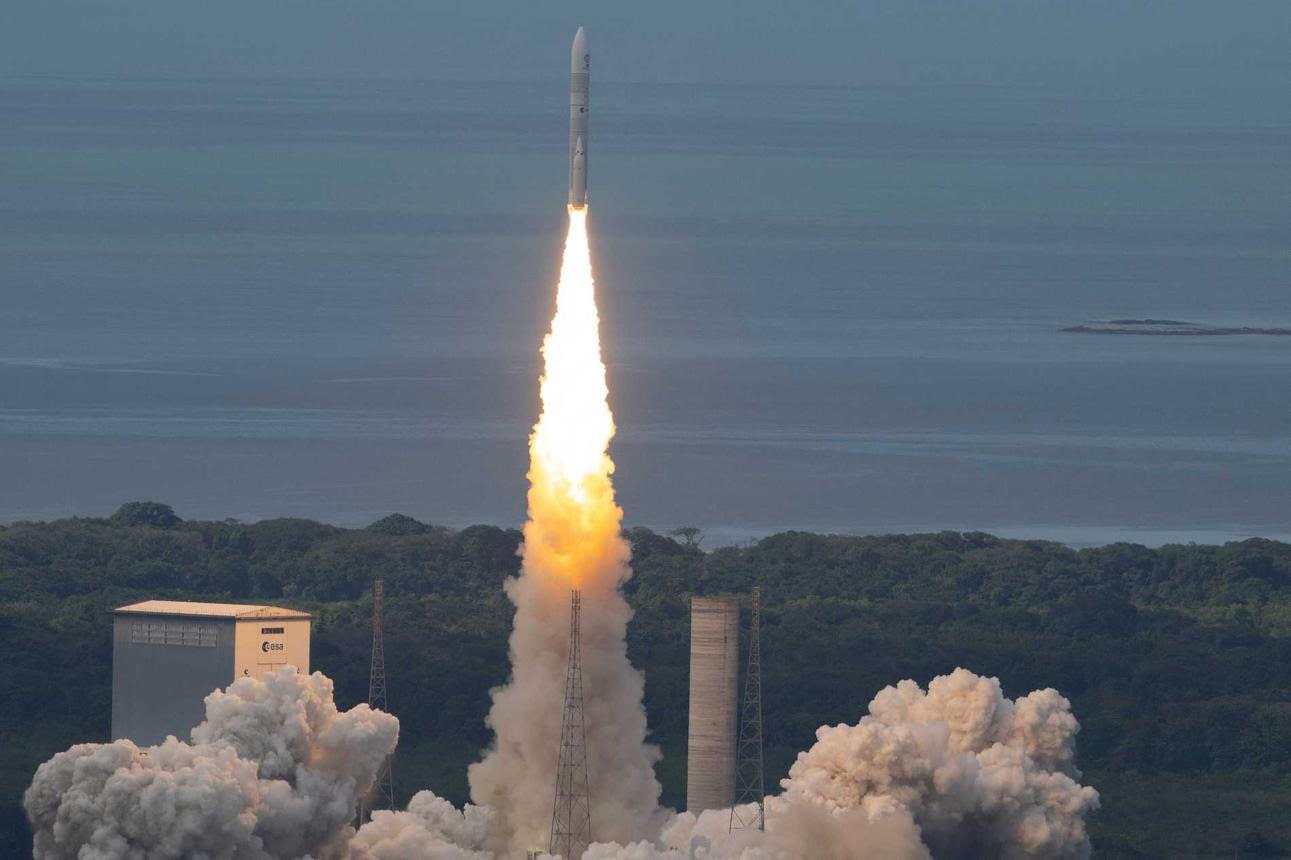
Launch capacity is the constraint nobody in the agreement can legislate away. Bringing first launches to 2029 and phasing 348 spacecraft into orbit requires a European launch cadence that does not yet exist at that rate. Ariane 6 is flying but not at volume, and the smaller European launchers remain early. If the Union insists on European launch for a sovereign system, the schedule depends on a supply chain still ramping. If it does not insist, the sovereignty argument weakens at precisely the point where it is loudest.
President von der Leyen used the International Space Summit in Paris on 10 September to frame all of this as a wider ambition, pairing IRIS2 with a competitive European space market, a more resilient industrial ecosystem and reformed governance. The speech listed priorities rather than instruments, which is the normal order: the EU Space Act, still working through its consultation phase, is where common safety and sustainability rules would actually bite.
Governance deserves more attention than it gets. The Union now runs Galileo, Copernicus, EGNOS, GOVSATCOM and IRIS2 through a mix of the Commission, the EU Agency for the Space Programme and the European Space Agency, with member states funding parts of each. Adding a defence-facing constellation to that structure raises accreditation and command questions that no single body currently owns.
The honest reading is that August fixed the programme’s credibility problem and inherited a harder one. A signed agreement, a fixed architecture and a dated schedule give industry something to build against, which the previous eighteen months did not. Whether 2029 holds now depends on launch slots, on the Space Act arriving before deployment rather than after it, and on a concession model that must sell capacity in a market Starlink already dominates. The Commission has bought certainty about the design. It has not yet bought certainty about the delivery.