September 19, 2026
LATEST
Manila Must Open Public Contracts Before Europe Signs AnythingEurope’s KIDS Act Would Put Parents Back in Charge of AccountsArmenian Apricots Reach Europe Only Through Narrow Tariff QuotasMyanmar’s Crisis Outgrows the Aid Envelope Europe Built for ItJapan Joins Horizon Europe for the Price of a Rounding ErrorIndia’s Trade Deal Now Waits on the Council and Two ParliamentsBeijing Gets an October Date and a Very Short Deliverables ListJudges Strike Down Estonia’s Deposit for European CandidatesSolidarity Fund Pays for Storms Eight Months After the WaterFreight Tariffs Decide Whether the Middle Corridor Reaches ScaleFolding the Diplomatic Service Into the Commission Needs UnanimityCritical Raw Materials Corporation Tests EU StockpilingHeatwave Plan Tests Europe’s Climate Adaptation GapEuropean Security Council Faces a Missing Legal BaseNature Restoration Plans Arrive With a Year of Haggling AheadPlatform Work Rules Arrive in December With Most States UnreadyDominant Firms Face Europe’s First Rulebook on Exclusionary AbuseInnovation Act Reaches Council With EU Preference Still DisputedSecondary Raw Materials Await an Act That Has Not Been TabledRiyadh Gets a Summit Date Before the Gulf Trade Text Is WrittenManila Must Open Public Contracts Before Europe Signs AnythingEurope’s KIDS Act Would Put Parents Back in Charge of AccountsArmenian Apricots Reach Europe Only Through Narrow Tariff QuotasMyanmar’s Crisis Outgrows the Aid Envelope Europe Built for ItJapan Joins Horizon Europe for the Price of a Rounding ErrorIndia’s Trade Deal Now Waits on the Council and Two ParliamentsBeijing Gets an October Date and a Very Short Deliverables ListJudges Strike Down Estonia’s Deposit for European CandidatesSolidarity Fund Pays for Storms Eight Months After the WaterFreight Tariffs Decide Whether the Middle Corridor Reaches ScaleFolding the Diplomatic Service Into the Commission Needs UnanimityCritical Raw Materials Corporation Tests EU StockpilingHeatwave Plan Tests Europe’s Climate Adaptation GapEuropean Security Council Faces a Missing Legal BaseNature Restoration Plans Arrive With a Year of Haggling AheadPlatform Work Rules Arrive in December With Most States UnreadyDominant Firms Face Europe’s First Rulebook on Exclusionary AbuseInnovation Act Reaches Council With EU Preference Still DisputedSecondary Raw Materials Await an Act That Has Not Been TabledRiyadh Gets a Summit Date Before the Gulf Trade Text Is Written
September 19, 2026
LATEST
Manila Must Open Public Contracts Before Europe Signs AnythingEurope’s KIDS Act Would Put Parents Back in Charge of AccountsArmenian Apricots Reach Europe Only Through Narrow Tariff QuotasMyanmar’s Crisis Outgrows the Aid Envelope Europe Built for ItJapan Joins Horizon Europe for the Price of a Rounding ErrorIndia’s Trade Deal Now Waits on the Council and Two ParliamentsBeijing Gets an October Date and a Very Short Deliverables ListJudges Strike Down Estonia’s Deposit for European CandidatesSolidarity Fund Pays for Storms Eight Months After the WaterFreight Tariffs Decide Whether the Middle Corridor Reaches ScaleFolding the Diplomatic Service Into the Commission Needs UnanimityCritical Raw Materials Corporation Tests EU StockpilingHeatwave Plan Tests Europe’s Climate Adaptation GapEuropean Security Council Faces a Missing Legal BaseNature Restoration Plans Arrive With a Year of Haggling AheadPlatform Work Rules Arrive in December With Most States UnreadyDominant Firms Face Europe’s First Rulebook on Exclusionary AbuseInnovation Act Reaches Council With EU Preference Still DisputedSecondary Raw Materials Await an Act That Has Not Been TabledRiyadh Gets a Summit Date Before the Gulf Trade Text Is WrittenManila Must Open Public Contracts Before Europe Signs AnythingEurope’s KIDS Act Would Put Parents Back in Charge of AccountsArmenian Apricots Reach Europe Only Through Narrow Tariff QuotasMyanmar’s Crisis Outgrows the Aid Envelope Europe Built for ItJapan Joins Horizon Europe for the Price of a Rounding ErrorIndia’s Trade Deal Now Waits on the Council and Two ParliamentsBeijing Gets an October Date and a Very Short Deliverables ListJudges Strike Down Estonia’s Deposit for European CandidatesSolidarity Fund Pays for Storms Eight Months After the WaterFreight Tariffs Decide Whether the Middle Corridor Reaches ScaleFolding the Diplomatic Service Into the Commission Needs UnanimityCritical Raw Materials Corporation Tests EU StockpilingHeatwave Plan Tests Europe’s Climate Adaptation GapEuropean Security Council Faces a Missing Legal BaseNature Restoration Plans Arrive With a Year of Haggling AheadPlatform Work Rules Arrive in December With Most States UnreadyDominant Firms Face Europe’s First Rulebook on Exclusionary AbuseInnovation Act Reaches Council With EU Preference Still DisputedSecondary Raw Materials Await an Act That Has Not Been TabledRiyadh Gets a Summit Date Before the Gulf Trade Text Is Written

Freight Tariffs Decide Whether the Middle Corridor Reaches Scale

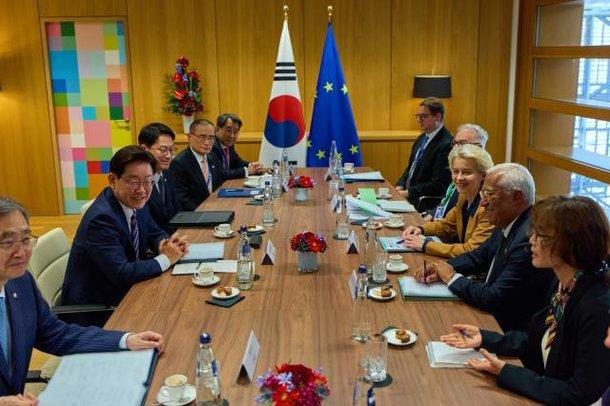
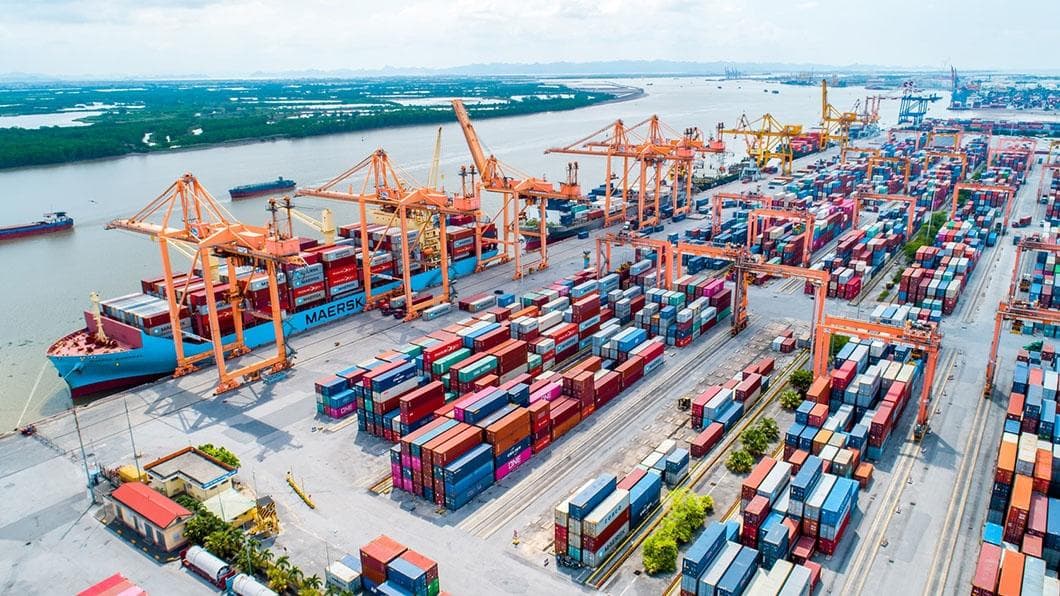
Aktau: The Caspian port that handles most of the containers moving west out of Central Asia has a new item on its horizon, and it is not a crane. Officials from the countries along the Trans-Caspian International Transport Route met in Sofia on 14 and 15 September and asked the European Commission to assess the corridor’s performance and propose measures to make it more competitive. They also signed a protocol on rail cooperation and spent much of the meeting on the least glamorous subject available: freight tariffs.

That choice of subject is the most informative thing about the meeting. Europe’s engagement with the corridor has been overwhelmingly financial. A €10 billion commitment was announced at the investors forum in Brussels, and the Global Gateway package unveiled for Central Asia runs to €12 billion, of which roughly €3 billion is earmarked for transport. Money on that scale buys terminals, ferries, signalling and port equipment. It does not buy a price.

The corridor’s commercial problem has always been that a container crossing from China to Europe by this route passes through the railways of Kazakhstan, the Caspian ferry operators, Azerbaijani rail, and then Georgian or Turkish infrastructure before it reaches a European network. Each link quotes its own tariff, on its own timetable, with its own capacity constraints. A forwarder in Duisburg comparing options against the northern route or a container ship does not receive one number for the Middle Corridor; they receive a construction. Uncertainty of that kind is priced as risk, and risk is why volumes remain where they are.

The volumes deserve stating plainly, because enthusiasm for the corridor tends to outrun them. Around 77,000 twenty-foot equivalent units moved along the route last year, against an ambition of 300,000 by 2029. Freight through the Kazakh segment has grown from roughly 0.8 million tonnes to 4.5 million tonnes over seven years, and the participating states have set themselves a target of about 11 million tonnes a year by 2030. Container train transits through Kazakhstan rose by more than a third in the first quarter of this year. The growth rates are real and the base is small. Measured against the tonnage Europe moves by sea, the corridor is a rounding error that happens to be strategically interesting.

Strategic interest is the honest justification. The route’s value to Europe is that it exists independently of Russian territory and does not run through the Red Sea. That is optionality, and optionality is worth paying for even when the throughput is modest. The mistake is to sell optionality as commercial logistics and then to measure success in TEU, because by that metric the corridor will disappoint for years regardless of how well it is run.

The request for a Commission assessment is therefore more interesting as an institutional move than as a technical one. The Union has money, standards and convening power along this route. It has no tariff-setting authority whatsoever, because the tariffs belong to state railways and shipping companies in countries that are not members and are not seeking membership. What a Commission performance study can do is publish comparable transit times, dwell times at the Caspian crossings and cost breakdowns that no single operator has an incentive to disclose. Transparency of that kind is a form of leverage: it identifies which link is slowing the chain, and it makes the identification public.

Whether the partner states welcome that once the numbers are printed is another question. A published bottleneck is an embarrassment for whoever owns it, and the corridor’s governance is a coalition of railways with competing interests in the same freight. The European instinct will be to answer the findings with another investment package. The evidence so far suggests that the binding constraint is administrative rather than physical — one quotation, one customs data set, one booking system. Those cost very little and require the hardest thing on offer, which is agreement among operators who currently make money from the friction.