The idea of a smaller European Commission moved onto the table of EU leaders at their 15 and 16 October summit, as part of a package meant to prepare the Union for 30 or more members. Enlargement Commissioner Marta Kos presented the proposals in early October. They would work without treaty change, which makes them politically easier to start and legally harder to deliver.
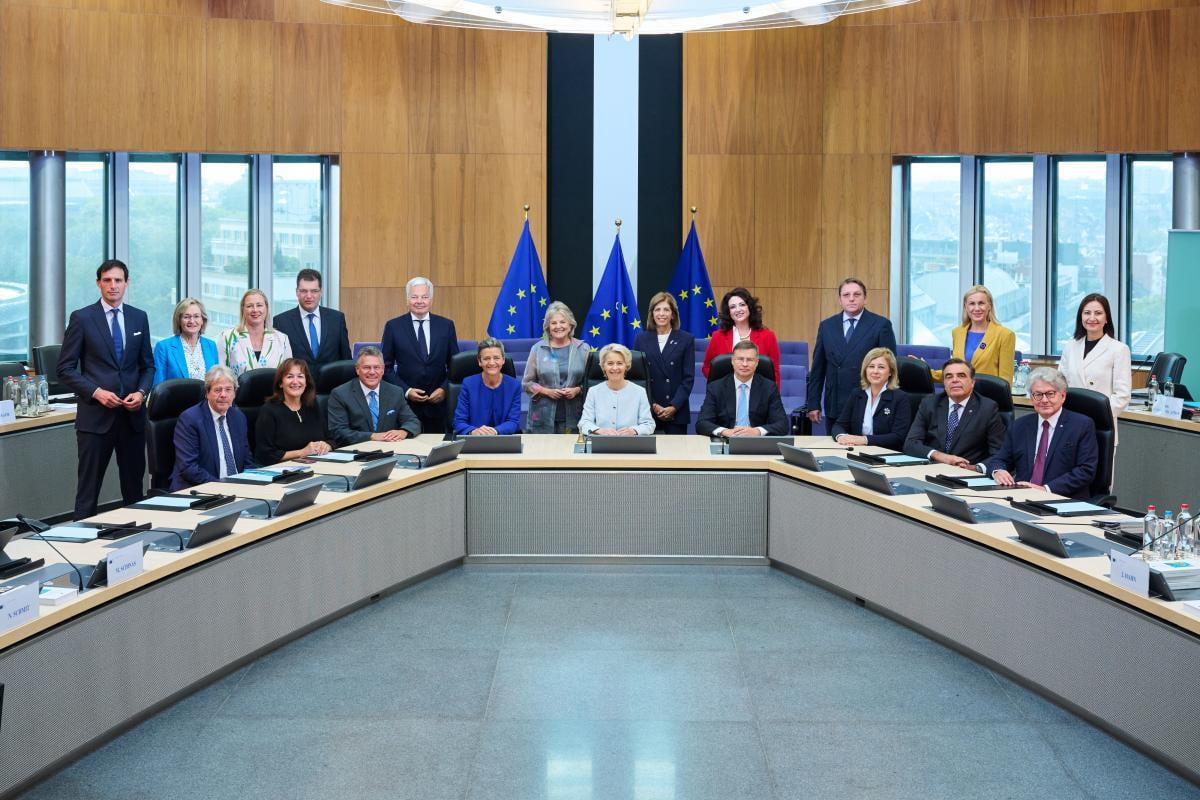
The core proposal is to drop the rule that every member state has its own commissioner. The Lisbon Treaty already allows a college with a number of members equal to two thirds of the member states, chosen by strictly equal rotation. The European Council kept one commissioner per country in 2013, a concession to Ireland before its second Lisbon referendum. A smaller European Commission would revive the original design.
Supporters see efficiency gains. A college of 30 or more commissioners would struggle to give each person a meaningful portfolio, and decisions would take longer. Kos has said the Commission wants to see how a smaller college would work, and she admits the reforms will not be easy but are worth trying. Critics respond that small countries fear losing their voice, while large ones may dislike rotation that could leave them outside the college for a term.
The package goes well beyond the idea of a smaller European Commission. It asks governments to identify policy areas where passerelle clauses could let the Council move from unanimity to qualified majority voting. Activating those clauses itself requires unanimity, so a single capital could block the shift. The Commission also wants to lower the number of unanimous steps in accession talks, where any member state currently holds a veto over about 150 stages.
A third strand covers enhanced cooperation, which lets at least nine member states deepen integration when others hold back. Hungary, Czechia and Slovakia opted out of the Ukraine Support Loan, which shows how differentiated arrangements already operate in practice. Eleven countries, including France and Germany, wrote a joint letter on 1 September asking to curb obstructive vetoes in foreign policy, and that coalition gives the reform push some weight.
Resistance is real. The so-called Friends of the Western Balkans, including Italy and Austria, have pushed back against differentiated membership for candidates. Four EU diplomats told Euronews that the internal reforms are unlikely to be accepted, and one said some items are drafted to be killed. Such comments suggest that bargaining chips, not final texts, fill parts of the package.
The timing complicates matters. Leaders are also negotiating the next long-term budget, which is likely to bring deep cuts to administration. A smaller European Commission could save money in principle, yet governments that fight over salaries and staff numbers rarely agree to give up a seat at the table. Plans for a smaller European Commission would therefore compete with the same budget politics that dominates every summit.
Candidate countries watch the smaller European Commission debate closely. Several expect the new safeguards against democratic backsliding to meet less resistance than internal changes, and they hope fewer vetoes will speed up their own talks. Yet the credibility of enlargement depends on the Union proving it can decide faster with 30 members than it does with 27.
The next test comes when the Commission turns summit guidance into concrete legal steps. If leaders endorse even part of the package, a smaller European Commission could become the first visible sign of an EU preparing for its next enlargement. If they stall, the debate will return when the next treaty discussion opens.