August 9, 2026
LATEST
Japan Becomes Europe’s Closest Security Partner in AsiaCan Europe’s New Zealand Deal Anchor It in the Pacific?Chip Research Binds Europe and South Korea CloserMinimum Prices Replace Tariffs in Europe’s China Car DealBrussels and Beijing Keep Talking While the Trade Gap WidensKorean Weapons and EU Loans Now Bankroll Europe’s RearmamentNew EU Gas Market Rules Take Effect With Consumer SafeguardsDeforestation Regulation Holds Its December Deadline Despite CutsDigital Omnibus Delays Europe’s High-Risk AI Deadline to 2027Europe’s Schools Confront a Widening Basic Skills GapRule of Law Report Finds Progress but Trust Still LagsIRIS2 Gains 66 Satellites as Brussels Signs the Rollout DealNature Restoration Plans Come Due as Member States Race a DeadlineECB Rates Hold at 2.25 Percent as Frankfurt Waits on the DataEU Budget Talks Turn to Cohesion as Ireland Takes OverWildfire Response Stretches Europe’s Emergency Fleet ThinCan Europe’s Quantum Plan Match Its Big Ambitions?Armenia Edges West as Moscow’s Grip Slips AwayEurope Inherits the World’s Aid Bill It Cannot Fully PayAir Passenger Rights Get Their First Overhaul in Two DecadesJapan Becomes Europe’s Closest Security Partner in AsiaCan Europe’s New Zealand Deal Anchor It in the Pacific?Chip Research Binds Europe and South Korea CloserMinimum Prices Replace Tariffs in Europe’s China Car DealBrussels and Beijing Keep Talking While the Trade Gap WidensKorean Weapons and EU Loans Now Bankroll Europe’s RearmamentNew EU Gas Market Rules Take Effect With Consumer SafeguardsDeforestation Regulation Holds Its December Deadline Despite CutsDigital Omnibus Delays Europe’s High-Risk AI Deadline to 2027Europe’s Schools Confront a Widening Basic Skills GapRule of Law Report Finds Progress but Trust Still LagsIRIS2 Gains 66 Satellites as Brussels Signs the Rollout DealNature Restoration Plans Come Due as Member States Race a DeadlineECB Rates Hold at 2.25 Percent as Frankfurt Waits on the DataEU Budget Talks Turn to Cohesion as Ireland Takes OverWildfire Response Stretches Europe’s Emergency Fleet ThinCan Europe’s Quantum Plan Match Its Big Ambitions?Armenia Edges West as Moscow’s Grip Slips AwayEurope Inherits the World’s Aid Bill It Cannot Fully PayAir Passenger Rights Get Their First Overhaul in Two Decades
August 9, 2026
LATEST
Japan Becomes Europe’s Closest Security Partner in AsiaCan Europe’s New Zealand Deal Anchor It in the Pacific?Chip Research Binds Europe and South Korea CloserMinimum Prices Replace Tariffs in Europe’s China Car DealBrussels and Beijing Keep Talking While the Trade Gap WidensKorean Weapons and EU Loans Now Bankroll Europe’s RearmamentNew EU Gas Market Rules Take Effect With Consumer SafeguardsDeforestation Regulation Holds Its December Deadline Despite CutsDigital Omnibus Delays Europe’s High-Risk AI Deadline to 2027Europe’s Schools Confront a Widening Basic Skills GapRule of Law Report Finds Progress but Trust Still LagsIRIS2 Gains 66 Satellites as Brussels Signs the Rollout DealNature Restoration Plans Come Due as Member States Race a DeadlineECB Rates Hold at 2.25 Percent as Frankfurt Waits on the DataEU Budget Talks Turn to Cohesion as Ireland Takes OverWildfire Response Stretches Europe’s Emergency Fleet ThinCan Europe’s Quantum Plan Match Its Big Ambitions?Armenia Edges West as Moscow’s Grip Slips AwayEurope Inherits the World’s Aid Bill It Cannot Fully PayAir Passenger Rights Get Their First Overhaul in Two DecadesJapan Becomes Europe’s Closest Security Partner in AsiaCan Europe’s New Zealand Deal Anchor It in the Pacific?Chip Research Binds Europe and South Korea CloserMinimum Prices Replace Tariffs in Europe’s China Car DealBrussels and Beijing Keep Talking While the Trade Gap WidensKorean Weapons and EU Loans Now Bankroll Europe’s RearmamentNew EU Gas Market Rules Take Effect With Consumer SafeguardsDeforestation Regulation Holds Its December Deadline Despite CutsDigital Omnibus Delays Europe’s High-Risk AI Deadline to 2027Europe’s Schools Confront a Widening Basic Skills GapRule of Law Report Finds Progress but Trust Still LagsIRIS2 Gains 66 Satellites as Brussels Signs the Rollout DealNature Restoration Plans Come Due as Member States Race a DeadlineECB Rates Hold at 2.25 Percent as Frankfurt Waits on the DataEU Budget Talks Turn to Cohesion as Ireland Takes OverWildfire Response Stretches Europe’s Emergency Fleet ThinCan Europe’s Quantum Plan Match Its Big Ambitions?Armenia Edges West as Moscow’s Grip Slips AwayEurope Inherits the World’s Aid Bill It Cannot Fully PayAir Passenger Rights Get Their First Overhaul in Two Decades

Brussels Redirects 34 Billion in Cohesion Funds Toward Defence

Brussels: The European Commission confirmed this spring that member states redirected a large slice of their cohesion funds toward defence and competitiveness, the biggest mid-term shake-up of the bloc’s flagship investment policy in a generation. Governments amended 186 national and regional programmes, shifting 34.6 billion euros — almost a tenth of the policy’s 367 billion euro envelope for 2021 to 2027 — into new strategic priorities.

The move reflects a Europe rattled by war on its borders and by fears that its industry is slipping behind American and Chinese rivals. Officials framed the reallocation as proof that cohesion funds can bend to a harsher geopolitical moment without abandoning poorer regions.

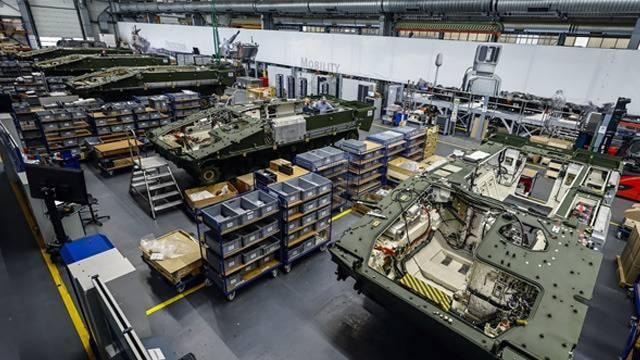
Of the money moved, 15.2 billion euros went to competitiveness and 11.9 billion euros to defence, according to the Commission’s results of the mid-term review. Governments also earmarked 3.3 billion euros for affordable and sustainable housing, 3.1 billion euros for water resilience, and 1.2 billion euros to strengthen energy security and industrial decarbonisation.

Brussels sweetened the deal to speed spending. Projects tied to the new priorities can draw co-financing rates up to 10 percentage points higher than usual, and governments receive a 20 percent one-off pre-financing on sums they reallocate during 2026. The Council and Parliament wrote those flexibilities into law last year, when negotiators adopted the mid-term review package.

The reform reserves extra help for regions that border Russia, Belarus and Ukraine, acknowledging the strain those communities carry in a tense security climate. Eastern member states had pressed hard for that recognition, arguing that frontier regions face costs their western partners rarely see.

Not everyone welcomes the shift. Regional authorities and several members of the European Parliament warn that channelling cohesion funds into defence and competitiveness risks hollowing out the policy’s founding purpose, which is to close the gap between richer and poorer parts of the Union. Mayors in lagging regions fear that flexible rules today become permanent diversions tomorrow.

The Commission counters that member states, not Brussels, chose where the money went, and that only a tenth of the total budget moved at all. The bulk of cohesion spending still flows to transport, skills, digital networks and the green transition in the Union’s less developed areas.

The debate now feeds directly into the fight over the next long-term budget after 2027, where the Commission has floated folding cohesion money into national plans. Regional lobbies see the 2026 reallocation as a warning shot. How Europe balances territorial solidarity against its new appetite for security spending will shape the cohesion funds that regions can count on for the rest of the decade.