August 9, 2026
LATEST
New EU Gas Market Rules Take Effect With Consumer SafeguardsDeforestation Regulation Holds Its December Deadline Despite CutsDigital Omnibus Delays Europe’s High-Risk AI Deadline to 2027Europe’s Schools Confront a Widening Basic Skills GapRule of Law Report Finds Progress but Trust Still LagsIRIS2 Gains 66 Satellites as Brussels Signs the Rollout DealNature Restoration Plans Come Due as Member States Race a DeadlineECB Rates Hold at 2.25 Percent as Frankfurt Waits on the DataEU Budget Talks Turn to Cohesion as Ireland Takes OverWildfire Response Stretches Europe’s Emergency Fleet ThinCan Europe’s Quantum Plan Match Its Big Ambitions?Armenia Edges West as Moscow’s Grip Slips AwayEurope Inherits the World’s Aid Bill It Cannot Fully PayAir Passenger Rights Get Their First Overhaul in Two DecadesErasmus Opens a 5 Billion Euro Round for Skills and MobilityCeuta Crisis Pushes the EU Toward Faster Migrant ReturnsBulky Parcels Face a Packaging Crackdown From August 12Can Europe Build Its Drone Wall Before 2030 Arrives?Indonesia’s Trade Deal With Europe Nears Its Final SignatureEurope Leans on Beijing to Keep Climate Talks Alive Before AntalyaNew EU Gas Market Rules Take Effect With Consumer SafeguardsDeforestation Regulation Holds Its December Deadline Despite CutsDigital Omnibus Delays Europe’s High-Risk AI Deadline to 2027Europe’s Schools Confront a Widening Basic Skills GapRule of Law Report Finds Progress but Trust Still LagsIRIS2 Gains 66 Satellites as Brussels Signs the Rollout DealNature Restoration Plans Come Due as Member States Race a DeadlineECB Rates Hold at 2.25 Percent as Frankfurt Waits on the DataEU Budget Talks Turn to Cohesion as Ireland Takes OverWildfire Response Stretches Europe’s Emergency Fleet ThinCan Europe’s Quantum Plan Match Its Big Ambitions?Armenia Edges West as Moscow’s Grip Slips AwayEurope Inherits the World’s Aid Bill It Cannot Fully PayAir Passenger Rights Get Their First Overhaul in Two DecadesErasmus Opens a 5 Billion Euro Round for Skills and MobilityCeuta Crisis Pushes the EU Toward Faster Migrant ReturnsBulky Parcels Face a Packaging Crackdown From August 12Can Europe Build Its Drone Wall Before 2030 Arrives?Indonesia’s Trade Deal With Europe Nears Its Final SignatureEurope Leans on Beijing to Keep Climate Talks Alive Before Antalya
August 9, 2026
LATEST
New EU Gas Market Rules Take Effect With Consumer SafeguardsDeforestation Regulation Holds Its December Deadline Despite CutsDigital Omnibus Delays Europe’s High-Risk AI Deadline to 2027Europe’s Schools Confront a Widening Basic Skills GapRule of Law Report Finds Progress but Trust Still LagsIRIS2 Gains 66 Satellites as Brussels Signs the Rollout DealNature Restoration Plans Come Due as Member States Race a DeadlineECB Rates Hold at 2.25 Percent as Frankfurt Waits on the DataEU Budget Talks Turn to Cohesion as Ireland Takes OverWildfire Response Stretches Europe’s Emergency Fleet ThinCan Europe’s Quantum Plan Match Its Big Ambitions?Armenia Edges West as Moscow’s Grip Slips AwayEurope Inherits the World’s Aid Bill It Cannot Fully PayAir Passenger Rights Get Their First Overhaul in Two DecadesErasmus Opens a 5 Billion Euro Round for Skills and MobilityCeuta Crisis Pushes the EU Toward Faster Migrant ReturnsBulky Parcels Face a Packaging Crackdown From August 12Can Europe Build Its Drone Wall Before 2030 Arrives?Indonesia’s Trade Deal With Europe Nears Its Final SignatureEurope Leans on Beijing to Keep Climate Talks Alive Before AntalyaNew EU Gas Market Rules Take Effect With Consumer SafeguardsDeforestation Regulation Holds Its December Deadline Despite CutsDigital Omnibus Delays Europe’s High-Risk AI Deadline to 2027Europe’s Schools Confront a Widening Basic Skills GapRule of Law Report Finds Progress but Trust Still LagsIRIS2 Gains 66 Satellites as Brussels Signs the Rollout DealNature Restoration Plans Come Due as Member States Race a DeadlineECB Rates Hold at 2.25 Percent as Frankfurt Waits on the DataEU Budget Talks Turn to Cohesion as Ireland Takes OverWildfire Response Stretches Europe’s Emergency Fleet ThinCan Europe’s Quantum Plan Match Its Big Ambitions?Armenia Edges West as Moscow’s Grip Slips AwayEurope Inherits the World’s Aid Bill It Cannot Fully PayAir Passenger Rights Get Their First Overhaul in Two DecadesErasmus Opens a 5 Billion Euro Round for Skills and MobilityCeuta Crisis Pushes the EU Toward Faster Migrant ReturnsBulky Parcels Face a Packaging Crackdown From August 12Can Europe Build Its Drone Wall Before 2030 Arrives?Indonesia’s Trade Deal With Europe Nears Its Final SignatureEurope Leans on Beijing to Keep Climate Talks Alive Before Antalya

Europe Pushes Its Armies To Buy Together And Mostly Buy At Home

Brussels: For decades the awkward truth of European defence was that twenty-seven national armies bought twenty-seven slightly different versions of almost everything. The same howitzer arrived in a dozen incompatible calibres of ambition, and the continent paid a premium for the privilege of fragmentation. That habit is now under sustained political assault, and the pressure is coming less from idealism than from arithmetic.

The logic is brutally simple. When member states procure on their own, they lose the discounts of scale, they duplicate research that a neighbour already finished, and they leave their forces unable to fight side by side without a translator standing between two radios. Pooling orders fixes all three problems at once. A joint purchase of ammunition or air defence is cheaper per unit, it consolidates demand into a signal that factories can actually plan around, and it nudges everyone toward kit that interoperates by default rather than by accident.

What has changed is that Brussels now has money and instruments to reward the behaviour it wants. Loan facilities backed by the common budget are being dangled in front of capitals on the condition that the spending is collaborative and that a meaningful share stays inside the Union’s industrial base. The carrot is real cash at attractive rates; the implicit stick is that a government buying alone, or buying entirely from outside suppliers, forfeits the cheap financing. It is industrial policy wearing a helmet.

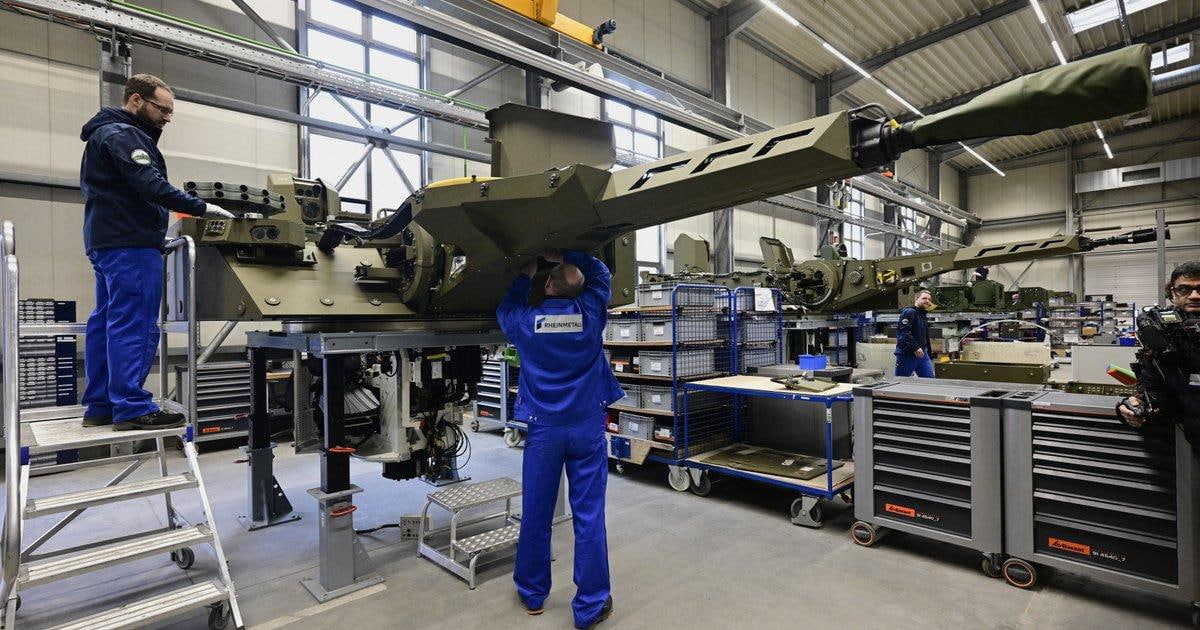
The ‘buy European’ element is the part that generates the most heat. Nobody in the capitals seriously proposes slamming the door on transatlantic suppliers, and several flagship platforms remain stubbornly American. But there is a growing conviction that a continent which cannot manufacture its own shells and drones at volume has outsourced its security to the goodwill of others. Reserving a defined slice of joint orders for firms rooted in Europe is the compromise between open markets and the uncomfortable lessons of recent supply shocks.

Resistance is predictable and it is not unreasonable. Smaller producing states fear that ‘buy European’ quietly means buy from the three or four countries with the largest defence champions, leaving everyone else as subcontractors. Governments with prized bilateral relationships outside the Union bristle at being told that those ties now carry a financing penalty. And national procurement bureaucracies, like all bureaucracies, prefer the contracts they already know how to write.

The counterargument is that the alternative has already been tested and found wanting. The scramble of recent years, when shells were suddenly worth more than gold and lead times stretched past the patience of any frontline, exposed how thin the continent’s industrial cushion had become. Twenty-seven separate panic orders bid the same scarce capacity against each other. A single coordinated order would have spoken with one voice and been heard.

None of this turns Europe into a unified defence market overnight. Sovereignty over who to arm, and when, remains firmly national, and it will stay that way. What the new instruments do is change the gravitational pull of every procurement decision, making the collaborative option the cheaper and better-supported one and the solo option the expensive outlier. Over a decade that shift in incentives could matter more than any single grand announcement.

The wager Brussels is making is that habits follow money. Offer capitals enough of a discount to club together, attach enough strings to keep the work largely at home, and the fragmented continent of twenty-seven shopping lists slowly becomes something that can plan, build and, if it must, fight as one. Whether the discipline survives the first genuinely inconvenient contract is the question that will define the experiment.