September 22, 2026
LATEST
One Ticket Promise Meets Its First Real Test Inside the CouncilCyprus Judge Takes Over a General Court Still Absorbing CasesSkills Portability Act Sets Five Weeks as the New Recognition LimitIreland Reopens the Digital Omnibus With Cookies Back in PlayMinisters Weigh the Long-Term Budget Before a Negotiating BoxSocial Partners Have One Week Left to Shape the Quality Jobs ActPhuket Round Decides Whether Thailand Closes Its Deal This YearSyria’s Banks Reconnect While Europe’s Risk Premium Stays PutMercosur’s First Health Ban Tests a Deal Still Being RatifiedBudget Performance Regulation Slips Toward a 2027 VotePontes Digital Euro Platform Goes Live for 13 BanksEU Arctic Drilling Ban Survives Norway’s Lobbying PushPrivacy Watchdog Wants Tighter Limits on Eurojust’s New DatabasesScrutiny Board Sends Europe’s Circular Economy Act Back for ReworkLow-LEO Studies Open the Next Chapter for Europe’s IRIS2 PlanFour Indo-Pacific Partners Join Europe’s Ministers in New YorkWildfire Season Closes Above Average as the rescEU Fleet GrowsQuality Education Roadmap Lands in November With Three FrontsPartnership Plans Recast Cohesion Policy Before Anyone VotesHandling Fee on Small Parcels Must Be Ready by 1 November 2026One Ticket Promise Meets Its First Real Test Inside the CouncilCyprus Judge Takes Over a General Court Still Absorbing CasesSkills Portability Act Sets Five Weeks as the New Recognition LimitIreland Reopens the Digital Omnibus With Cookies Back in PlayMinisters Weigh the Long-Term Budget Before a Negotiating BoxSocial Partners Have One Week Left to Shape the Quality Jobs ActPhuket Round Decides Whether Thailand Closes Its Deal This YearSyria’s Banks Reconnect While Europe’s Risk Premium Stays PutMercosur’s First Health Ban Tests a Deal Still Being RatifiedBudget Performance Regulation Slips Toward a 2027 VotePontes Digital Euro Platform Goes Live for 13 BanksEU Arctic Drilling Ban Survives Norway’s Lobbying PushPrivacy Watchdog Wants Tighter Limits on Eurojust’s New DatabasesScrutiny Board Sends Europe’s Circular Economy Act Back for ReworkLow-LEO Studies Open the Next Chapter for Europe’s IRIS2 PlanFour Indo-Pacific Partners Join Europe’s Ministers in New YorkWildfire Season Closes Above Average as the rescEU Fleet GrowsQuality Education Roadmap Lands in November With Three FrontsPartnership Plans Recast Cohesion Policy Before Anyone VotesHandling Fee on Small Parcels Must Be Ready by 1 November 2026
September 22, 2026
LATEST
One Ticket Promise Meets Its First Real Test Inside the CouncilCyprus Judge Takes Over a General Court Still Absorbing CasesSkills Portability Act Sets Five Weeks as the New Recognition LimitIreland Reopens the Digital Omnibus With Cookies Back in PlayMinisters Weigh the Long-Term Budget Before a Negotiating BoxSocial Partners Have One Week Left to Shape the Quality Jobs ActPhuket Round Decides Whether Thailand Closes Its Deal This YearSyria’s Banks Reconnect While Europe’s Risk Premium Stays PutMercosur’s First Health Ban Tests a Deal Still Being RatifiedBudget Performance Regulation Slips Toward a 2027 VotePontes Digital Euro Platform Goes Live for 13 BanksEU Arctic Drilling Ban Survives Norway’s Lobbying PushPrivacy Watchdog Wants Tighter Limits on Eurojust’s New DatabasesScrutiny Board Sends Europe’s Circular Economy Act Back for ReworkLow-LEO Studies Open the Next Chapter for Europe’s IRIS2 PlanFour Indo-Pacific Partners Join Europe’s Ministers in New YorkWildfire Season Closes Above Average as the rescEU Fleet GrowsQuality Education Roadmap Lands in November With Three FrontsPartnership Plans Recast Cohesion Policy Before Anyone VotesHandling Fee on Small Parcels Must Be Ready by 1 November 2026One Ticket Promise Meets Its First Real Test Inside the CouncilCyprus Judge Takes Over a General Court Still Absorbing CasesSkills Portability Act Sets Five Weeks as the New Recognition LimitIreland Reopens the Digital Omnibus With Cookies Back in PlayMinisters Weigh the Long-Term Budget Before a Negotiating BoxSocial Partners Have One Week Left to Shape the Quality Jobs ActPhuket Round Decides Whether Thailand Closes Its Deal This YearSyria’s Banks Reconnect While Europe’s Risk Premium Stays PutMercosur’s First Health Ban Tests a Deal Still Being RatifiedBudget Performance Regulation Slips Toward a 2027 VotePontes Digital Euro Platform Goes Live for 13 BanksEU Arctic Drilling Ban Survives Norway’s Lobbying PushPrivacy Watchdog Wants Tighter Limits on Eurojust’s New DatabasesScrutiny Board Sends Europe’s Circular Economy Act Back for ReworkLow-LEO Studies Open the Next Chapter for Europe’s IRIS2 PlanFour Indo-Pacific Partners Join Europe’s Ministers in New YorkWildfire Season Closes Above Average as the rescEU Fleet GrowsQuality Education Roadmap Lands in November With Three FrontsPartnership Plans Recast Cohesion Policy Before Anyone VotesHandling Fee on Small Parcels Must Be Ready by 1 November 2026

A Bankrupt Belgian Fab Becomes Europe’s First Chip Spy Trial

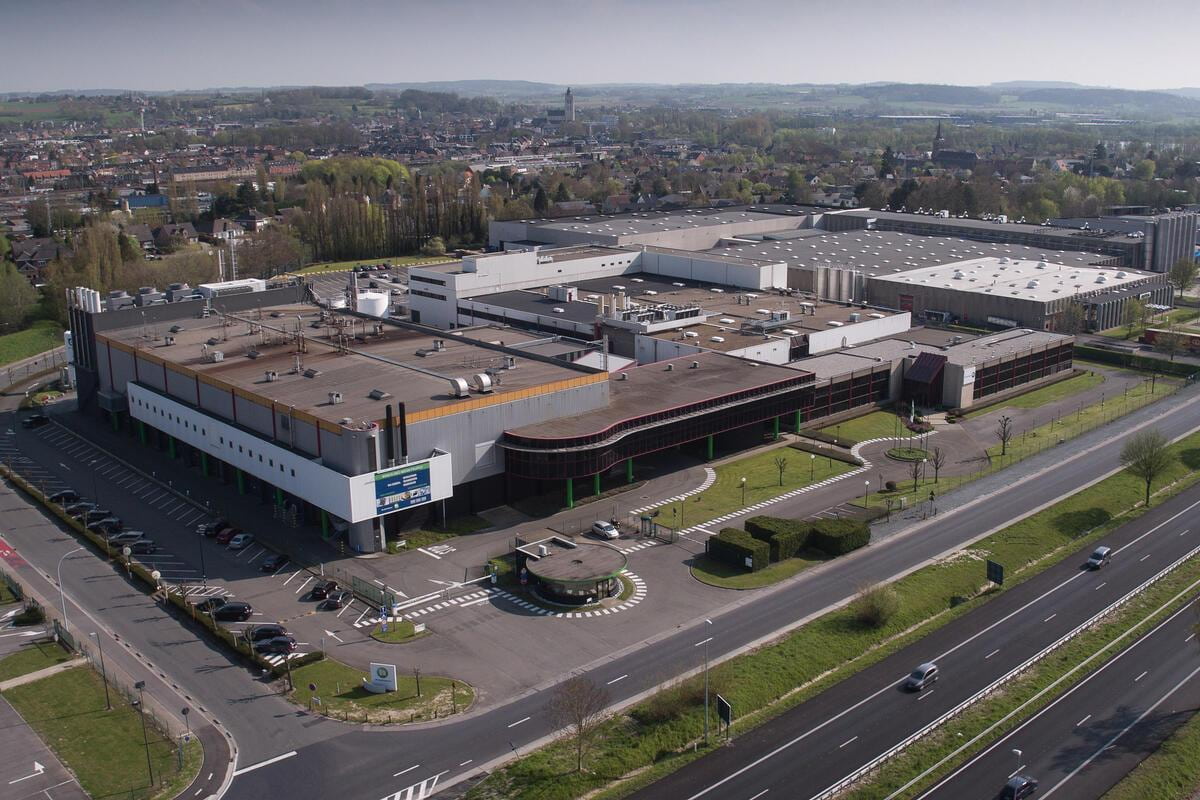
Oudenaarde: The wafer fabrication plant on the edge of this East Flanders town changed hands, changed business model and went bankrupt inside three years. It is now the setting for a criminal case that will test whether Europe has any legal answer to the loss of technology that never crosses a border as an export.

Belgian prosecutors have confirmed that a fifty-two-year-old dual Belgian-Chinese national, arrested at Brussels airport in May as he prepared to board a flight to Beijing, will face trial. He has remained in custody since. The investigation covers espionage, participation in a criminal organisation, misuse of company assets and the unlawful disclosure of company secrets. A second suspect has not been detained.

The company at the centre of the case, Belgan, specialised in gallium nitride devices, a class of power semiconductor used in fast chargers, electric vehicle inverters, data centre power supplies and radar. It bought the site from an American owner and was declared bankrupt in July 2024. According to the investigation, the suspect held a senior position at the Belgian firm while simultaneously serving as a director of a Chinese company making the same category of chips, incorporated a few months after he joined the Belgian operation and financed by a Chinese investment fund.

If the allegation is established, the mechanism deserves attention, because it does not resemble the threat model European technology policy has been built around. Export controls under the dual-use regulation restrict shipments of listed equipment and software. Foreign investment screening examines acquisitions of European companies. Neither instrument is designed to catch a senior employee who is lawfully present, lawfully employed and moving know-how by memory, document and personnel rather than by container.

Gallium nitride sharpens the point. It is not the advanced logic node that dominates the export control debate, and it is not manufactured with the extreme ultraviolet lithography that the Netherlands licenses case by case. It is a materials and process technology, where the value sits in recipes, yield data and the accumulated knowledge of engineers who have run the line. That knowledge is portable in a way that machinery is not, and it is precisely what a new entrant needs in order to skip a decade of learning.

The European Chips Act, whose review this month conceded that its headline market share target is out of reach, funds capacity. It says little about protecting the intellectual property inside that capacity. The Union has no criminal offence of economic espionage; trade secret protection rests on a 2016 directive that is civil in character and transposed unevenly across the twenty-seven member states. Prosecutors therefore build cases such as this one out of national criminal law on organised crime, corporate fiduciary duty and state security, which is why the charge sheet reads as an assemblage rather than a single accusation.

There is a second lesson in the bankruptcy. Distressed semiconductor assets are cheap, and distress creates exactly the conditions in which oversight thins out: an owner looking for an exit, a workforce looking for security, and a management layer whose outside interests are difficult to police. Europe has a growing inventory of such assets, and the screening regulation triggers on the acquisition of shares, not on the quiet departure of the people who know how the process works.

The trial will be conducted under Belgian law and its outcome will bind nobody else. Its value to the rest of the Union lies in the record it produces. A documented account of how a European process technology was allegedly duplicated in China without a single controlled item leaving the country would be the most concrete evidence yet that the Union’s economic security toolbox is pointed at the wrong doorway. The Commission is currently consulting on revisions to the investment screening rules. It would be worth reading the judgment before that text is finalised.