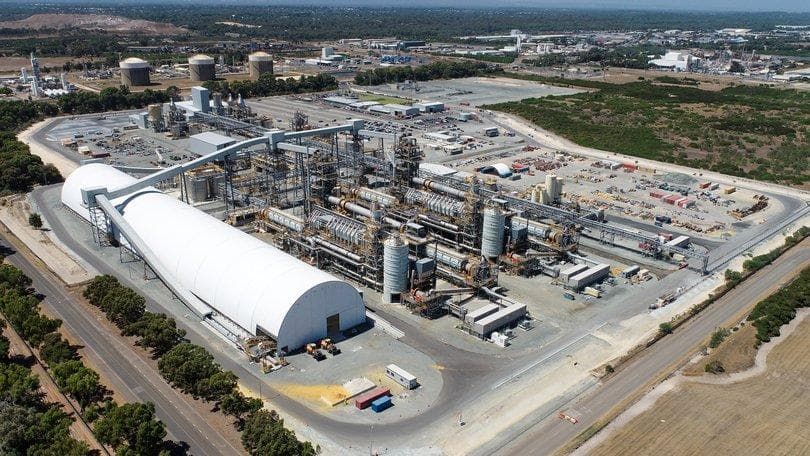
Kwinana: The refineries south of Perth were meant to prove that Australia could sell Europe something more processed than rock, and their difficulties are a better guide to the new trade agreement’s value than the tariff schedule is.
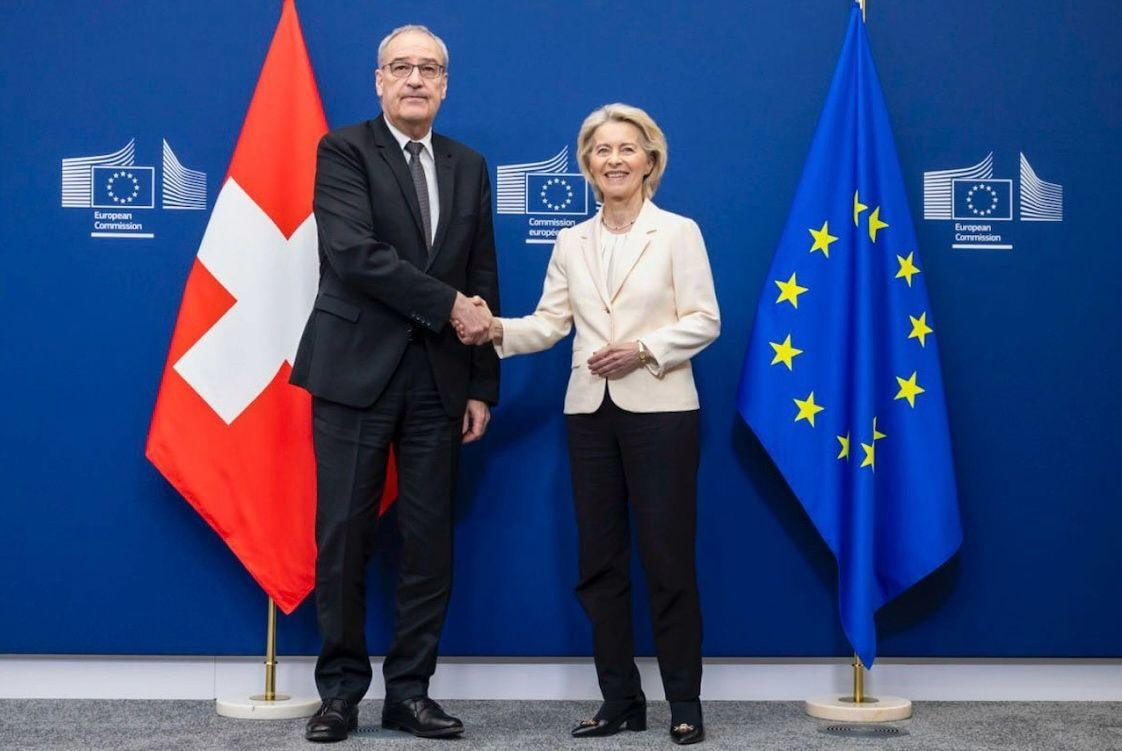
Negotiators concluded the Australia-European Union free trade agreement in late March after eight years of talks that collapsed once and were revived. The text removes duties on almost all goods. For the resources sector every tariff on energy and mineral exports to the Union disappears permanently, including the lines covering critical minerals, lithium hydroxide and hydrogen and its carriers, which had carried duties of up to roughly 5.5 per cent. The Australian government puts the annual value to its economy at about ten billion Australian dollars.
The strategic framing was explicit in both capitals. Europe wants aluminium, lithium and manganese from a jurisdiction that is not China, and Australia wants a customer that will pay for supply security rather than only for tonnes. That is a defensible basis for an agreement. It is not the same thing as a tariff problem being solved, because the tariff was never what stopped European buyers from sourcing Australian lithium hydroxide.
What stopped them was that there was very little Australian lithium hydroxide to buy. Refining spodumene into battery-grade chemical is a difficult, capital-hungry process that Australian operators have found harder and slower to master than their plans assumed, and two years of weak lithium prices removed the margin that would have funded the learning curve. A duty of 5.5 per cent is meaningful at the edge. It is trivial next to a price that has moved by multiples, and irrelevant if the plant is not running at nameplate. The same logic applies to hydrogen carriers, where the binding constraint is that almost nothing is being shipped.
The agreement’s more durable contribution is therefore institutional rather than fiscal. Locking the tariff at zero permanently removes one variable from a twenty-year investment case, which is worth something to a board deciding whether to build a refinery in Western Australia or a cathode plant in Europe. The critical raw materials provisions give European buyers a treaty basis for objecting if a supplier state ever contemplates export restrictions, a live concern across the sector even where it is not a live concern with Canberra. And the deal creates a forum in which to argue about the Union’s carbon border mechanism and its deforestation rules, which affect Australian exporters far more than any duty ever did.
None of it is in force. Signature is expected late this year or early next. The text appears to be structured as a Union-only instrument, which spares it the ordeal of twenty-seven national ratifications, but it still requires the European Parliament’s consent and a Council decision to conclude, while Australia’s treaties committee conducts its own scrutiny and implementing legislation passes. Australian officials have been candid that the full sequence could take up to two years.
Refiners will therefore be operating under the old tariff for some time yet, and by the time the new one applies the economics will have been settled by lithium prices, engineering competence and Chinese processing costs. That is the recurring lesson of resource diplomacy. Trade agreements can remove obstacles governments created. They cannot conjure an industry that markets have not yet chosen to fund.