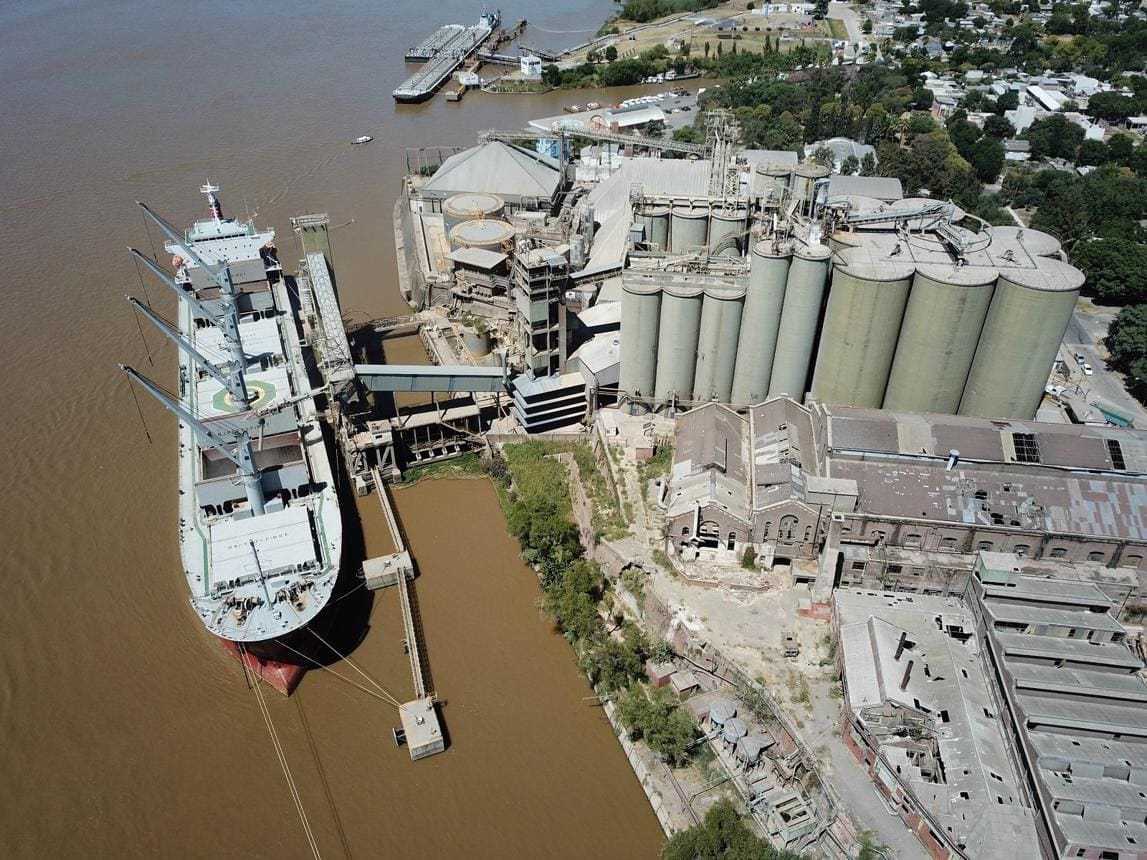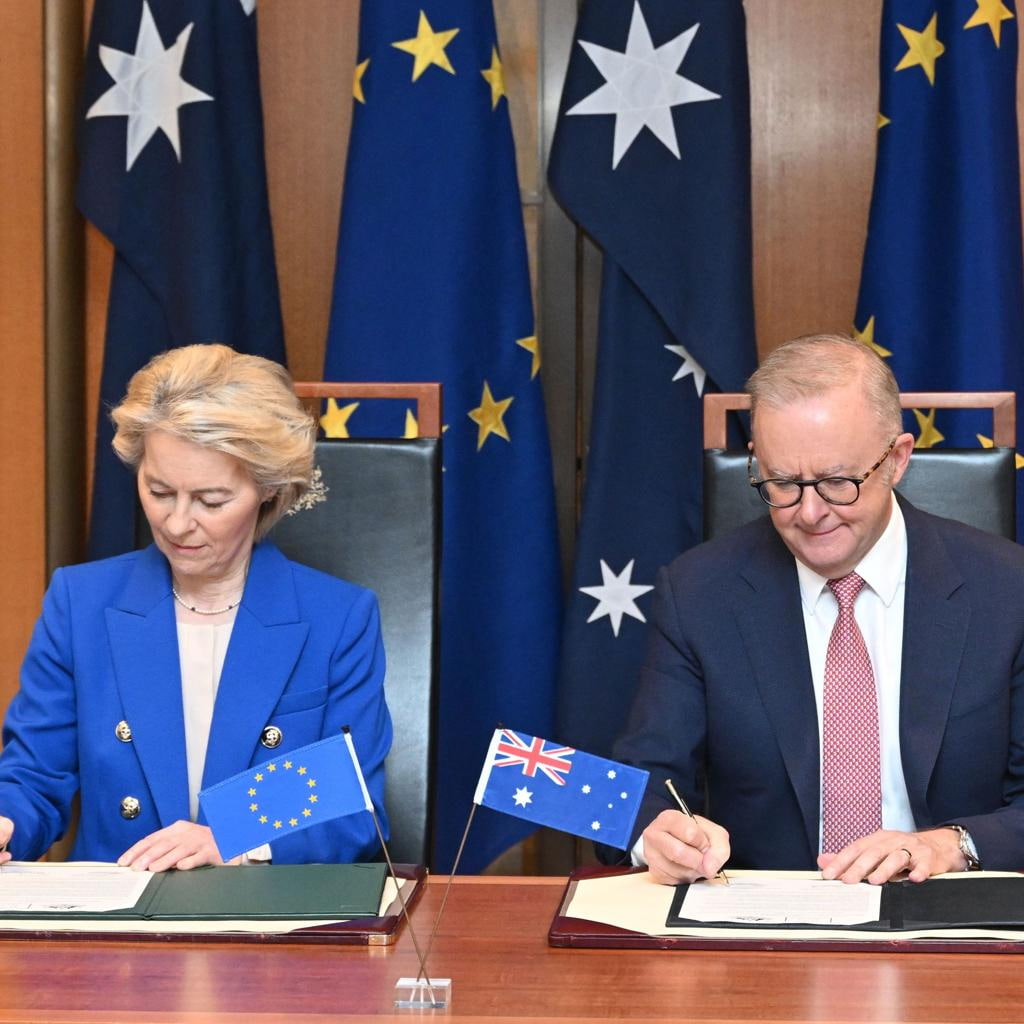
Kwinana: The lithium refinery south of Perth turns Western Australian spodumene into battery-grade hydroxide, and its operators have watched European buyers circle for years without a trade agreement to sit underneath the contracts. That gap closed in principle on 24 March 2026, when Ursula von der Leyen and Anthony Albanese announced that negotiators had concluded a free trade agreement after eight years of stop-start talks.
The commercial arithmetic is straightforward. Both sides agreed to remove more than 99 percent of tariff lines. European exporters expect to save roughly one billion euros a year in duties, mostly on cars, machinery, pharmaceuticals and processed food. Canberra puts the annual gain to the Australian economy at around ten billion Australian dollars, a figure that rests on modelling assumptions rather than observed trade.
The resource chapters carry the strategic weight. Lithium, antimony, tungsten and rare earths gain tariff-free access to the European market, hydrogen tariffs disappear, and the 2024 Strategic Partnership on Sustainable Critical Minerals gains a formal upgrade with commitments on downstream investment. Von der Leyen framed the whole package around collective resilience, which is the polite formulation for reducing exposure to processing capacity concentrated elsewhere.
Less noticed, the agreement includes professional mobility provisions running up to four years, which matters more to engineering and legal services firms than any tariff schedule. Services rarely generate headlines in trade coverage. They generate a large share of the actual benefit.
Then comes the timetable, and the timetable is where enthusiasm meets procedure. Concluding negotiations is not signing. Signing is not ratification. Lawyers on both sides must finish legal scrubbing and translation into every official language, a process that regularly consumes six to nine months. Formal signature looks likely in late 2026 or early 2027 on current projections.
After signature the European Parliament must give consent, the Council must decide to conclude, and Australia’s Joint Standing Committee on Treaties runs its own scrutiny before domestic implementing legislation moves. Australia’s Department of Foreign Affairs and Trade tells exporters the full sequence may take up to two years. Nobody in Brussels expects entry into force during 2026.
Parliament’s consent vote is the variable worth watching. Agriculture committee members from France, Ireland and Poland scrutinised the beef, sheepmeat and sugar quotas closely throughout the talks, and those quotas were the reason negotiations collapsed in 2023. The final volumes look modest against European production, but modest volumes have sunk consent votes before. Parliament tracks the file publicly through its legislative train.
Critics of the deal argue Europe conceded farm access for minerals it could have secured through investment alone. Defenders reply that investment without preferential access leaves European refiners bidding against Asian buyers on identical terms. Both positions hold water. The Commission has published a chapter-by-chapter summary for anyone who wants to judge the balance directly.