Kathmandu: Europe has spent the past decade telling partners that its money now travels with a strategy attached. This month it put that claim to work in one of the world’s least connected electricity regions.
In July the European Union launched a five million euro project to knit together the fragmented power systems of Bangladesh, Bhutan, India, Nepal and Sri Lanka. The Energy Connectivity in South Asia programme aims to build a single regional power market where surplus Himalayan hydropower can reach demand centres on the plains and the coast.
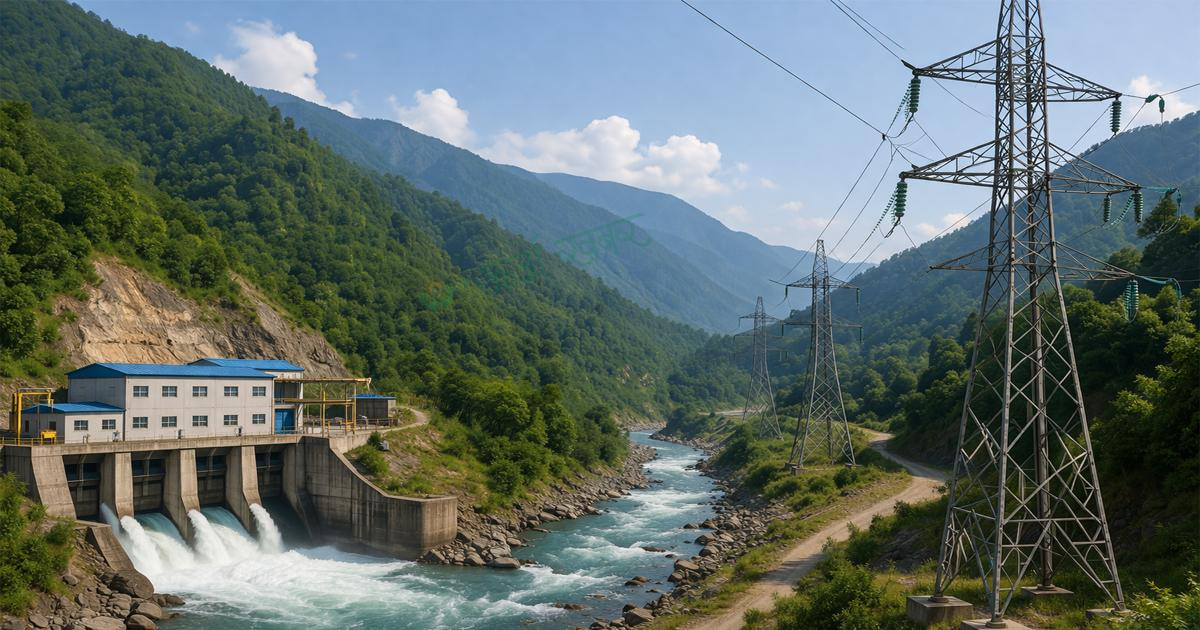
The logic is simple and the geography stubborn. Nepal and Bhutan generate more hydroelectricity than they can consume during the monsoon months, while India and Bangladesh burn coal to cover their evening peaks. A working power market would let clean electrons cross borders instead of spilling over dam gates, and Brussels wants to help write the rules that make those trades routine.
Officials frame the initiative as one piece of the wider Global Gateway, the bloc’s answer to China’s Belt and Road. Between 2021 and 2027 Team Europe plans to mobilise up to three hundred billion euros for infrastructure that carries European standards on transparency, procurement and environmental safeguards. South Asia now joins Southeast Asia, where the EU is backing the ASEAN Power Grid, on the list of regions Brussels hopes to wire together.
The sums look modest against that headline figure, and the gap invites fair scepticism. Five million euros builds no transmission line. What it buys is technical assistance, regulatory design and the political cover that lets nervous governments share a grid with neighbours they distrust. Europe learned the same lesson the hard way when it stitched its own national markets into a single electricity pool, and it now exports the institutional memory rather than the hardware.
That distinction matters. India has long guarded its energy sovereignty and views regional integration through a security lens as much as an economic one. Pakistan sits outside the project entirely. Sri Lanka is only now recovering from a currency crisis that once left it unable to pay for imported fuel. Winning the trust of these capitals will take more than a launch event and a European logo.
Yet the timing carries its own force. Electricity demand across South Asia is climbing faster than almost anywhere on earth, and every year of delay locks in more coal capacity that the region will struggle to retire. A cross-border market that moves Himalayan hydropower south offers a rare chance to bend that curve without asking poorer countries to sacrifice growth.
For the EU the project also answers a strategic question that has nothing to do with kilowatts. Brussels wants to prove that its development model can match Beijing’s on speed and scale while beating it on standards. A clean, transparent power market spanning five democracies would be exactly the advertisement it needs. The Commission sets out its own framing of the effort on the European External Action Service site.
The harder work starts now. Grids follow trust as much as they follow money, and trust between these neighbours remains scarce. Europe has bought itself a seat at the table and a chance to shape the rules. Whether South Asia builds the market those rules describe will depend on politics that no development grant can purchase.