August 12, 2026
LATEST
Baltic Sea Fishing Quotas Face Steep Cuts for 2026EU Packaging Waste Rules Take Effect Across the BlocDigital Fairness Act Aims to Curb Addictive DesignYerevan’s Westward Bet Redraws Armenia’s Place in EuropeEurope Reaches Across the Caspian for Clean Power It Can TrustReforms Stall Even as the EU Grades Its Own Rule of Law RecordMontenegro Closes In on Its 2028 Target for Full EU MembershipMercosur Deal Now Faces a Long and Bruising Ratification GrindTemu Faces EU Penalty Threat Over Blocked Subsidy ChecksBanks Set for Simpler ESG Disclosure Under New EBA PlanMinimum Wages Climb Fastest in Eastern Europe, Data ShowsEurope’s Electrification Plan Aims to Slash Fossil Fuel BillsCouncil Clears Fertiliser Aid to Shield Struggling EU FarmersCan Europe Court Beijing and Contain It at the Same Time?Korean Tanks Fill the Gaps Europe Cannot Arm Fast EnoughAustralia Becomes Europe’s Answer to China’s Mineral GripEurope and Japan Bet on Shared Labs to Outpace ChinaWhy Europe and South Korea Rewrote the Rules of Digital TradeNew Zealand Helps Europe Anchor Its Ambitions Across the PacificCompetitiveness Fund Faces Its First Real Test of DeliveryBaltic Sea Fishing Quotas Face Steep Cuts for 2026EU Packaging Waste Rules Take Effect Across the BlocDigital Fairness Act Aims to Curb Addictive DesignYerevan’s Westward Bet Redraws Armenia’s Place in EuropeEurope Reaches Across the Caspian for Clean Power It Can TrustReforms Stall Even as the EU Grades Its Own Rule of Law RecordMontenegro Closes In on Its 2028 Target for Full EU MembershipMercosur Deal Now Faces a Long and Bruising Ratification GrindTemu Faces EU Penalty Threat Over Blocked Subsidy ChecksBanks Set for Simpler ESG Disclosure Under New EBA PlanMinimum Wages Climb Fastest in Eastern Europe, Data ShowsEurope’s Electrification Plan Aims to Slash Fossil Fuel BillsCouncil Clears Fertiliser Aid to Shield Struggling EU FarmersCan Europe Court Beijing and Contain It at the Same Time?Korean Tanks Fill the Gaps Europe Cannot Arm Fast EnoughAustralia Becomes Europe’s Answer to China’s Mineral GripEurope and Japan Bet on Shared Labs to Outpace ChinaWhy Europe and South Korea Rewrote the Rules of Digital TradeNew Zealand Helps Europe Anchor Its Ambitions Across the PacificCompetitiveness Fund Faces Its First Real Test of Delivery
August 12, 2026
LATEST
Baltic Sea Fishing Quotas Face Steep Cuts for 2026EU Packaging Waste Rules Take Effect Across the BlocDigital Fairness Act Aims to Curb Addictive DesignYerevan’s Westward Bet Redraws Armenia’s Place in EuropeEurope Reaches Across the Caspian for Clean Power It Can TrustReforms Stall Even as the EU Grades Its Own Rule of Law RecordMontenegro Closes In on Its 2028 Target for Full EU MembershipMercosur Deal Now Faces a Long and Bruising Ratification GrindTemu Faces EU Penalty Threat Over Blocked Subsidy ChecksBanks Set for Simpler ESG Disclosure Under New EBA PlanMinimum Wages Climb Fastest in Eastern Europe, Data ShowsEurope’s Electrification Plan Aims to Slash Fossil Fuel BillsCouncil Clears Fertiliser Aid to Shield Struggling EU FarmersCan Europe Court Beijing and Contain It at the Same Time?Korean Tanks Fill the Gaps Europe Cannot Arm Fast EnoughAustralia Becomes Europe’s Answer to China’s Mineral GripEurope and Japan Bet on Shared Labs to Outpace ChinaWhy Europe and South Korea Rewrote the Rules of Digital TradeNew Zealand Helps Europe Anchor Its Ambitions Across the PacificCompetitiveness Fund Faces Its First Real Test of DeliveryBaltic Sea Fishing Quotas Face Steep Cuts for 2026EU Packaging Waste Rules Take Effect Across the BlocDigital Fairness Act Aims to Curb Addictive DesignYerevan’s Westward Bet Redraws Armenia’s Place in EuropeEurope Reaches Across the Caspian for Clean Power It Can TrustReforms Stall Even as the EU Grades Its Own Rule of Law RecordMontenegro Closes In on Its 2028 Target for Full EU MembershipMercosur Deal Now Faces a Long and Bruising Ratification GrindTemu Faces EU Penalty Threat Over Blocked Subsidy ChecksBanks Set for Simpler ESG Disclosure Under New EBA PlanMinimum Wages Climb Fastest in Eastern Europe, Data ShowsEurope’s Electrification Plan Aims to Slash Fossil Fuel BillsCouncil Clears Fertiliser Aid to Shield Struggling EU FarmersCan Europe Court Beijing and Contain It at the Same Time?Korean Tanks Fill the Gaps Europe Cannot Arm Fast EnoughAustralia Becomes Europe’s Answer to China’s Mineral GripEurope and Japan Bet on Shared Labs to Outpace ChinaWhy Europe and South Korea Rewrote the Rules of Digital TradeNew Zealand Helps Europe Anchor Its Ambitions Across the PacificCompetitiveness Fund Faces Its First Real Test of Delivery

Europe Reaches Across the Caspian for Clean Power It Can Trust

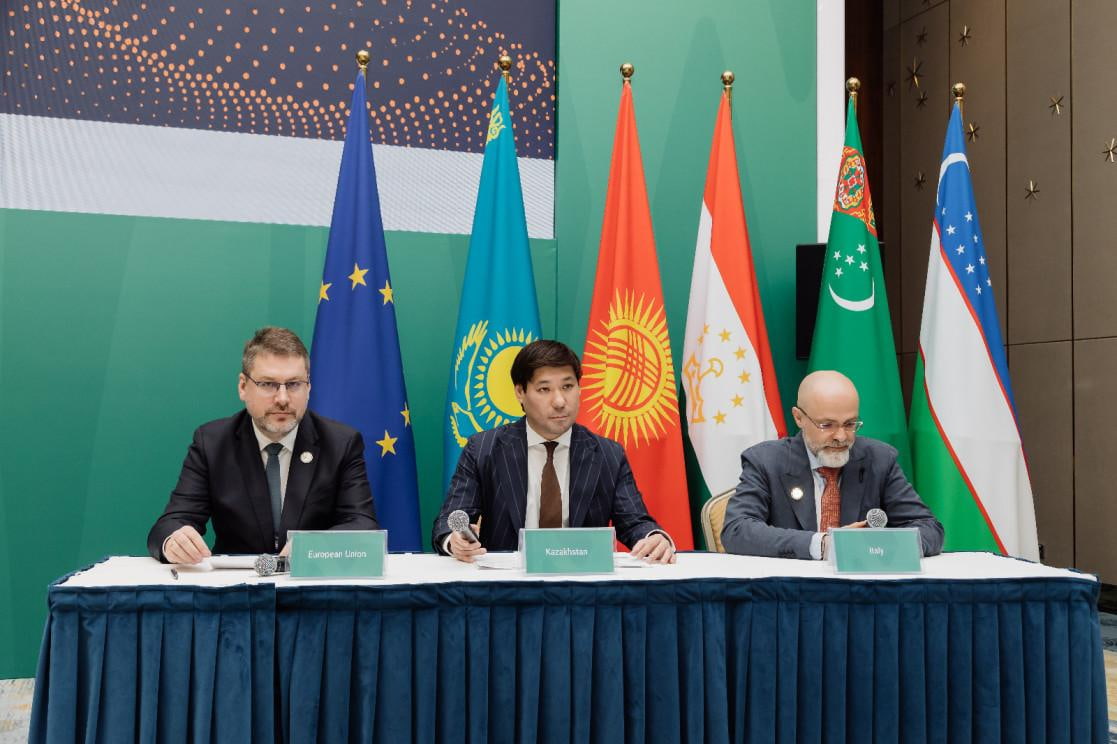
Astana: Europe has spent two decades searching for energy it can trust, and it is beginning to find some of the answer on the far shore of the Caspian Sea. A green power corridor stitched together by Kazakhstan, Azerbaijan and Uzbekistan now sits near the centre of the European Union’s pitch to Central Asia, and the courtship is accelerating.

The plan traces back to an accord the three governments signed in Baku in late 2024 to build the Caspian Green Energy Corridor, a chain of undersea and overland links designed to carry renewable electricity from the steppe toward European markets. Officials talk of first exports around 2032, starting near four gigawatts of capacity and climbing toward six. The timeline is distant, but the political weight it carries is immediate.

Brussels has folded the project into its wider Central Asia bet. At last year’s Samarkand summit the Union unveiled a 12 billion euro Global Gateway package, with roughly 6.4 billion earmarked for water, energy and climate and a further tranche for the Trans-Caspian Transport Corridor, the freight route that promises to move goods between Europe and Central Asia in about fifteen days. The investment deliverables stretch from highway upgrades in Uzbekistan to rail and port works in Kazakhstan.

The logic is straightforward. Europe wants clean electrons and critical minerals that do not run through Russia or depend on China, and Central Asia wants capital, technology and a customer that pays in euros rather than leverage. Kazakhstan alone produces most of the raw materials the European economy classes as critical, and the region holds vast wind and solar potential that has never had a route to a wealthy market.

Delivery is another matter. The corridor must cross the Caspian, a body of water whose legal status and shallow depth complicate undersea cables, and it must knit together grids in countries with uneven regulation and thin investment records. Russia and China both have their own designs on the same geography, and neither will cede influence quietly.

There is also the question of pace. Renewable exports promised for the 2030s do little for a Europe managing energy costs today, and Central Asian leaders have learned to extract maximum diplomacy from projects that may never fully materialise. The green corridor could yet become one more memorandum gathering dust.

Still, the strategic reasoning holds. By treating energy, transport and minerals as a single connectivity offer, the European Union gives Central Asian governments a reason to look west without abandoning their careful neutrality. Whether the cables and turbines follow the communiques will decide if this becomes a genuine alliance or simply the most photogenic phase of a long great game.