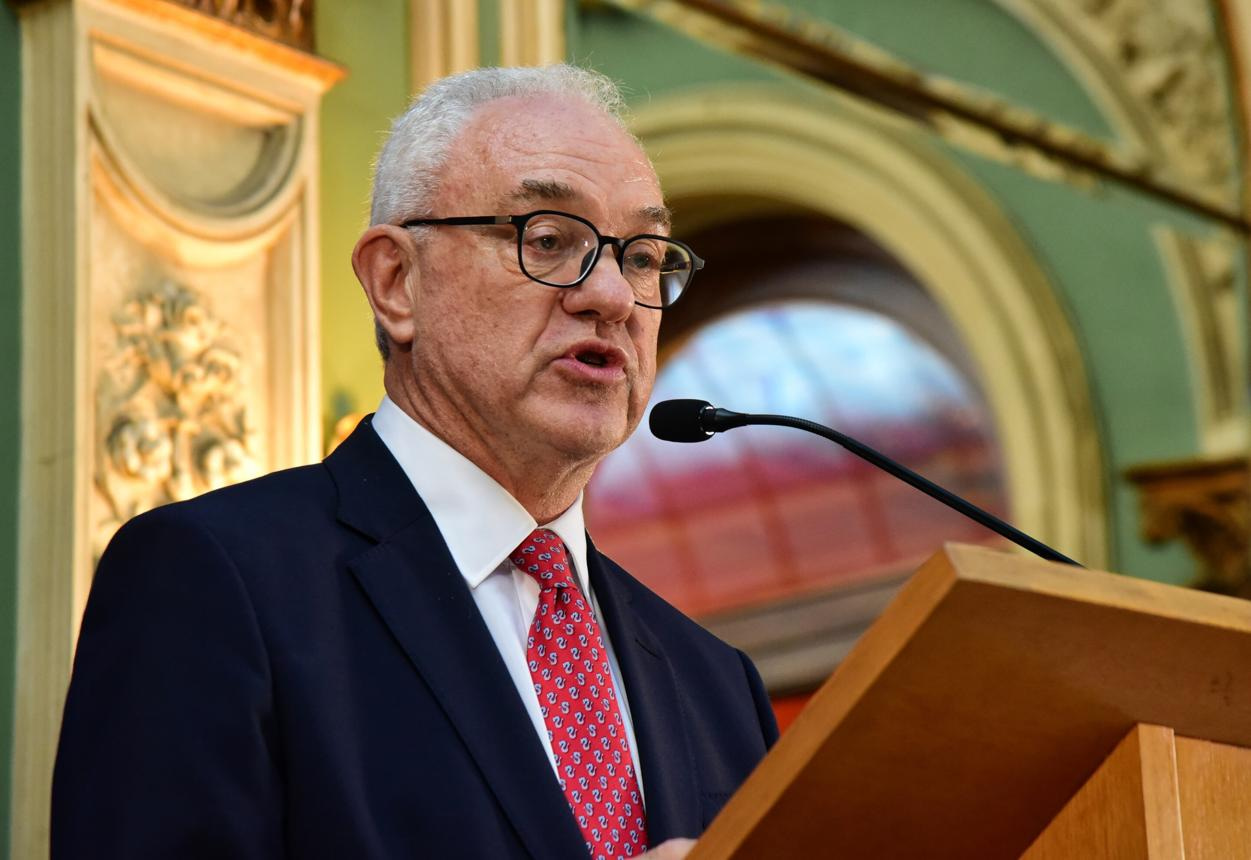
Montevideo: Uruguay’s government issued a blunt warning to Europe this week. Ratify the Mercosur agreement, it said, or watch South America drift toward China. Foreign Minister Mario Lubetkin called the moment historic, and he argued that hesitation in Brussels would cost the bloc influence across a continent it has courted for a quarter of a century.
The four Mercosur countries moved fast. Argentina, Uruguay, Brazil and Paraguay all ratified the deal between February and March 2026, and the agreement began provisional application on 1 May. Europe, by contrast, has yet to close the file. Several member states still weigh the political cost at home, and the European Parliament asked the Court of Justice in January to rule on whether parts of the pact can apply before every capital signs off.
That gap between South American urgency and European caution now defines the diplomacy. Montevideo reads the delay as a signal, and it is not the only capital watching. Chinese trade with the region has climbed steadily, and Beijing has spent the past decade turning ports, railways and lithium contracts into leverage. Every month Europe waits, that argument gains weight.
Brussels grasps the strategic logic. Commission officials describe Mercosur as the largest market-opening deal the bloc has ever struck, covering more than 700 million people once both sides fully apply it. The pact would scrap tariffs on most goods, open public contracts, and lock in commitments on the Paris climate accord. For a Europe intent on cutting its dependence on any single supplier, a partnership across the Atlantic carries obvious appeal.
Yet the domestic politics cut hard. French farmers fear a wave of cheaper beef and poultry, and governments in Paris, Warsaw and Vienna have all voiced doubts. Environmental groups question whether the deal’s sustainability chapter can hold Brazilian producers to account for deforestation. These objections carry real weight, and they explain why the Commission split the agreement into a trade track and a broader partnership track to ease it through.
The Uruguayan intervention aims squarely at this hesitation. By invoking China, Lubetkin turns a technical ratification debate into a geopolitical test. He wants European capitals to see the choice not as a farm-policy dispute but as a contest for the future alignment of a resource-rich continent. His warning works as both a plea and a nudge.
Whether the pressure lands depends on decisions still pending in Luxembourg and national parliaments. The Court of Justice ruling will shape how quickly the deal can advance, and a handful of governments could yet stall it. For now, Mercosur stands as Europe’s clearest chance to prove that it can still finish what it starts on the world stage, and its most visible test of resolve against a rival that rarely waits.