August 9, 2026
LATEST
New EU Gas Market Rules Take Effect With Consumer SafeguardsDeforestation Regulation Holds Its December Deadline Despite CutsDigital Omnibus Delays Europe’s High-Risk AI Deadline to 2027Europe’s Schools Confront a Widening Basic Skills GapRule of Law Report Finds Progress but Trust Still LagsIRIS2 Gains 66 Satellites as Brussels Signs the Rollout DealNature Restoration Plans Come Due as Member States Race a DeadlineECB Rates Hold at 2.25 Percent as Frankfurt Waits on the DataEU Budget Talks Turn to Cohesion as Ireland Takes OverWildfire Response Stretches Europe’s Emergency Fleet ThinCan Europe’s Quantum Plan Match Its Big Ambitions?Armenia Edges West as Moscow’s Grip Slips AwayEurope Inherits the World’s Aid Bill It Cannot Fully PayAir Passenger Rights Get Their First Overhaul in Two DecadesErasmus Opens a 5 Billion Euro Round for Skills and MobilityCeuta Crisis Pushes the EU Toward Faster Migrant ReturnsBulky Parcels Face a Packaging Crackdown From August 12Can Europe Build Its Drone Wall Before 2030 Arrives?Indonesia’s Trade Deal With Europe Nears Its Final SignatureEurope Leans on Beijing to Keep Climate Talks Alive Before AntalyaNew EU Gas Market Rules Take Effect With Consumer SafeguardsDeforestation Regulation Holds Its December Deadline Despite CutsDigital Omnibus Delays Europe’s High-Risk AI Deadline to 2027Europe’s Schools Confront a Widening Basic Skills GapRule of Law Report Finds Progress but Trust Still LagsIRIS2 Gains 66 Satellites as Brussels Signs the Rollout DealNature Restoration Plans Come Due as Member States Race a DeadlineECB Rates Hold at 2.25 Percent as Frankfurt Waits on the DataEU Budget Talks Turn to Cohesion as Ireland Takes OverWildfire Response Stretches Europe’s Emergency Fleet ThinCan Europe’s Quantum Plan Match Its Big Ambitions?Armenia Edges West as Moscow’s Grip Slips AwayEurope Inherits the World’s Aid Bill It Cannot Fully PayAir Passenger Rights Get Their First Overhaul in Two DecadesErasmus Opens a 5 Billion Euro Round for Skills and MobilityCeuta Crisis Pushes the EU Toward Faster Migrant ReturnsBulky Parcels Face a Packaging Crackdown From August 12Can Europe Build Its Drone Wall Before 2030 Arrives?Indonesia’s Trade Deal With Europe Nears Its Final SignatureEurope Leans on Beijing to Keep Climate Talks Alive Before Antalya
August 9, 2026
LATEST
New EU Gas Market Rules Take Effect With Consumer SafeguardsDeforestation Regulation Holds Its December Deadline Despite CutsDigital Omnibus Delays Europe’s High-Risk AI Deadline to 2027Europe’s Schools Confront a Widening Basic Skills GapRule of Law Report Finds Progress but Trust Still LagsIRIS2 Gains 66 Satellites as Brussels Signs the Rollout DealNature Restoration Plans Come Due as Member States Race a DeadlineECB Rates Hold at 2.25 Percent as Frankfurt Waits on the DataEU Budget Talks Turn to Cohesion as Ireland Takes OverWildfire Response Stretches Europe’s Emergency Fleet ThinCan Europe’s Quantum Plan Match Its Big Ambitions?Armenia Edges West as Moscow’s Grip Slips AwayEurope Inherits the World’s Aid Bill It Cannot Fully PayAir Passenger Rights Get Their First Overhaul in Two DecadesErasmus Opens a 5 Billion Euro Round for Skills and MobilityCeuta Crisis Pushes the EU Toward Faster Migrant ReturnsBulky Parcels Face a Packaging Crackdown From August 12Can Europe Build Its Drone Wall Before 2030 Arrives?Indonesia’s Trade Deal With Europe Nears Its Final SignatureEurope Leans on Beijing to Keep Climate Talks Alive Before AntalyaNew EU Gas Market Rules Take Effect With Consumer SafeguardsDeforestation Regulation Holds Its December Deadline Despite CutsDigital Omnibus Delays Europe’s High-Risk AI Deadline to 2027Europe’s Schools Confront a Widening Basic Skills GapRule of Law Report Finds Progress but Trust Still LagsIRIS2 Gains 66 Satellites as Brussels Signs the Rollout DealNature Restoration Plans Come Due as Member States Race a DeadlineECB Rates Hold at 2.25 Percent as Frankfurt Waits on the DataEU Budget Talks Turn to Cohesion as Ireland Takes OverWildfire Response Stretches Europe’s Emergency Fleet ThinCan Europe’s Quantum Plan Match Its Big Ambitions?Armenia Edges West as Moscow’s Grip Slips AwayEurope Inherits the World’s Aid Bill It Cannot Fully PayAir Passenger Rights Get Their First Overhaul in Two DecadesErasmus Opens a 5 Billion Euro Round for Skills and MobilityCeuta Crisis Pushes the EU Toward Faster Migrant ReturnsBulky Parcels Face a Packaging Crackdown From August 12Can Europe Build Its Drone Wall Before 2030 Arrives?Indonesia’s Trade Deal With Europe Nears Its Final SignatureEurope Leans on Beijing to Keep Climate Talks Alive Before Antalya

Europe’s Central Asia Minerals Plan Is Stalling On The Ground

Samarkand: A little over a year after European and Central Asian leaders gathered here in April 2025 for their first joint summit, the gap between the continent’s ambitions and the terrain on which they must be realised has rarely looked wider. The summit produced a Joint Declaration on critical raw materials and a Global Gateway package worth roughly twelve billion euros, of which around 2.5 billion was earmarked for minerals, 3 billion for the Trans-Caspian Transport Corridor and the remainder for energy and connectivity. The numbers were impressive. The geography is unforgiving.

Europe’s interest in the region is not hard to explain. Central Asia sits on close to forty percent of the world’s known manganese reserves, alongside meaningful deposits of lithium, graphite and the rare earths that feed everything from wind turbines to guided munitions. For a bloc that spent the past two years discovering how exposed it is to Chinese processing and Russian leverage, a partnership with Astana, Tashkent and their neighbours looks less like opportunism than insurance. The roadmap signed with Kazakhstan, building on a 2022 memorandum, promised not merely extraction but local processing, the part of the value chain Europe most wants to pry away from Beijing.

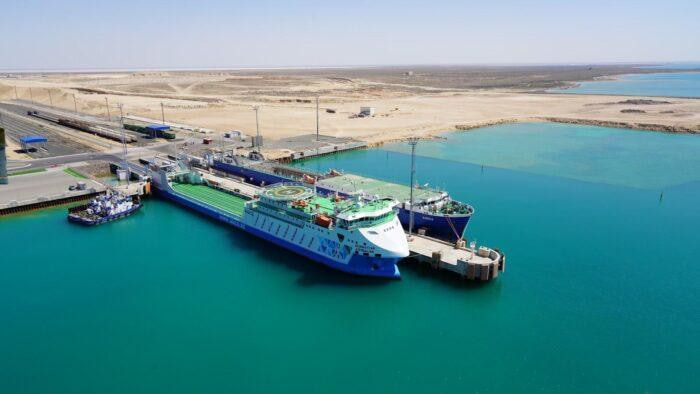
Yet a strategy drawn on a map must survive contact with the physical world, and here the early evidence is sobering. The Caspian Sea, the indispensable hinge of the Middle Corridor, has been falling by as much as thirty centimetres a year since 2020. The consequences are not abstract: ferry capacity on the Baku to Kuryk route has dropped by more than a fifth, and wagon traffic by a tenth, simply because the water is too shallow to float fully laden vessels. No declaration of intent can refill a drying sea.

The infrastructure picture is similarly mixed. Cargo across the corridor did grow by more than sixty percent in 2024, reaching some 4.1 million tonnes, a figure European officials are fond of quoting. But the route remains a fragile chain of ports, railheads and customs posts spread across several jurisdictions with different gauges, tariffs and political incentives. The clearest warning sign came from Georgia, where the government cut funding for the strategically vital Anaklia deep-water port from 150 million lari to 50 million for 2026, even though Brussels and the World Bank had flagged it as a corridor priority. When a host government withdraws from its own flagship project, money pledged in Samarkand cannot easily fill the hole.

There is also the question of who else is in the room. Russia and China remain the dominant economic presences across Central Asia, and neither has any interest in seeing European capital build an alternative to their own corridors. The region’s leaders, for their part, have learned to court multiple suitors without committing to any. They will take European financing for processing plants and railways while keeping Chinese loans and Russian transit routes firmly in play. That is rational hedging, not betrayal, but it means Europe is buying influence in a crowded market rather than securing exclusivity.

None of this makes the Central Asia strategy a mistake. Diversifying away from a single dominant supplier is sound policy even when it is slow and expensive, and the alternative of continued dependence is plainly worse. But the lesson of the past year is that announcements travel faster than freight. If Brussels wants the Samarkand promises to mean anything by the end of the decade, it will need to spend less time celebrating headline figures and more time on the unglamorous work of ports, gauges and water levels that no summit communique can conjure into being.