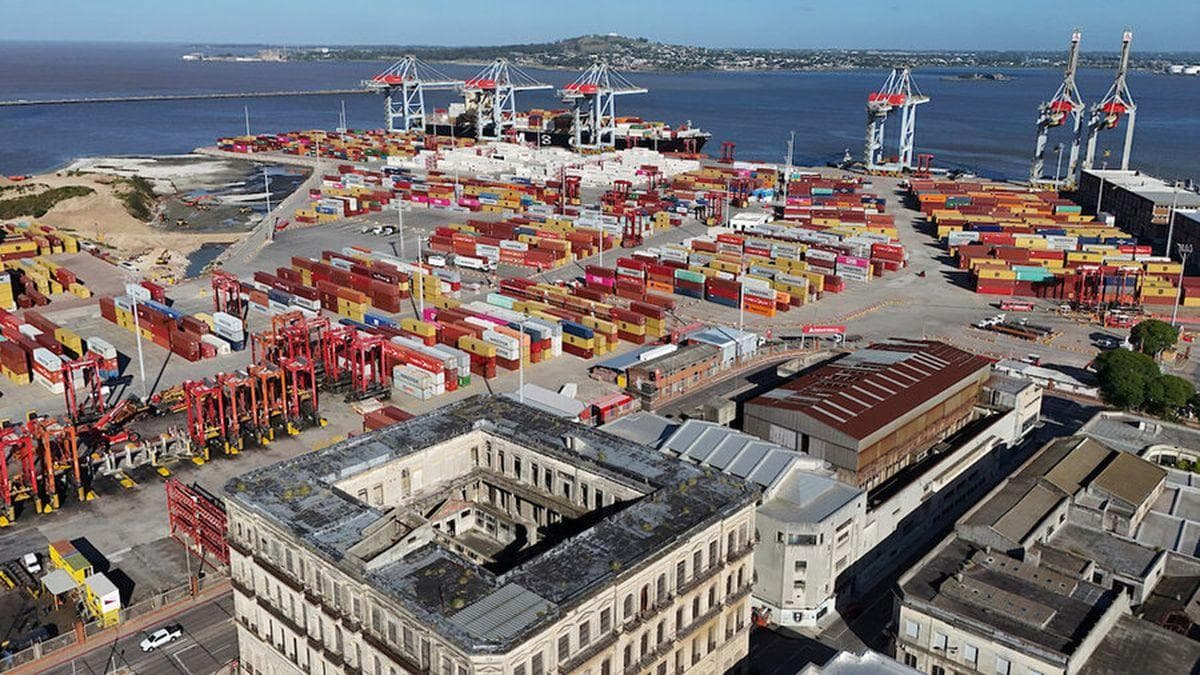
Montevideo: Mercosur trade with Europe already moves under a treaty that no European parliament has approved. Since 1 May 2026 the interim trade agreement has applied provisionally, cutting duties on industrial goods and opening the quotas exporters on this side of the Atlantic spent a generation requesting. The legal foundation beneath all of it remains, deliberately, unfinished.
The sequence looks strange only if you assume ratification must precede benefit. Brussels chose the reverse order. The Council split the original package into a comprehensive partnership agreement, which needs consent from every national parliament, and a trade-only instrument the Union can apply on its own competence. The Commission confirmed provisional application at the end of April, and customs administrations on both continents rewrote their tariff schedules within days.
Then the European Parliament asked the Court of Justice whether the architecture holds. Its January resolution froze parliamentary consent for somewhere between sixteen and eighteen months, a clock that runs deep into 2027.
The asymmetry deserves more attention than it gets. Argentina, Brazil, Paraguay and Uruguay have finished. Brazil completed its procedure in February and Paraguay followed in March, closing the South American side of the ledger. Europe has not started its own. Four legislatures that critics routinely described as the unreliable partners delivered first, while the bloc that wrote the sustainability chapters now waits on its own judges.
Exporters here read the practical consequences quickly. Fresh beef enters the European market at an in-quota rate of 7.5 percent, under a tariff rate quota that starts near 9,000 tonnes and grows toward roughly 55,000 tonnes by year five, capped at about 1.5 percent of total European production. Those numbers are modest against the political noise they generated. They also arrive with a bilateral safeguard regulation that lets Brussels throttle imports when a surge threatens serious injury, and the threat alone suffices to trigger the procedure.
European farm organisations argue that provisional application stripped them of their leverage. They have a point worth stating plainly. A parliament that can withhold consent holds real bargaining power; a parliament ratifying a deal already in force holds considerably less. Supporters of the sequencing answer that the trade-only instrument covers exactly the areas where the Union already acts alone, and that delaying commercial benefit for two years to preserve a symbolic veto would punish exporters for a constitutional argument they did not start.
The Court will not rule on whether the agreement is wise. It will examine competence and compatibility with the Treaties, which means the interesting question concerns remedy rather than merit. A clean opinion returns the file to a Parliament that must now vote on a treaty its constituents have lived under for two years. An adverse opinion forces Brussels to unwind arrangements that shipping lines, meat processors and machinery firms have already built into their contracts.
Uruguayan officials describe this quietly as manageable risk. Investors price it less generously. Financing a processing plant against tariff preferences that a court might undo carries a discount, and that discount falls on the smaller Mercosur economies rather than on Brussels.
Watch three markers before the year closes. The Commission publishes its first monitoring data on quota utilisation, which will show whether the feared surge materialised. The safeguard regulation completes its passage, setting the trigger thresholds that matter more than the headline quotas. And member states begin their national ratification of the wider partnership agreement, where a single hostile chamber can stall the whole edifice. The trade already flows. Whether the law catches up is a separate question, and Europe has chosen to answer it last.