August 22, 2026
LATEST
What the EU Taiwan Framework Would Actually Have to DoKorea Signed a Digital Trade Deal That Nobody Has RatifiedCritical Minerals in Mongolia Still Have to Cross Two BordersCan an Indonesia Trade Deal Survive Two Years of RatifyingCross-Border Data Orders Went Live Before the Plumbing DidPlatform Work Rules Take Effect in December and Few Are ReadyCan Europe’s Firefighting Fleet Keep Pace With EU WildfiresThe AI Act Deadline Passed on 2 August and Nothing BitWhy Construction Keeps Shrinking While Confidence ImprovesAccession Talks Stall Again and September 1 Is the TestBrussels Applied a Trade Deal It Cannot Yet RatifyAfrica’s Power Market Now Needs Money More Than BlueprintsLong-Term Budget Talks Enter Autumn Without a Council LineForeign Subsidies Enforcement Now Turns on a Dublin RaidWho Writes Europe’s Telecom Rules Once Copper DisappearsDisability Cards Exist on Paper and Nowhere Else Until 2028Losing Visa-Free Travel Now Takes a Thirty Percent SwingTwenty Flagship Actions Will Test Whether the Culture Compass WorksEurope’s Quality Jobs Act Now Rests on What Unions Do by SeptemberDoes a Three Euro Parcel Duty Change Anything About Cheap ImportsWhat the EU Taiwan Framework Would Actually Have to DoKorea Signed a Digital Trade Deal That Nobody Has RatifiedCritical Minerals in Mongolia Still Have to Cross Two BordersCan an Indonesia Trade Deal Survive Two Years of RatifyingCross-Border Data Orders Went Live Before the Plumbing DidPlatform Work Rules Take Effect in December and Few Are ReadyCan Europe’s Firefighting Fleet Keep Pace With EU WildfiresThe AI Act Deadline Passed on 2 August and Nothing BitWhy Construction Keeps Shrinking While Confidence ImprovesAccession Talks Stall Again and September 1 Is the TestBrussels Applied a Trade Deal It Cannot Yet RatifyAfrica’s Power Market Now Needs Money More Than BlueprintsLong-Term Budget Talks Enter Autumn Without a Council LineForeign Subsidies Enforcement Now Turns on a Dublin RaidWho Writes Europe’s Telecom Rules Once Copper DisappearsDisability Cards Exist on Paper and Nowhere Else Until 2028Losing Visa-Free Travel Now Takes a Thirty Percent SwingTwenty Flagship Actions Will Test Whether the Culture Compass WorksEurope’s Quality Jobs Act Now Rests on What Unions Do by SeptemberDoes a Three Euro Parcel Duty Change Anything About Cheap Imports
August 22, 2026
LATEST
What the EU Taiwan Framework Would Actually Have to DoKorea Signed a Digital Trade Deal That Nobody Has RatifiedCritical Minerals in Mongolia Still Have to Cross Two BordersCan an Indonesia Trade Deal Survive Two Years of RatifyingCross-Border Data Orders Went Live Before the Plumbing DidPlatform Work Rules Take Effect in December and Few Are ReadyCan Europe’s Firefighting Fleet Keep Pace With EU WildfiresThe AI Act Deadline Passed on 2 August and Nothing BitWhy Construction Keeps Shrinking While Confidence ImprovesAccession Talks Stall Again and September 1 Is the TestBrussels Applied a Trade Deal It Cannot Yet RatifyAfrica’s Power Market Now Needs Money More Than BlueprintsLong-Term Budget Talks Enter Autumn Without a Council LineForeign Subsidies Enforcement Now Turns on a Dublin RaidWho Writes Europe’s Telecom Rules Once Copper DisappearsDisability Cards Exist on Paper and Nowhere Else Until 2028Losing Visa-Free Travel Now Takes a Thirty Percent SwingTwenty Flagship Actions Will Test Whether the Culture Compass WorksEurope’s Quality Jobs Act Now Rests on What Unions Do by SeptemberDoes a Three Euro Parcel Duty Change Anything About Cheap ImportsWhat the EU Taiwan Framework Would Actually Have to DoKorea Signed a Digital Trade Deal That Nobody Has RatifiedCritical Minerals in Mongolia Still Have to Cross Two BordersCan an Indonesia Trade Deal Survive Two Years of RatifyingCross-Border Data Orders Went Live Before the Plumbing DidPlatform Work Rules Take Effect in December and Few Are ReadyCan Europe’s Firefighting Fleet Keep Pace With EU WildfiresThe AI Act Deadline Passed on 2 August and Nothing BitWhy Construction Keeps Shrinking While Confidence ImprovesAccession Talks Stall Again and September 1 Is the TestBrussels Applied a Trade Deal It Cannot Yet RatifyAfrica’s Power Market Now Needs Money More Than BlueprintsLong-Term Budget Talks Enter Autumn Without a Council LineForeign Subsidies Enforcement Now Turns on a Dublin RaidWho Writes Europe’s Telecom Rules Once Copper DisappearsDisability Cards Exist on Paper and Nowhere Else Until 2028Losing Visa-Free Travel Now Takes a Thirty Percent SwingTwenty Flagship Actions Will Test Whether the Culture Compass WorksEurope’s Quality Jobs Act Now Rests on What Unions Do by SeptemberDoes a Three Euro Parcel Duty Change Anything About Cheap Imports

New Zealand’s Exports Found Their Fastest Market in Europe

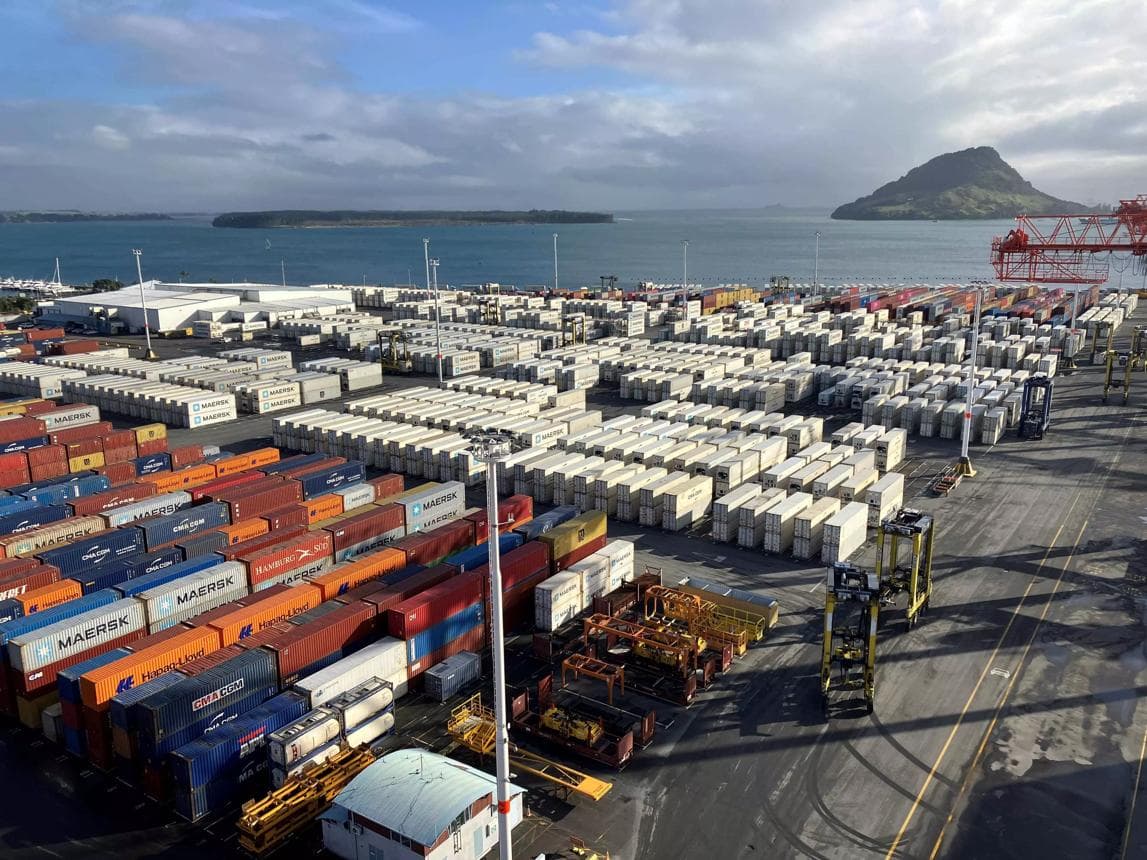
Tauranga: Two years after the agreement entered into force, the numbers coming through this port settle an argument that Brussels has been losing rhetorically. New Zealand goods exports to the European Union have risen by roughly 2.5 billion New Zealand dollars since May 2024, a cumulative increase of about 58 per cent, which makes the Union New Zealand’s fastest-growing goods export market. In the year to June 2025 alone, exports climbed 28 per cent to 7.88 billion dollars, with services adding a further 15 per cent to reach 1.95 billion.

Trade agreements rarely produce results that clean, and the reason this one did is worth stating precisely. The deal removed tariffs on products New Zealand already makes well and Europe already wanted, and it did so on a schedule short enough that exporters could plan around it. Two-way goods and services trade reached 21.58 billion dollars in the year to June 2025. The Union is now New Zealand’s third largest source of imports and fourth largest export market, positions it held before the agreement but occupied less profitably. The Wellington government’s own accounting tracks the shift year by year.

The asymmetry is the interesting part. For New Zealand this is a structural realignment, a genuine second option after two decades of deepening dependence on Chinese demand for milk powder and logs. For the Union it is a rounding error, a fraction of one per cent of external trade. That imbalance is exactly why the agreement matters diplomatically. Brussels spent years telling Indo-Pacific partners that it offered an alternative to coercive economics, and it was asked, reasonably, to show an example where the alternative had been delivered rather than announced.

Wellington has meanwhile aligned with European positions on Russian sanctions, on Chinese economic pressure against Lithuania, and on standards work in international bodies where votes are counted rather than debated. None of that alignment was purchased by the trade deal, and it would be crude to suggest otherwise. It does, however, illustrate a pattern the Union has struggled to reproduce with larger partners: agreements with small, high-trust democracies deliver disproportionate political return because they can be concluded, ratified and then pointed to.

The limits are equally clear. New Zealand’s export growth concentrates in a narrow band of agricultural and horticultural goods, and the Union’s own tariff-rate quotas on beef and dairy still cap the categories New Zealand producers most want to expand. European farm groups fought hard for those caps and will fight harder in any review. The Commission’s summary of the relationship is candid about where liberalisation stopped.

Officials in both capitals now talk about extending cooperation into research participation, critical minerals and defence industrial consultation, which is the natural next step and also the point at which momentum usually slows. The trade chapter worked because it had deadlines. Whatever follows will need them too.