Nagoya: The aerospace and precision machinery cluster around this city supplies components for aircraft that Europe helps design, and almost none of that work passes through the European institutions now describing Japan as an industrial partner.
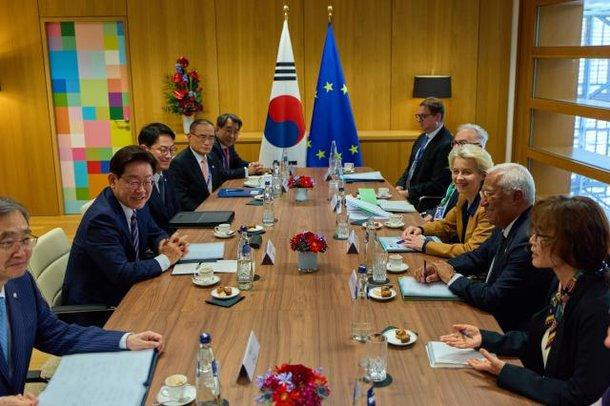
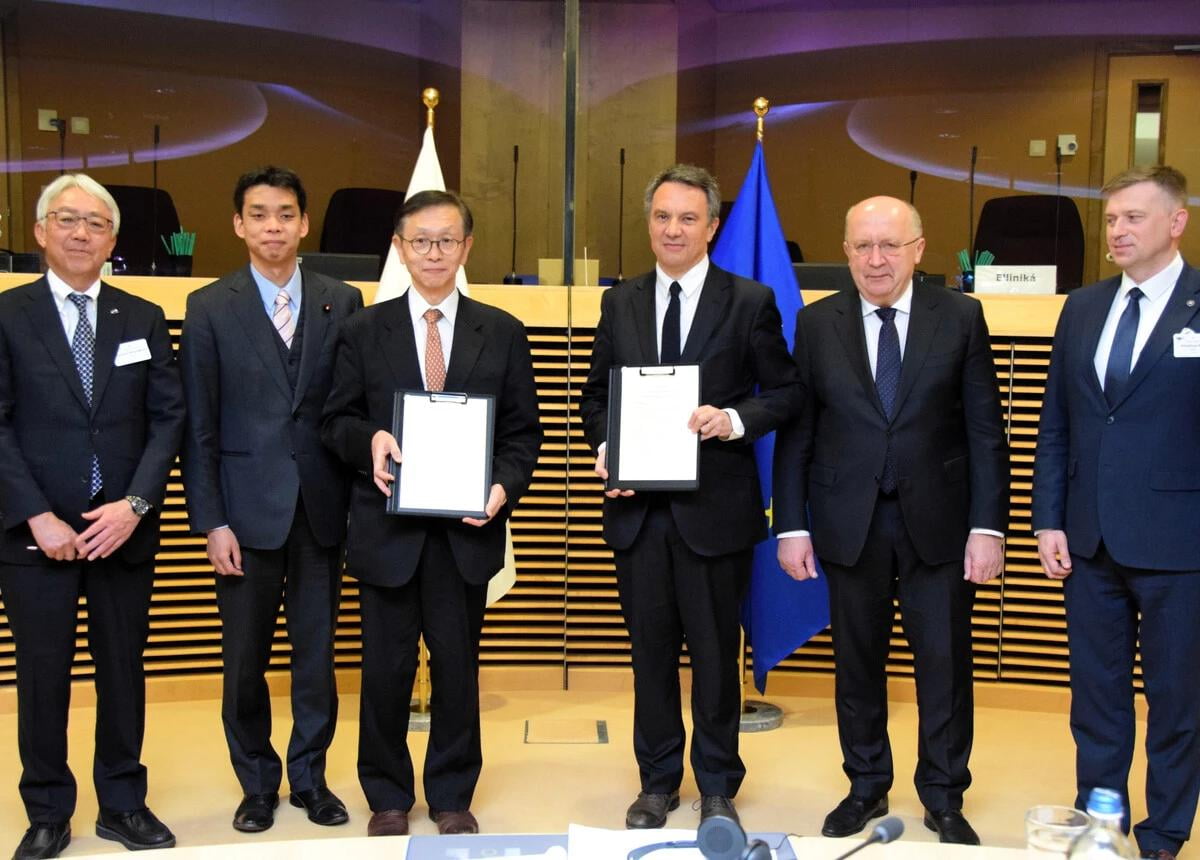
Japan and the European Union held the first meeting of their Defence Industry Dialogue in Brussels on 17 April 2026 and issued a joint statement promising deeper cooperation on defence industrial and dual-use technology. The Commission’s defence and space directorate published the outcome of that meeting. The dialogue grew out of the EU-Japan Competitiveness Alliance agreed at the July 2025 summit, which in turn sat on the Security and Defence Partnership signed in November 2024.
Three frameworks in eighteen months suggest energy. They also suggest that nobody has found the mechanism yet. A dialogue coordinates. It does not qualify a supplier, certify a component, share a technical data package or move money, and those four steps decide whether two defence industrial bases actually connect.
Business has moved ahead of the institutions. In February 2026 senior Japanese officials and executives toured Finland, Sweden and Germany in the first mission built explicitly around dual-use technology, looking for partners in sensors, materials, propulsion and autonomy. Those conversations happen firm to firm and capital to capital. Brussels hears about them afterwards.
The most substantial Japan-Europe defence project runs outside EU structures altogether. The Global Combat Air Programme joins Japan with Italy and the United Kingdom on a sixth-generation fighter aimed at service around 2035, and Japanese estimates put the domestic employment effect in the tens of thousands of high-skill jobs over a decade. One participant is a member state, one is not, and the programme answers to a trilateral organisation rather than to any European instrument. The European Council on Foreign Relations argued this year that EU-Japan industrial ties should start at the bilateral level, which is a polite way of describing what already happens.
Japan’s own constraints have loosened but not disappeared. Tokyo revised its equipment transfer rules to permit more export categories, yet each case still moves through political review, and Japanese firms remember decades in which defence work meant one domestic customer and no export risk. European firms face the mirror problem. Their order books are full of European government demand, and adding a Japanese supplier means requalifying parts against a schedule nobody wants to slip.
Economic security is where the two sides genuinely converge. Both depend on the same narrow set of upstream inputs, both faced export restrictions on those inputs, and both have discovered that stockpiling substitutes for a supplier only until the stock runs out. Joint work on alternative materials, on shared testing, and on aligning what each side treats as a controlled technology would produce results neither can reach alone.
That agenda needs an owner, a budget line and a date. The April dialogue produced none of the three. Until the next meeting does, Nagoya’s suppliers will keep building for Europe through contracts that were never signed in Brussels.