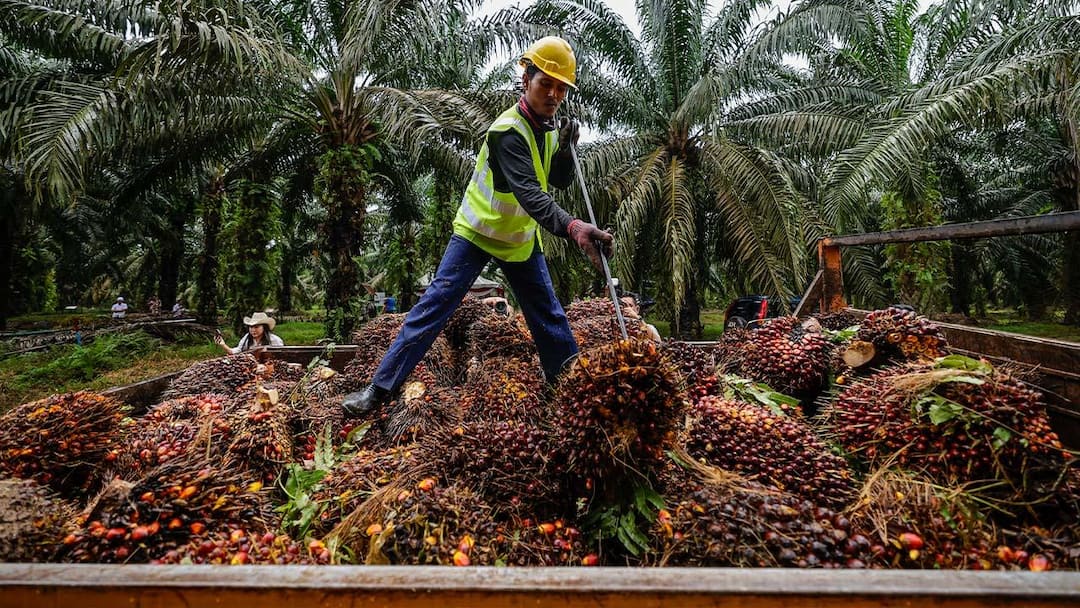
Pekanbaru: Growers across Riau have about four months before Europe’s deforestation deadline starts deciding which of their fruit bunches can enter the European market at all.
Europe settled the timing last December. Regulation 2025/2650 pushed application to 30 December 2026 for medium and large operators and to 30 June 2027 for micro and small ones, and the co-legislators scrapped the grace period the Commission had floated in favour of a clean date. The Council sign-off also thinned the paperwork, so only the operator first placing a product on the market files a due diligence statement and only the first downstream buyer carries the reference number forward.
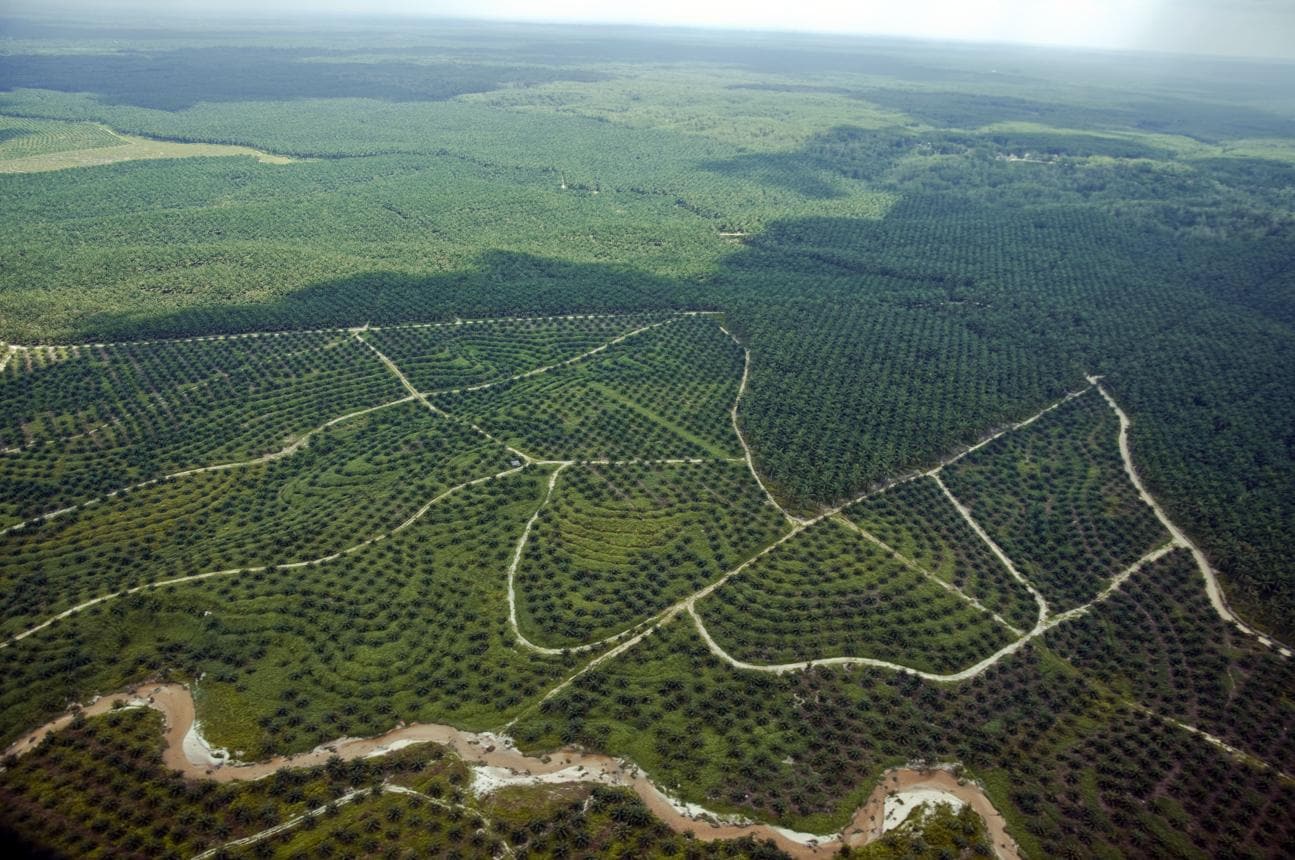
That simplification helps European importers. It does very little for a farmer in Sumatra, because the obligation that bites upstream never moved. Someone must still produce geolocation coordinates for every plot behind every shipment, and prove the trees standing there predate the end of 2020.
Smallholders work close to two-fifths of Indonesia’s planted oil palm area. Many hold land under customary or incomplete title, sell through collectors who mix loads from dozens of plots, and have never been mapped by anyone. Indonesia and Malaysia together supply more than 85 percent of the world’s palm oil, so this is not a niche compliance problem.
Jakarta has argued the same point for three years and made it concrete. The Indonesian palm oil association wants smallholders carved out of the reporting requirement and wants Brussels to accept the national ISPO certification scheme as a compliance pathway. Kuala Lumpur presses an identical case for its MSPO standard. Neither request has landed, and the Commission’s implementation guidance continues to treat certification as evidence rather than as proof.
Brussels has a defensible reason to hold that line. A regulation that accepted national schemes wholesale would outsource its own standard to the governments whose forest loss prompted it. But the reluctance carries a cost the Commission rarely prices. Refusing recognition without funding an alternative leaves traceability to mills and traders, who solve it the cheapest way available, by dropping unmapped suppliers rather than mapping them.
The likely outcome is segmentation rather than protection. Compliant volume commands a premium and flows to Europe. Everything else moves to India and China, which impose no equivalent test. Europe buys under a tenth of Indonesia’s palm exports, so the leakage argument is serious and the deterrent effect on clearing is weaker than the regulation’s drafters assumed.
The counterargument deserves a hearing too. Traceability infrastructure built for Europe does not vanish when the cargo sails elsewhere, and mills that map their supply base once can use those records for any buyer. Several Malaysian refiners already treat the mapping as a permanent cost rather than a European one.
Timing sharpens all of it. Indonesia and the European Union aim to sign their economic partnership agreement in the final quarter of this year, weeks before the deforestation rules apply. Jakarta will not read those two dates as a coincidence, and Brussels should expect the smallholder question to arrive at the trade table whether or not it belongs there.
Three things to watch between now and December. Whether the Commission’s review reopens the smallholder treatment. Whether the information system copes with the filing volume it has never been stress tested against. And whether the first enforcement actions target traders or the farmers nobody mapped.