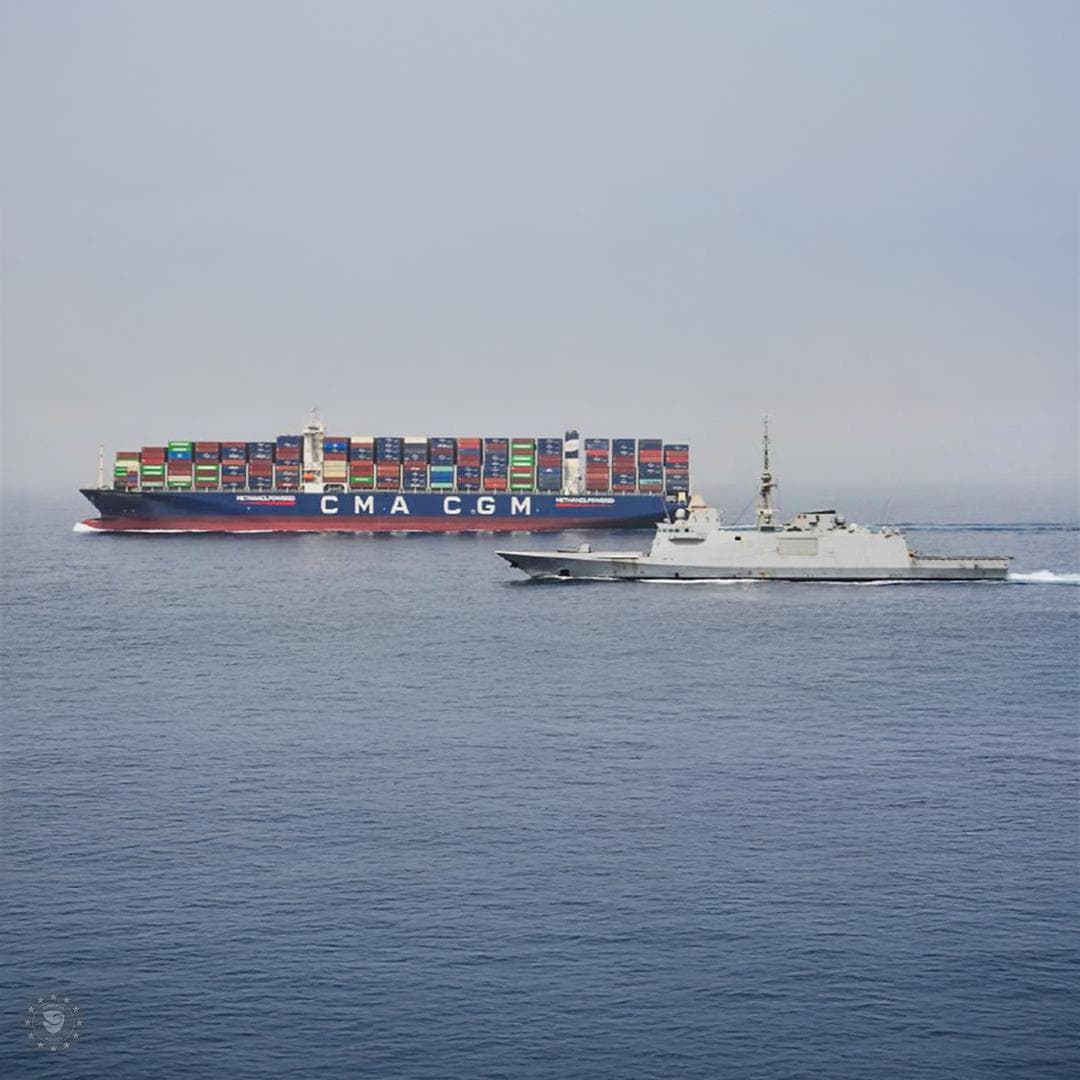
Brussels: Operation Aspides, the EU naval mission in the Red Sea, still lacks the ships its own diplomats say it needs. High Representative Kaja Kallas has told capitals the operation requires at least ten vessels, and she admitted that the Union is not there yet. The gap grows more serious as Houthi attacks widen.
Italy and Greece provide the three core ships of Operation Aspides. Germany, France, Spain, the Netherlands and Belgium send vessels on a rotating basis, so the number of warships on station changes from month to month. The mission launched in February 2024 and has escorted hundreds of merchant vessels through the Bab el-Mandeb Strait.
On 19 September Kallas wrote to European capitals and asked for more naval and air assets after an Italian frigate escorted an Italian merchant vessel off the Yemeni coast. Only two extra warships have been pledged since. The Dutch frigate will serve in an associate role that focuses on awareness and information gathering, and the Belgian Leopold I has technical problems that keep it away until next year.
Other governments have kept their ships closer to home. Several fleets are tied down in the Baltic and Black Seas, where Russian hybrid pressure is a concern. Italian Defence Minister Guido Crosetto said Rome would raise its contribution only if partners show the same commitment, which turns a shortage of hulls into a bargaining problem.
The security picture explains the urgency. The Houthis, backed by Iran, have struck Saudi Arabia and hit Riyadh’s international airport, with reports of 14 deaths and more than 300 injured. EU leaders at the summit of 15 and 16 October condemned the strikes, called for an end to attacks on shipping in the Red Sea and Bab el-Mandeb, and asked for Operation Aspides to be reinforced within its mandate.
That wording matters because it limits the options. Leaders did not ask for a larger mandate or for strikes on land targets, and they did not name contributors. A call for reinforcement without ships behind it leaves Operation Aspides where it is, and a defence readiness assessment seen by journalists warns that critical maritime gaps will close only after 2030.
Europe depends on the route that Operation Aspides guards for energy, fertiliser and food, and the European Council itself warned that disruption could hit all three. Italy relies heavily on Middle Eastern energy and has already sent air defence and radar systems to Gulf partners, so its own interest points toward a stronger mission, even as its minister asks for fairness.
My assessment is that member states should settle the question in the next Foreign Affairs Council. A rota that guarantees ten hulls, with named ships and dates, would cost less than a failed escort. If capitals keep promising reinforcement without delivering it, Operation Aspides will lose credibility with shippers and with the Gulf partners it is meant to reassure.