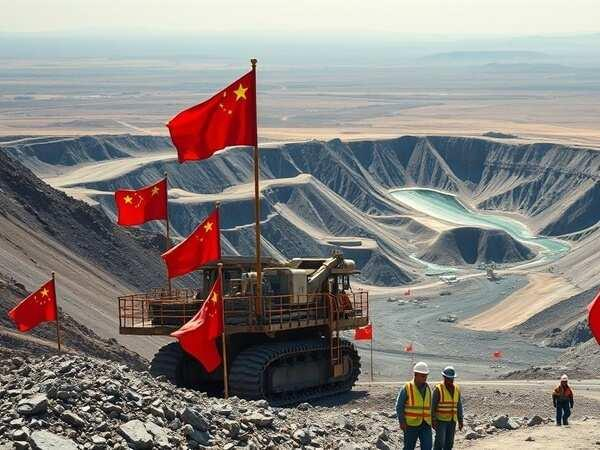
Beijing: China’s two-wave rare earth export control architecture, introduced in April and October 2025 with the second tranche suspended until November 2026, has become the most consequential single input into the European Union’s economic security policy of the current mandate cycle. The suspension window has bought European industrial buyers an operational reprieve, but it has not removed the underlying chokepoint. Roughly ninety percent of global rare earth processing capacity still sits inside Chinese refineries and separation plants, and European Central Bank work has confirmed that more than four-fifths of large European firms are no more than three intermediaries away from a Chinese rare earth producer in their input chains.
The European response, formalised through the RESourceEU initiative that Commission President Ursula von der Leyen announced in October 2025 and the Critical Minerals Centre that Vice-President Stéphane Séjourné laid out in November, is a deliberate attempt to harden the demand-side architecture without provoking the kind of escalation that would convert the November 2026 suspension into a permanent cut-off. The two instruments work in different registers. RESourceEU is a joint purchasing and stockpiling envelope structured around the model that the Commission deployed during the 2022 to 2023 gas crisis, allowing Member State industrial buyers to aggregate demand for neodymium, dysprosium, terbium and samarium and to deploy strategic reserves when spot prices break specified thresholds. The Critical Minerals Centre, modelled in part on the United States Department of Energy’s stockpile and offtake architecture, will fund domestic strategic projects under the Critical Raw Materials Act and coordinate purchases across the European Investment Bank, the European Bank for Reconstruction and Development, and the Strategic Technologies for Europe Platform.
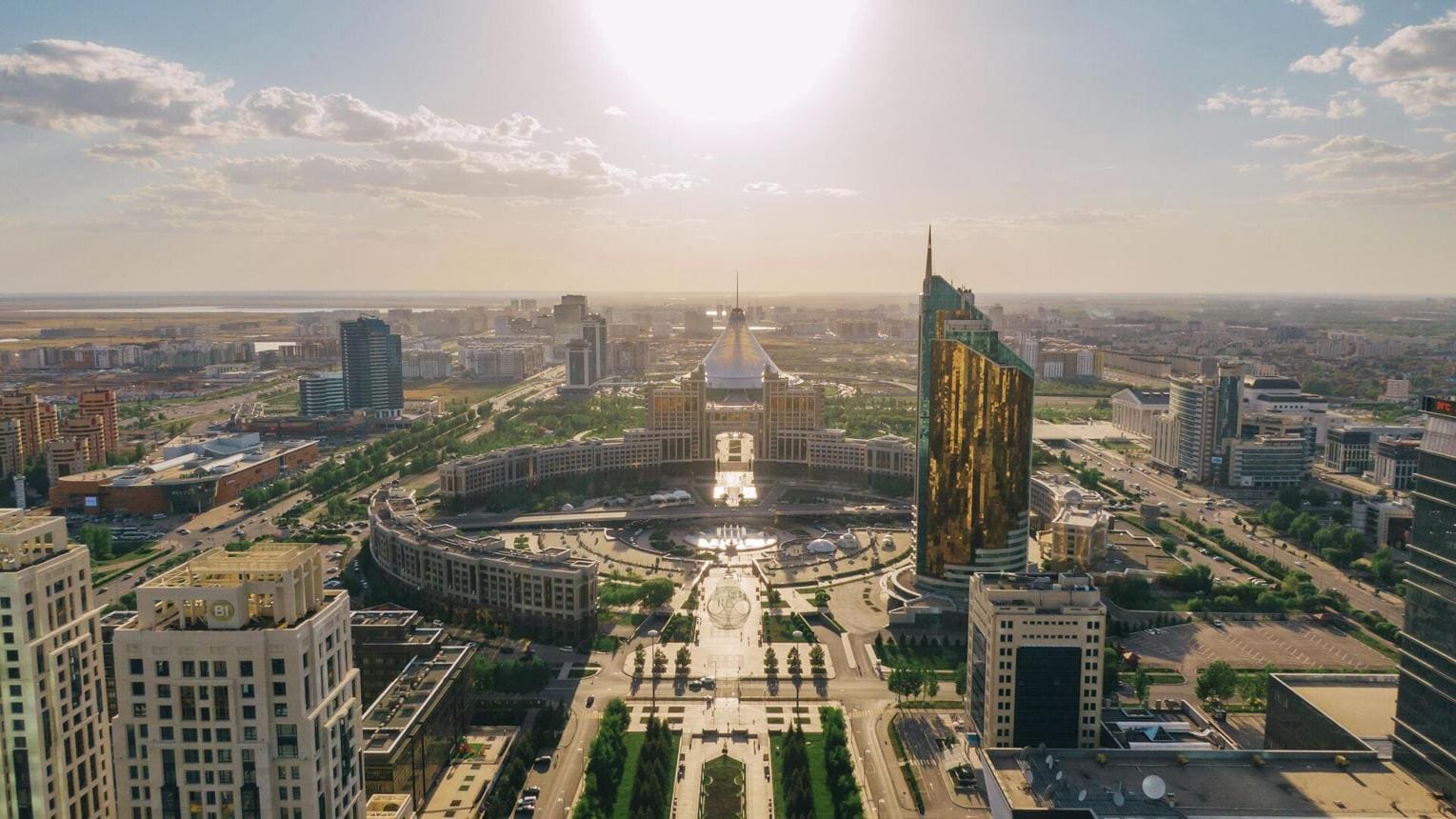
The political question that European officials are now circling is whether the demand-side aggregation is large enough to give European buyers genuine pricing leverage against Chinese producers, or whether it functions primarily as a domestic industrial signal. The honest answer, drawn from the Commission’s own impact assessments and from the Mercator Institute for China Studies’ parallel reading, is that 2026 stockpile volumes will not match Chinese supply elasticity. They will, however, alter the timing geometry of supply disruptions and they will give European industrial buyers the breathing room to commission alternative supply through the Australia Free Trade Agreement, the Kazakhstan critical minerals roadmap, the Greenland rare earth track, and the broader African critical raw materials partnership pipeline.
The high-level dialogue track between Brussels and Beijing remains the place where the operational management of this exposure plays out. The upgraded supply chain mechanism that the July 2025 summit committed to has met twice since November and has cleared two specific bottleneck cases at the Member State level, but its formal escalation protocols remain underspecified. Member State capitals with the deepest industrial exposure, in particular Berlin, Paris and Stockholm, have been pushing the Commission to harden the mechanism’s documentation requirements before the November 2026 suspension expires.
What the rare earth architecture is doing, more broadly, is forcing the European Union to integrate three policy strands that had been running on parallel tracks. The trade defence toolkit, including the International Procurement Instrument and the Foreign Subsidies Regulation, is being recalibrated to handle minerals as a specific category. The competition law framework for joint purchasing exemptions is being adapted to allow industrial buyers to coordinate without antitrust exposure. And the foreign policy track around the China high-level dialogue is being asked to absorb commercial risk-management functions that it was not originally designed to perform. The November 2026 cliff will test whether that integration has come together in time.