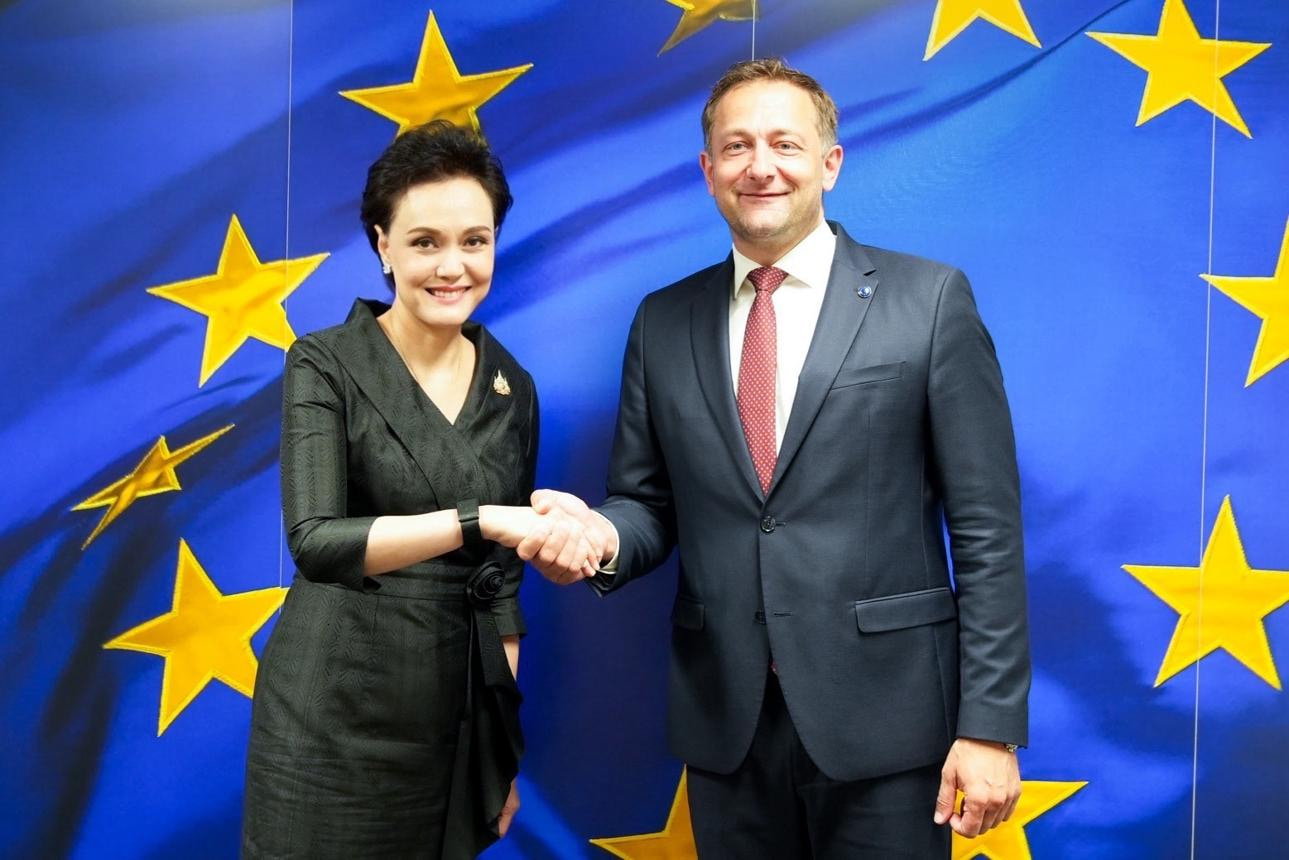
Bangkok: The Thailand trade talks with the European Union have reached a stage that Thai officials describe as nearing completion, and both sides now aim to conclude negotiations by the end of 2026. The tenth negotiating round took place in Phuket from 28 September to 6 October 2026, according to reports from Thailand’s national news agency published in early October.
Most provisions of the free trade agreement in the Thailand trade talks are largely settled. Negotiators reported progress on sanitary and phytosanitary measures, rules of origin, and chapters on energy and raw materials. Market access in goods, services, investment and government procurement remains the hardest part, and the two Thai accounts differ slightly in tone, one saying market access advanced and the other saying it is still ongoing. The Thailand trade talks therefore look close to a deal but not yet finished.
The economic stakes are sizeable. The EU was Thailand’s fourth-largest trading partner in 2025, with bilateral trade of $45.03 billion, up 3.44 percent from 2024. Thai exports to Europe reached $26.45 billion while imports stood at $18.58 billion, leaving Bangkok with a surplus of about $7.86 billion. A surplus of that size explains why Thai officials want better access to the European market, and why European negotiators press for openings in return.
Deputy Prime Minister and Commerce Minister Supajee Suthumpun leads the Thai side, and the government says it is coordinating positions across ministries and agencies. Officials speak of balancing wider market access against the effects on domestic sectors, and they mention sensitive products and business sectors without naming them. That caution is typical of late-stage negotiations, when each concession has a constituency at home.
Thailand is also running a parallel track with the United Arab Emirates. Supajee met the UAE’s Minister of Foreign Trade, Thani bin Ahmed Al Zeyoudi, on 23 September to discuss a proposed comprehensive economic partnership agreement. Deputy Government Spokesperson Lalida Perisvivatana told exporters on 9 October that neither agreement offers tariff benefits yet, because preferences apply only after entry into force. She advised small firms to review product standards, import requirements, production costs and the origin of their raw materials.
That advice highlights a point often lost in headlines. A concluded deal still needs legal scrubbing, approval by the Council and the European Parliament, and ratification in Thailand, so the Thailand trade talks will not change tariffs in 2027 on their own. For exporters, the Thailand trade talks matter most through standards and rules of origin. Companies that prepare early for European standards will gain more than those that wait for the signature.
Three milestones will show whether the deadline holds. The first is an eleventh negotiating round with a clear agenda on market access, the second is an agreed text on public procurement, and the third is a joint announcement of conclusion before the year ends. If they arrive, the Thailand trade talks will close one of the EU’s longest Southeast Asian negotiations; if they slip, the effort could roll into a crowded 2027 trade calendar.