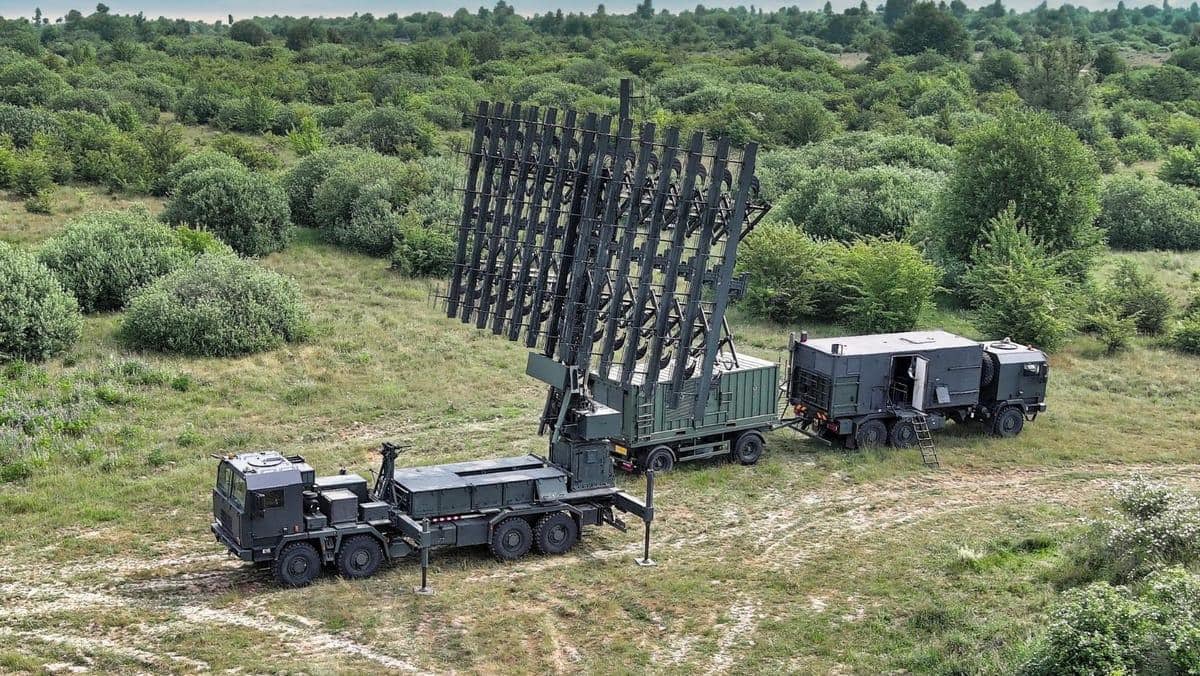
Chisinau: Moldova air defence is receiving its largest European upgrade yet after the Council of the EU adopted a €120 million assistance measure under the European Peace Facility in mid-July 2026. The measure pays for a mid-range air defence system for the Moldovan Armed Forces and lifts total EU support through the facility to €317 million, according to the EU for Moldova information platform.
The money matters because Moldova borders a country at war, and Moldova air defence has long been the weakest part of its security. Drones and missiles aimed at Ukraine have repeatedly strayed near Moldovan airspace, and a small state with limited military resources has struggled to track, let alone stop, such intrusions. The new package builds on earlier Peace Facility measures for air surveillance and air defence, which means Moldova air defence now moves from sensors toward a system that can engage a target. EU for Moldova says the goal is to improve the operational effectiveness of the armed forces and so better protect civilians.
The instrument itself deserves a short explanation. The European Peace Facility was created in March 2021 to finance military and defence actions under the Common Foreign and Security Policy, including capacity building for partner countries. It sits outside the regular EU budget and draws on contributions from member states, which gives governments direct control over each decision. A €120 million measure therefore reflects a political choice by all 27 capitals, not only a Commission programme.
Politics ran alongside the funding. Moldpres reported that Kaja Kallas, the High Representative, met Moldova’s acting Deputy Prime Minister and Foreign Minister Mihai Popsoi in the same week that accession talks on the external relations cluster opened. Kallas reaffirmed strong support for the European path of the Republic of Moldova and for deeper security and defence cooperation. Popsoi said Moldova values the Union’s constant support, which helps it advance towards accession and to contribute, as a future member state, to the security and stability of Europe.
The reporting leaves several gaps. Neither source names the air defence system, the supplier, or a delivery date, and neither quotes the Council on the reasoning behind the sum. Readers should also note that the €197 million implied for earlier support is a subtraction from the €317 million total, not a figure the sources state. Until the Council publishes its own text, details on training, maintenance and operating costs remain unknown.
Those details will decide how much the package changes for Moldova air defence. An air defence system is only as good as the radars that feed it, the crews who run it and the spare parts that keep it working. Moldova air defence will therefore depend on a long programme of training and logistics, and on how well the new equipment connects to the surveillance gear already financed by the Peace Facility.
Three signals will show whether the investment pays off. The first is the delivery schedule, the second is whether member states add training support, and the third is whether Chisinau reports its first operational tests. If all three arrive in 2027, Moldova air defence will mark a real change in the country’s ability to protect its skies; if they slip, it will remain a large pledge on paper.